What should you look for in titanium?
For an established industrial, titanium can be an attractive material because of its relatively low density and the availability of documented grades. Ask for the exact grade, finish and component composition, and check the professionally confirmed gauge and length.
Why the word titanium is not enough
Titanium is a material family, not a single complete jewellery specification. A product name that includes it may tell you what the merchant intends to describe, but does not establish a specific grade or the composition of every part. The Association of Professional Piercers identifies particular documented titanium materials in its initial jewellery guidance, including ASTM F136 and F67. Those are examples of material specifications, not blanket certification of any product carrying the word titanium. Ask the supplier about the grade of the shaft and terminal components. The industrial jewellery materials comparison puts titanium alongside the alternatives rather than treating a metal name as a quality rating.
Weight is a practical consideration
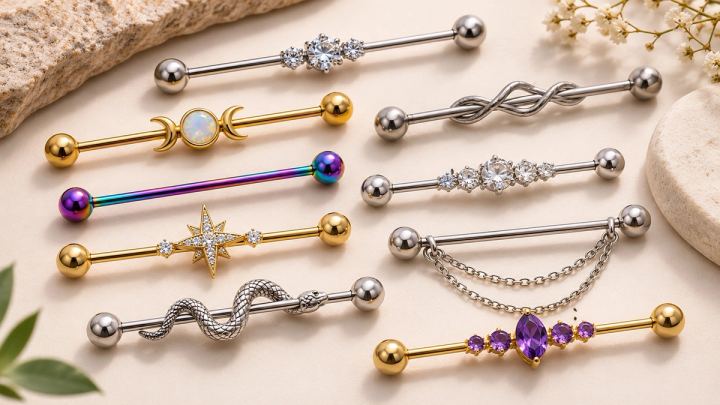
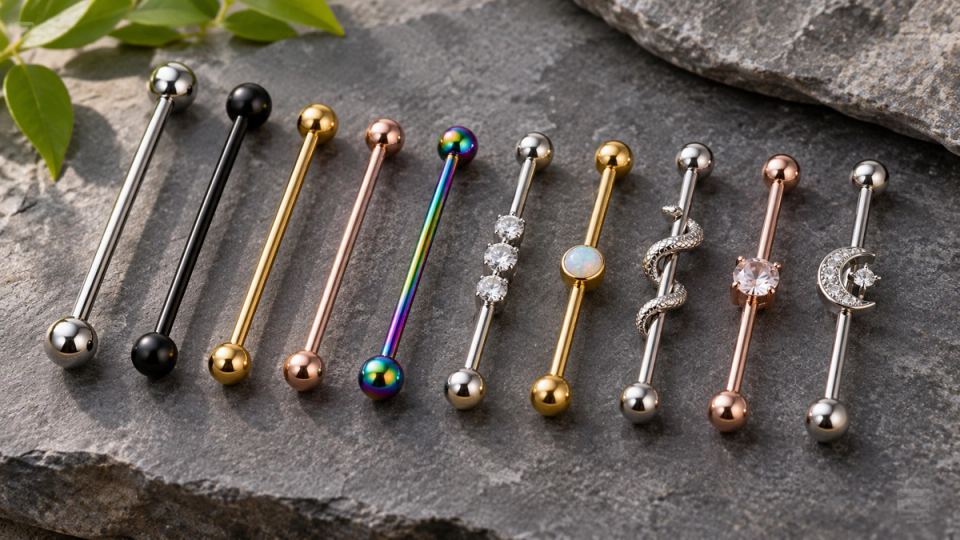
Titanium is less dense than stainless steel, so bars of comparable geometry can differ in weight. The actual assembled jewellery may include stones, decorative metal settings and different terminal ends, which means that a material comparison alone does not determine the finished weight. A plain bar and a gem-set bar made with titanium shafts may have noticeably different profiles and balances. If your industrial is sensitive to movement, discuss the assembled design with your piercer. Do not select a heavy ornamental piece on the assumption that a titanium label guarantees a lightweight result. Request the product's actual dimensions and weight where they are available.
Natural silver tones and anodised colours
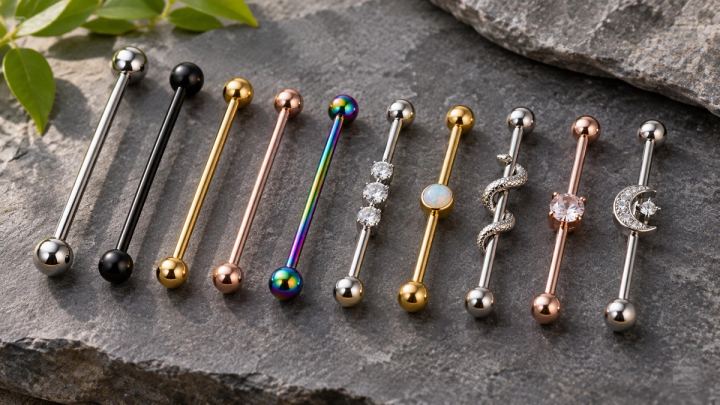
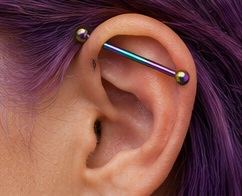
A polished titanium piece can have a silver-grey appearance. Titanium can also be anodised to produce different colours through an altered surface oxide layer. That appearance can resemble gold or other finishes without making the underlying material a gold alloy. A colourful photograph cannot establish that the piece is actually anodised titanium; a merchant should identify both the substrate and the treatment. Colour can also vary with lighting and photography. For a curated ear, consider whether you want a consistently neutral finish or a deliberate colour accent, but establish the material first. Our gold industrial jewellery guide explains why gold appearance and gold composition are distinct.
Look at the construction
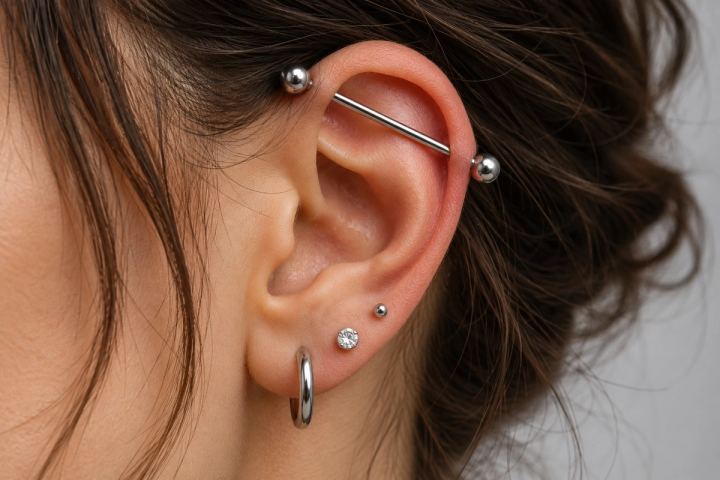
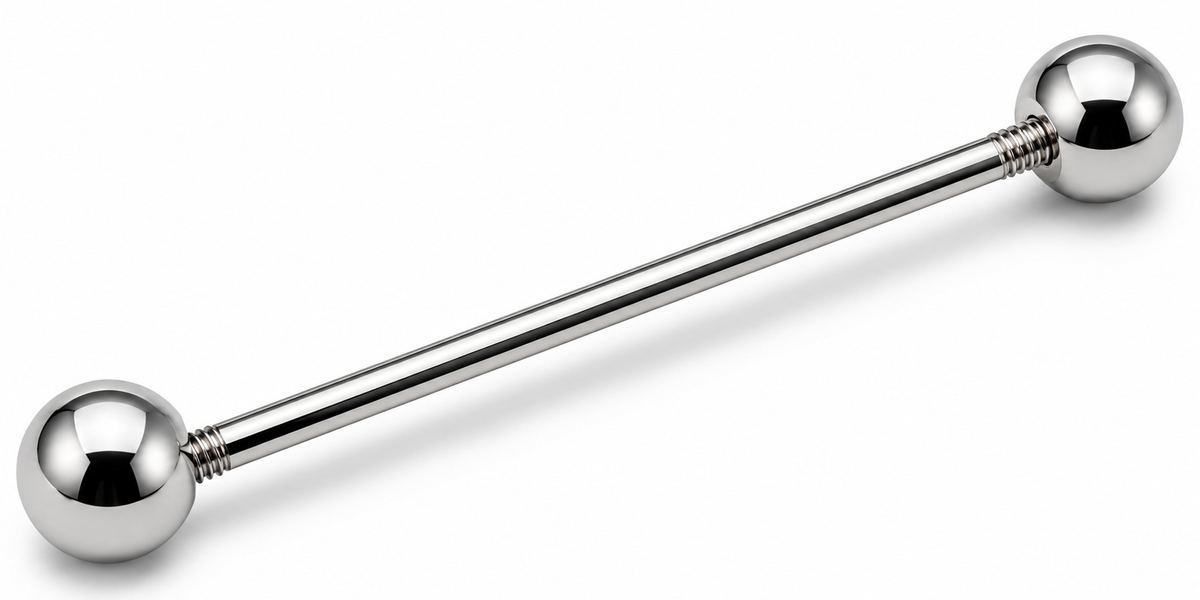
A long industrial shaft passes through two channels. Its surface and attachments matter as much as the bulk material when assessing the finished piece. Ask whether the ends use internal threading, a threadless attachment or another design, and whether replacement parts are compatible. A beautiful finish on the visible shaft does not necessarily reveal the quality of the connection or the underside of an ornament. It is useful to have a qualified piercer examine jewellery when you cannot confirm these details from a listing. The industrial sizing guide explains the dimensions you should record alongside material and attachment information.
If you are choosing titanium because of sensitivity
A history of jewellery reactions is a reason to take documentation particularly seriously. Do not treat titanium as a universal solution to irritation. A bar that presses against cartilage or has a bulky end may cause difficulty irrespective of its alloy. Similarly, a central decorative component can be made from a different substance than the shaft. Share your previous experiences with your piercer and ask for an assessment of fit as well as material. Our sensitive ears guide explains how to approach these two uncertainties. Persistent or worsening symptoms may require medical attention rather than another online purchase.
What is actually available in this catalogue
The supplied OUFER feed contains several industrial designs described as steel or without an adequate titanium designation. It does not establish a specific titanium industrial variant that can confidently be recommended on the basis of its material documentation. We therefore do not substitute a steel product into a titanium buying list. Ask an experienced piercer or a specialist retailer to identify a suitable bar with documented material, your confirmed thickness and length, and compatible ends. This is a more useful shortlist than a collection of photographs whose silver colour might be mistaken for titanium. See the related titanium cartilage jewellery guide for broader material context.
Frequently asked questions
Is anodised titanium solid gold?
No. Anodisation can change titanium's appearance without changing the bulk metal into gold.
Does every titanium bar have the same finish?
No. The grade, surface treatment and construction should all be checked for the actual item.
Sources and further reading
Industrial Piercing Jewellery Library
Complete guide
Main guides
- Best Industrial Piercing Barbells
- Industrial Piercing Jewellery Sizes and Measurements
- Industrial Piercing Jewellery Materials: Titanium, Gold and Steel
- Industrial Piercing Jewellery Styles and Designs
Supporting guides
- Best Industrial Barbells for Everyday Wear
- Industrial Piercing Jewellery for Sensitive Ears
- Industrial Piercing Barbell Length Guide
- Industrial Piercing Gauge Guide: 14G vs 16G
- How Should an Industrial Piercing Barbell Fit?
- Gold Industrial Piercing Jewellery
- Stainless Steel Industrial Piercing Jewellery
- Industrial Piercing Chain Jewellery
- Minimalist Industrial Piercing Jewellery
- Decorative Industrial Barbells: Gems, Opals and Charms
- Vertical Industrial Piercing Jewellery
- Industrial Piercing Anatomy: Will Your Ear Accommodate a Barbell?
- When Can You Change Industrial Piercing Jewellery?