What should sensitive ears look for?
If your ears have reacted to jewellery before, obtain precise material documentation and have a piercer assess the industrial's fit. Nickel exposure, pressure and friction are different potential issues; a label such as hypoallergenic cannot establish that an individual piece will be tolerated.
What a previous reaction tells you
If you have had itching, redness or discomfort after wearing certain earrings, record which pieces were involved and how the problem developed. The information is useful to share with a professional, even if you do not know what those earrings were made from. It does not by itself identify the cause. The fit of jewellery, its movement, surface condition and exposure to products around the ear can all complicate the picture. An industrial is particularly dependent on the geometry of the two channels. It would be a mistake to treat every uncomfortable bar as proof of metal allergy. For the other side of the decision, see how an industrial barbell should fit.
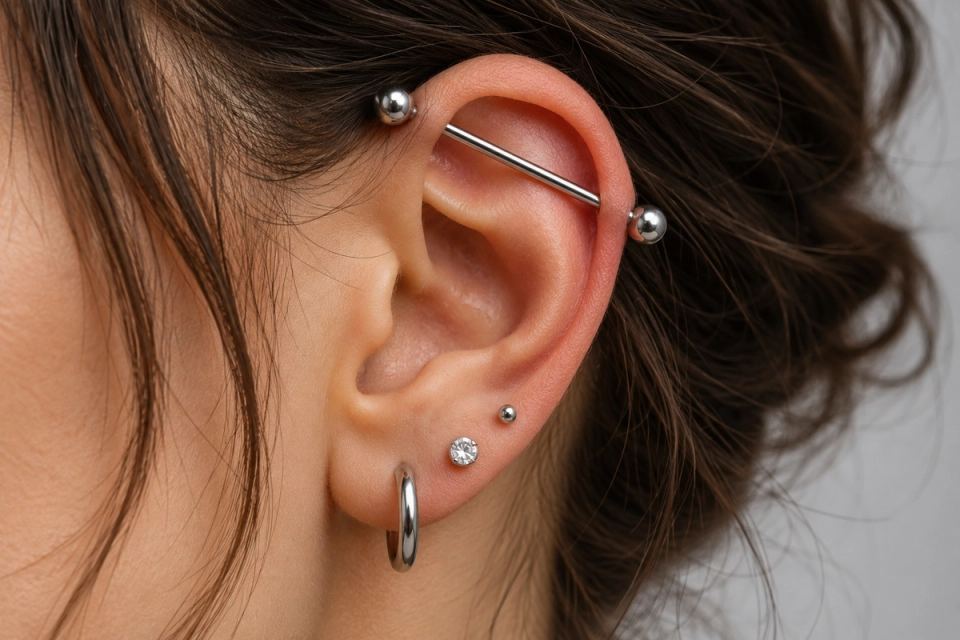
Ask for the actual alloy
Terms such as skin-friendly, medical grade and surgical are commonly encountered in shopping descriptions but may not identify an exact material. When a supplier claims titanium, ask for the relevant grade and evidence behind the claim. When it claims stainless steel, ask which alloy is being used and whether it is documented. When it claims gold, distinguish the gold content from the colour of the finish. The industrial materials pillar compares these categories in more detail. A reliable description should cover the shaft and the ends rather than only naming the most visually prominent component.
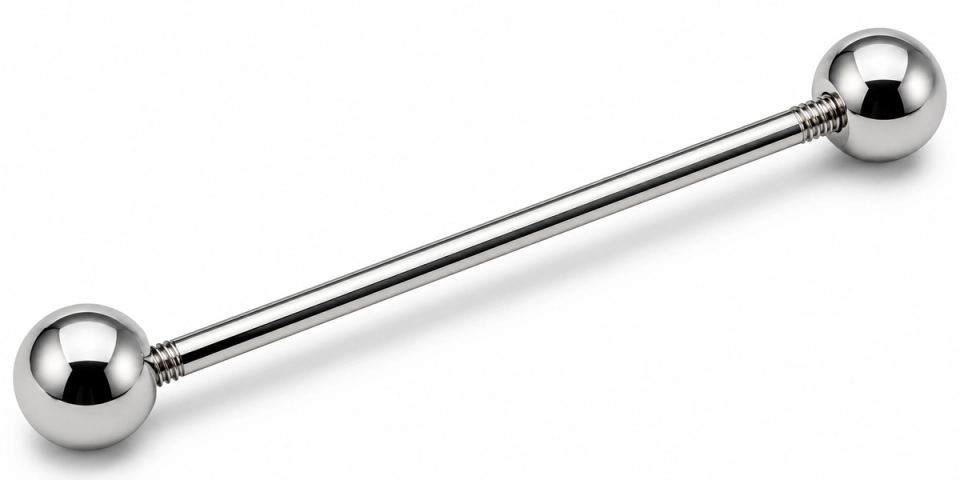
Coatings and mixed materials deserve attention
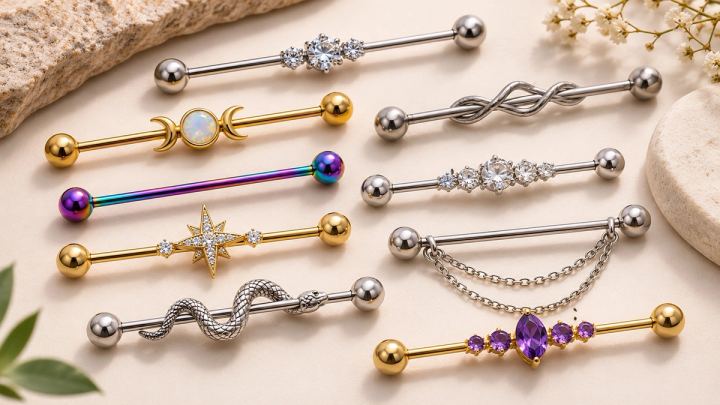
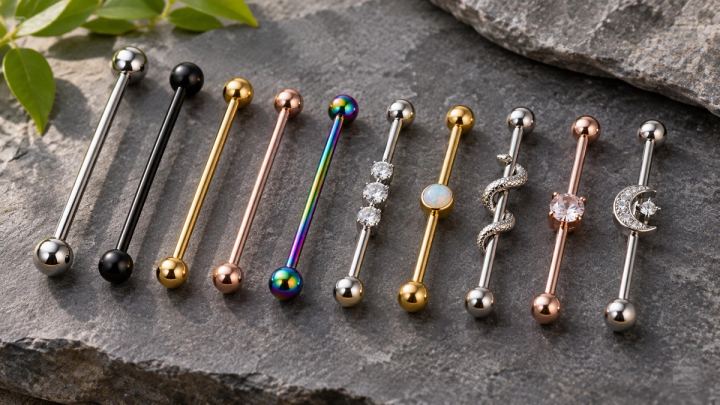
The part of the bar that crosses the ear may be made from a different substance from the ornament in its centre. A decorative piece can also have a surface coating over a different underlying metal. For someone with a history of reactions, that difference is relevant even if the piece looks uniform in a photograph. Do not assume that a gold-coloured finish avoids every exposure associated with the base metal. Equally, a rainbow finish is not sufficient evidence that the underlying material is titanium. Request the material and finishing details for the specific product and variant. Keep those details for later reference if you and your piercer need to compare pieces.
Look at the fit as carefully as the material
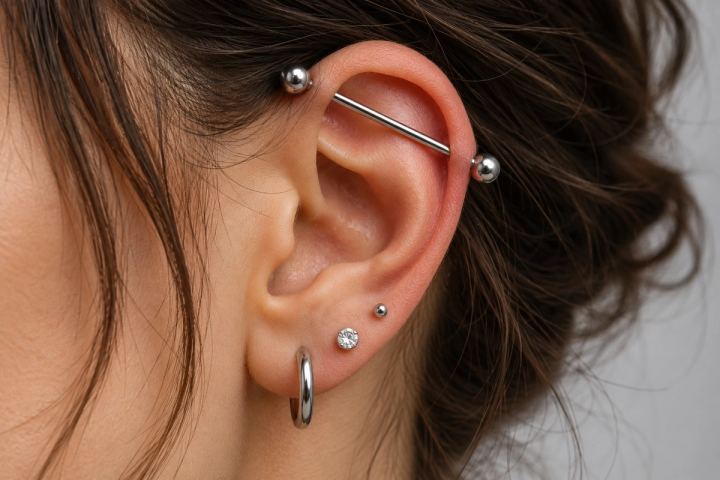
A tight end, a shaft pressing against the middle of the ear or an ornament that repeatedly catches on clothing can cause irritation independent of its alloy. If a previous piece was uncomfortable, have the entire arrangement assessed before ordering a replacement made from another metal. A professional may identify a fitting problem that would persist even if you bought a different finish. Avoid repeatedly testing alternatives in a troubled or healing piercing. It is far more informative to establish what is happening than to purchase several pieces in the hope that one solves the problem. A confirmed fit and a documented material reduce two separate uncertainties.
When a titanium option is worth discussing
People who are concerned about nickel exposure often discuss appropriately documented titanium jewellery with a piercer. Titanium also has a relatively low density, which can be relevant when comparing long bars of similar geometry. However, the word titanium does not establish that every attachment or decorative component is made from the same material. If a merchant provides only a product name without supporting information, ask for the precise grade. The titanium industrial guide explains what to look for in product documentation. Our broader sensitive cartilage earring guide covers related considerations for other placements.
Know when buying is not the next step
If your ear has become increasingly painful, hot or swollen, or you feel generally unwell, seek prompt medical advice rather than diagnosing the problem from a jewellery listing. If infection is suspected, the NHS advises leaving jewellery in unless a doctor tells you otherwise. A medical professional can assess symptoms that cannot reliably be distinguished online. Even without those warning signs, persistent irritation is a good reason to seek a fitting review. Jewellery marketed to sensitive ears is not a treatment for an existing problem. Once the piercing is assessed and established, you can make a better-informed choice using the documentation and dimensions you have recorded.
Frequently asked questions
Does hypoallergenic mean nobody will react?
No. It is not a guarantee of individual tolerance or proof of the complete composition.
Can a gold-coloured bar contain steel?
Yes. Colour alone does not distinguish a gold alloy from another material with a gold-coloured finish.
Sources and further reading
Industrial Piercing Jewellery Library
Complete guide
Main guides
- Best Industrial Piercing Barbells
- Industrial Piercing Jewellery Sizes and Measurements
- Industrial Piercing Jewellery Materials: Titanium, Gold and Steel
- Industrial Piercing Jewellery Styles and Designs
Supporting guides
- Best Industrial Barbells for Everyday Wear
- Industrial Piercing Barbell Length Guide
- Industrial Piercing Gauge Guide: 14G vs 16G
- How Should an Industrial Piercing Barbell Fit?
- Titanium Industrial Piercing Jewellery
- Gold Industrial Piercing Jewellery
- Stainless Steel Industrial Piercing Jewellery
- Industrial Piercing Chain Jewellery
- Minimalist Industrial Piercing Jewellery
- Decorative Industrial Barbells: Gems, Opals and Charms
- Vertical Industrial Piercing Jewellery
- Industrial Piercing Anatomy: Will Your Ear Accommodate a Barbell?
- When Can You Change Industrial Piercing Jewellery?