Can any industrial bar be worn vertically?
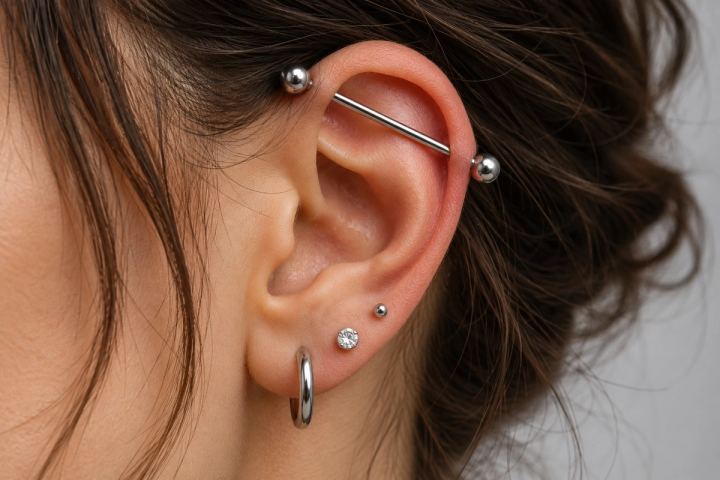
A vertical industrial uses a different placement geometry from the conventional diagonal or horizontal industrial. The correct jewellery depends on the exact channels and clearance, so a standard horizontal bar should not be assumed compatible.
What vertical describes
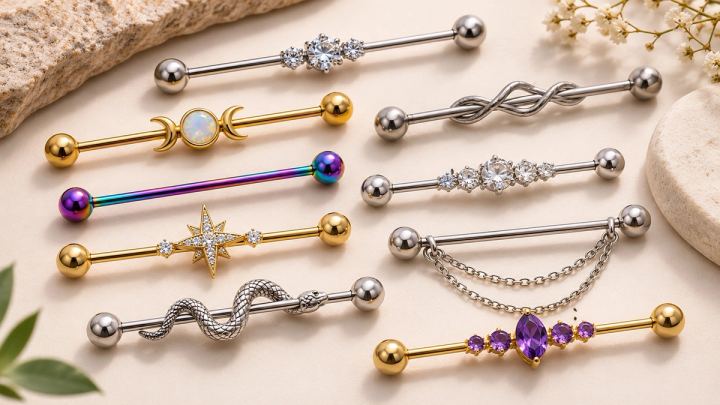
The term generally refers to a connected arrangement oriented more vertically than the familiar bar across the upper ear. It is not a single universal specification for every possible placement. Different piercers may use more precise terminology for configurations involving particular areas of cartilage. Ask the professional to explain which areas they would connect and the jewellery geometry involved. A picture of a vertical industrial can help communicate a style preference, but it does not establish that another person can have that placement. Our industrial styles guide discusses alternatives to the conventional horizontal-looking line and the aesthetic distinctions between them.
Why a horizontal size chart is not enough
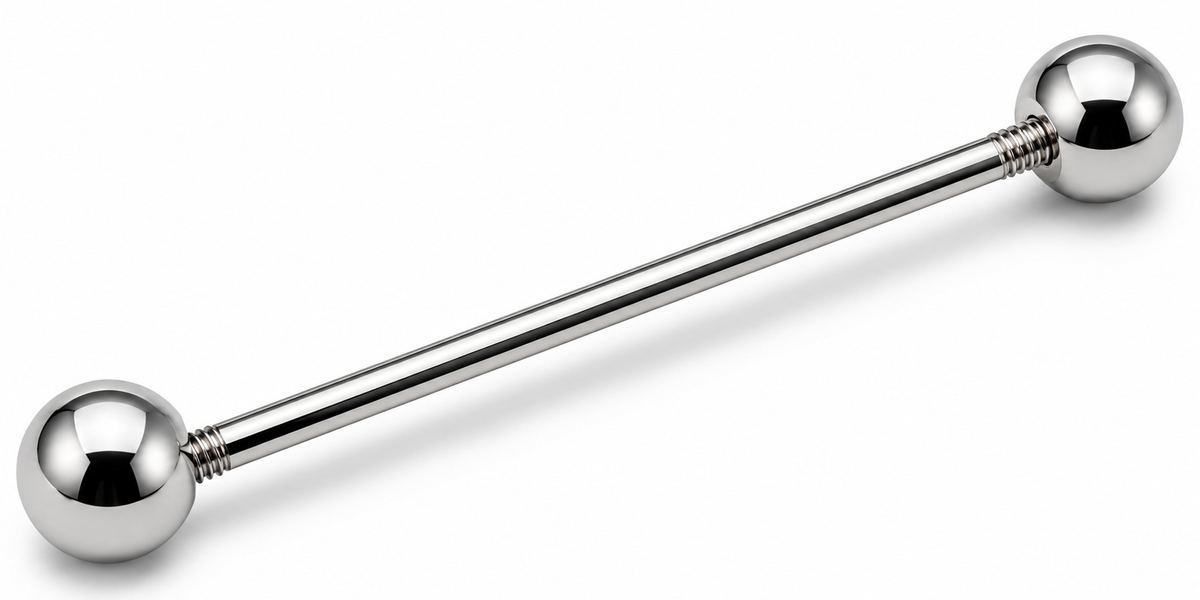
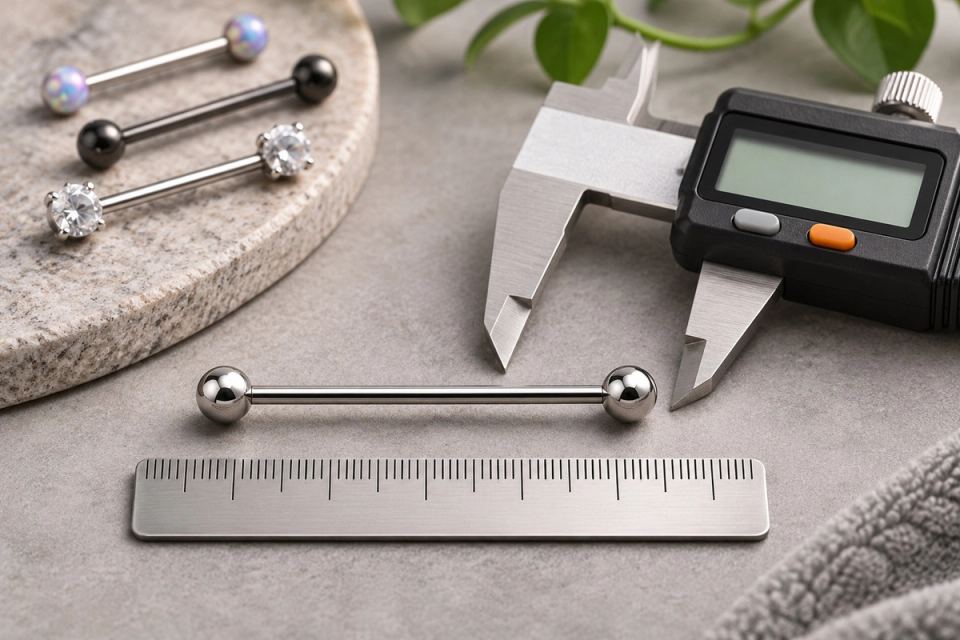
The wearable length of a straight shaft is only one part of a vertical arrangement. The position and direction of each channel determine whether the selected jewellery can sit without being forced. A bar intended for one conventional industrial may have a different length or end profile from one required for an alternative placement. The surrounding folds also determine how much room is available for terminal attachments. Do not select a bar based on the orientation of a photograph or assume that turning an ordinary industrial bar upright makes it suitable. The industrial sizes and measurements guide explains the basic specifications, while a professional must assess the geometry.
Understand the limits of inspiration photographs
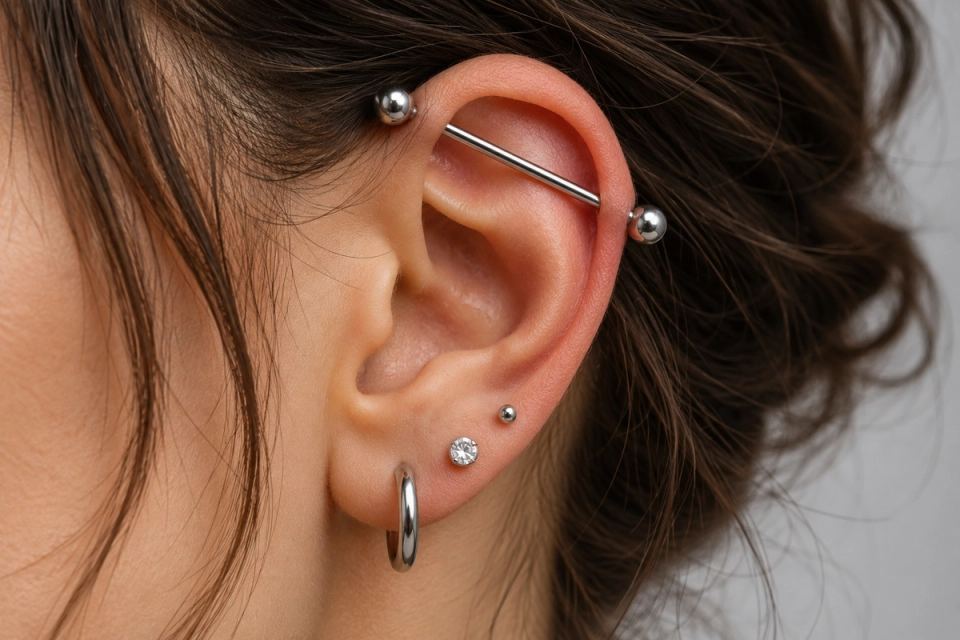
Online photographs tend to emphasise the visible line and the decorative ends. They rarely show the exact path through cartilage or the clearance from every angle. A photograph may also show an alternative arrangement involving separate jewellery pieces rather than one connected rigid bar. When saving visual references, identify the features you like: the direction of the line, the finish, the amount of decoration or the relationship to existing piercings. Bring those preferences to a consultation rather than requesting an exact reproduction of another person's placement. Our industrial anatomy guide explains why the shape of the ear is central to that discussion.
Consider the profile along the entire ear
A vertical arrangement may bring jewellery close to different folds or other piercings compared with a conventional industrial. Large ends, projecting ornaments and long chains could interact with adjacent parts of the ear differently. For someone who wears headphones or uses protective equipment, the new orientation may also change where contact occurs. A simple design can be a useful starting point for discussing the placement because it makes the line and available space easier to consider. If you want an elaborate centrepiece eventually, ask whether the planned arrangement would leave suitable clearance after healing. Do not assume that a design intended for another placement will work.
Distinguish a flexible arrangement from a rigid one
Some alternative ear styles use independent compatible jewellery pieces connected by a decorative chain. Such a connection can follow a different visual path from a rigid bar, but it is not mechanically identical. If a piercer advises that a conventional rigid industrial is not suitable for your ear, they may discuss other arrangements depending on your anatomy and preferences. Do not try to convert a healing industrial to independent pieces yourself. The industrial chain guide explains the different constructions and their visual possibilities. Any alteration to a healing or established configuration should be assessed professionally before a purchase.
Shop only after the actual configuration is known
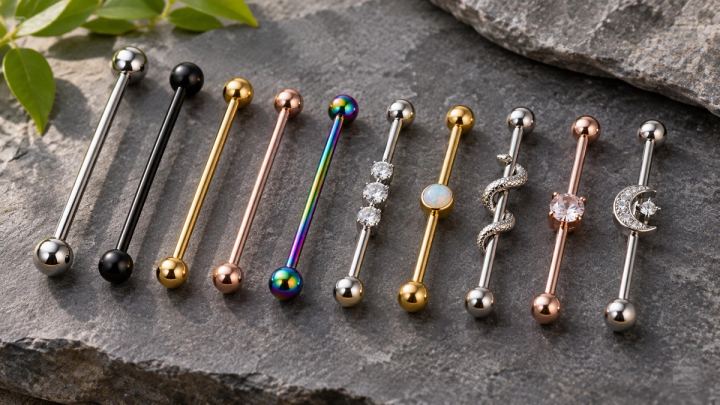
The current OUFER feed identifies several industrial barbells but does not document a dedicated, compatible vertical variant for the particular placements discussed here. We have not treated the horizontal designs as suitable replacements. If you are planning a vertical industrial, ask your piercer to identify the intended arrangement and initial jewellery. If yours is established, obtain the confirmed dimensions, material and attachment information before searching. A specialist may be able to identify a compatible design or explain why a custom specification is required. See the complete industrial jewellery guide for the wider selection process and when to change jewellery for timing.
Frequently asked questions
Can I turn an ordinary industrial bar vertically?
Not as a way of establishing compatibility. The placement and fit must be assessed independently.
Does a vertical industrial always use one straight bar?
The term is used for different arrangements. Ask your piercer to explain the particular configuration and jewellery.
Sources and further reading
Industrial Piercing Jewellery Library
Complete guide
Main guides
- Best Industrial Piercing Barbells
- Industrial Piercing Jewellery Sizes and Measurements
- Industrial Piercing Jewellery Materials: Titanium, Gold and Steel
- Industrial Piercing Jewellery Styles and Designs
Supporting guides
- Best Industrial Barbells for Everyday Wear
- Industrial Piercing Jewellery for Sensitive Ears
- Industrial Piercing Barbell Length Guide
- Industrial Piercing Gauge Guide: 14G vs 16G
- How Should an Industrial Piercing Barbell Fit?
- Titanium Industrial Piercing Jewellery
- Gold Industrial Piercing Jewellery
- Stainless Steel Industrial Piercing Jewellery
- Industrial Piercing Chain Jewellery
- Minimalist Industrial Piercing Jewellery
- Decorative Industrial Barbells: Gems, Opals and Charms
- Industrial Piercing Anatomy: Will Your Ear Accommodate a Barbell?
- When Can You Change Industrial Piercing Jewellery?