How should an industrial bar sit?
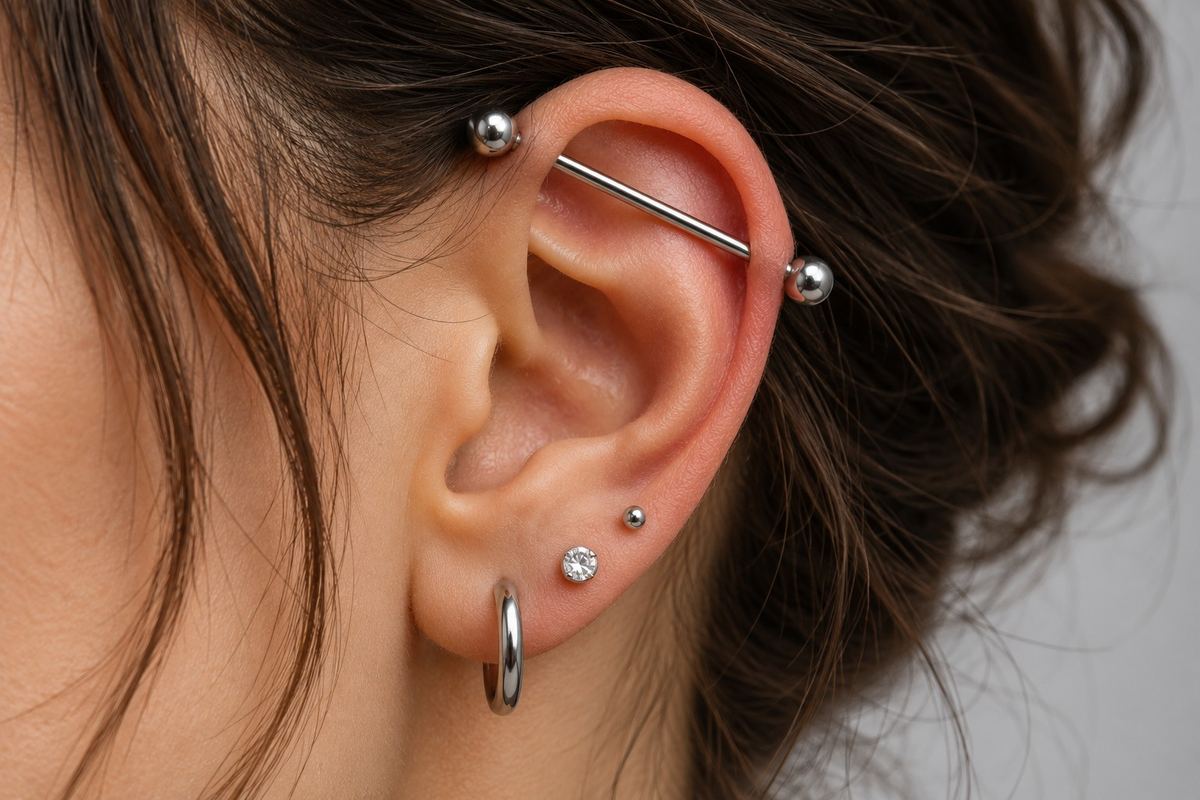
A conventional industrial bar should sit in two compatible cartilage channels without forced alignment or pressure on the intervening ear. Length, gauge, terminal clearance and decoration all contribute to the fit. Persistent discomfort deserves professional assessment.
The central clearance test is not a fashion test
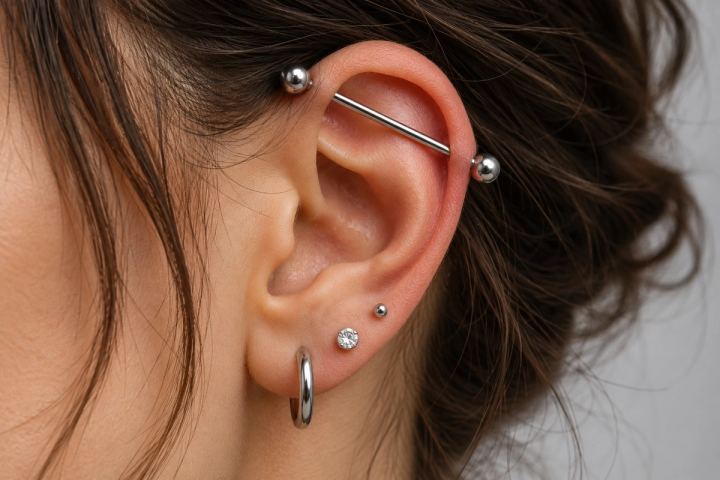
The straight shaft of a conventional industrial crosses the area between two cartilage ridges. It should not be forced against a projecting part of the ear in order to connect the two channels. A close-up picture taken from a flattering angle may conceal contact between the bar and the flat cartilage. Because you cannot establish three-dimensional clearance reliably from a single photograph, a professional examination is important. Do not press the bar into a different position to make it look straighter. The industrial anatomy guide explains why the shape of the ear determines whether a conventional arrangement is possible.
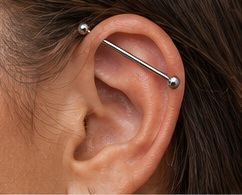
Both ends must work together
Consider the space around the terminal balls or other attachments. One end may appear comfortable while the other touches a fold or sits awkwardly against the outer rim. Because the shaft links the two channels, pressure at one end may affect the other. A different end design can change this relationship even if the nominal shaft length remains unchanged. An elaborate star or sculpted charm can extend in directions that a small ball does not. This is why a new piece needs an assessment of the complete assembled geometry. Our sizes and measurements guide outlines the dimensions to compare before buying.
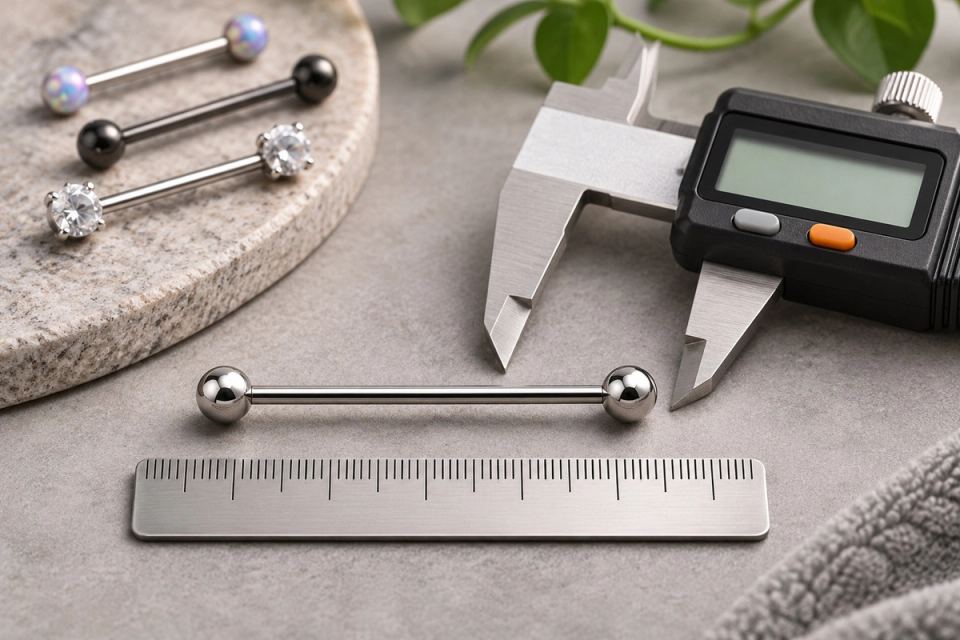
Too much length has its own drawbacks
A longer bar is not automatically safer or more comfortable. Excess length can provide a larger projection beyond the ear, giving hair, clothing and equipment more opportunity to catch. On the other hand, shortening jewellery without assessing the placement may introduce inappropriate pressure. Early jewellery may intentionally allow for healing-related changes; later adjustment should be determined by a piercer rather than by appearance alone. The barbell length guide explains how to distinguish wearable length from the overall outside dimension. If you are comparing replacements, ask for the same measurement convention used for your professionally fitted piece.
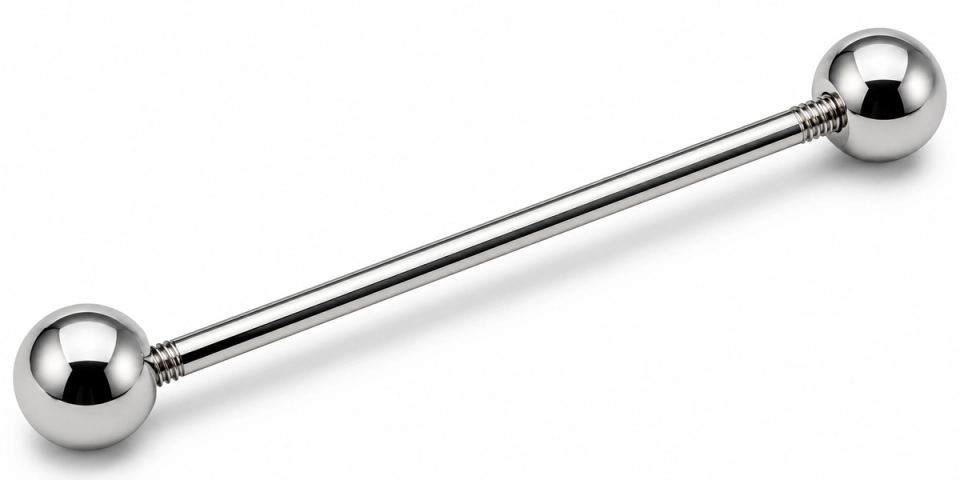
Distinguish a changed profile from a changed fit
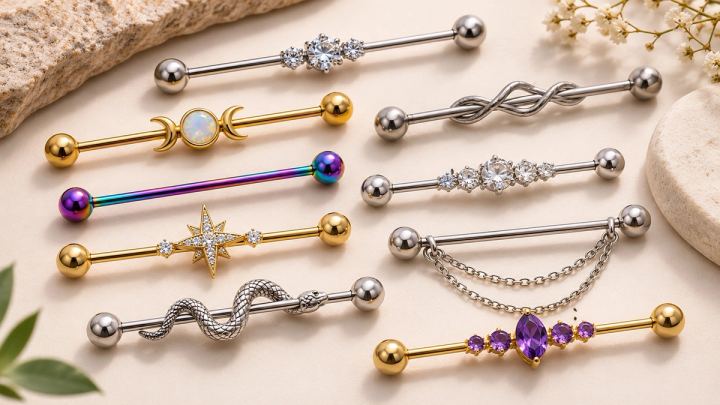
Suppose you replace a plain bar with an equally long piece that has a large central stone. The written length and gauge may match, yet the stone's setting may protrude towards the ear or make the piece more likely to snag. A chain may introduce movement that the original bar did not have. These are differences in geometry and behaviour, not necessarily errors in the size label. Before purchasing, request side-view photographs or dimensions of the ornament and discuss clearance with your piercer. Our decorative barbell guide compares several common embellishments from this practical perspective.
Take discomfort seriously without diagnosing it yourself
Soreness or irritation can result from different causes, including friction, pressure and other problems that require assessment. A new or worsening issue is not proof that you need a shorter bar, a different gauge or another metal. If symptoms suggest infection, such as increasing heat, swelling, pain, pus or feeling unwell, seek urgent medical advice. The NHS advises leaving jewellery in unless a doctor tells you to remove it when infection is suspected. If the concern is fit without signs of infection, arrange a review with a qualified piercer. Do not attempt to bend a rigid bar or force it through misaligned channels.
Record the outcome of a fitting review
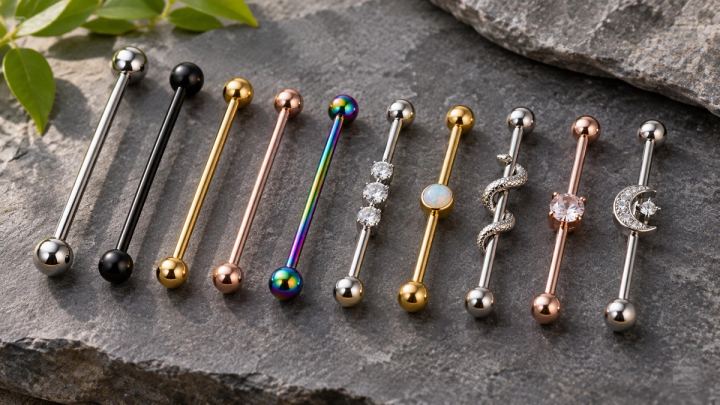
After a professional confirms a suitable configuration, ask for the gauge, length, attachment type and material details. If the problem involved a protruding centre or a particular shape of terminal end, note that too. The next time you shop, this information can rule out designs that repeat the problem. For an established industrial that works well, there is no obligation to replace the jewellery just because another design looks appealing. A comfortable configuration is valuable in its own right. The everyday barbell guide provides practical selection criteria, and the jewellery change guide explains when a replacement is appropriate.
Frequently asked questions
Should an industrial bar touch the middle of the ear?
It should not exert pressure against the intervening cartilage. Ask a piercer to assess suspected contact.
Can I bend a bar to make it fit?
Do not alter jewellery yourself to compensate for incompatible geometry. Consult a professional.
Sources and further reading
Industrial Piercing Jewellery Library
Complete guide
Main guides
- Best Industrial Piercing Barbells
- Industrial Piercing Jewellery Sizes and Measurements
- Industrial Piercing Jewellery Materials: Titanium, Gold and Steel
- Industrial Piercing Jewellery Styles and Designs
Supporting guides
- Best Industrial Barbells for Everyday Wear
- Industrial Piercing Jewellery for Sensitive Ears
- Industrial Piercing Barbell Length Guide
- Industrial Piercing Gauge Guide: 14G vs 16G
- Titanium Industrial Piercing Jewellery
- Gold Industrial Piercing Jewellery
- Stainless Steel Industrial Piercing Jewellery
- Industrial Piercing Chain Jewellery
- Minimalist Industrial Piercing Jewellery
- Decorative Industrial Barbells: Gems, Opals and Charms
- Vertical Industrial Piercing Jewellery
- Industrial Piercing Anatomy: Will Your Ear Accommodate a Barbell?
- When Can You Change Industrial Piercing Jewellery?