When is a jewellery change appropriate?
Change industrial jewellery for fashion only after both channels are fully healed and a qualified piercer confirms that the intended replacement is suitable. A professional fitting adjustment during healing is a separate matter and should not be confused with an elective jewellery swap.
A calendar is only part of the decision
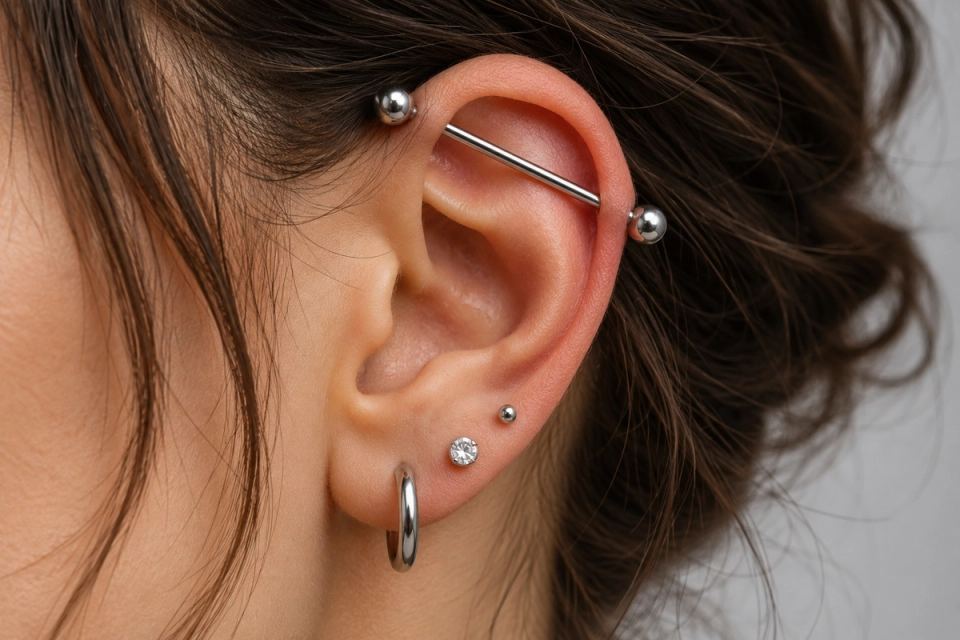
Cartilage healing can take many months and varies between individuals and placements. The absence of obvious surface discomfort is not sufficient evidence that the inside of both channels has healed. The Association of Professional Piercers explains that piercings can appear healed before their interior is ready. This is particularly relevant to an industrial because it connects two sites rather than one. Ask your piercer for the expected healing course for your particular arrangement and arrange a review before changing it for appearance. Our complete industrial jewellery guide places the timing of jewellery changes within the wider sequence of anatomy, fit and material selection.
Professional adjustment is different from a fashion change
Initial jewellery may be selected to accommodate healing-related changes. A piercer may later decide that a fitting adjustment is appropriate even though the piercing is not ready for unrestricted fashion changes. That decision depends on an examination of the placement and the jewellery. It is not a reason to buy a shorter bar and fit it yourself. A decorative replacement may introduce a different end profile or a central ornament that has not been evaluated. The industrial length guide explains how the wearable measurement differs from overall length, but an accurate measurement does not establish that a healing piercing is ready for an elective change.
Look for a complete assessment of both channels
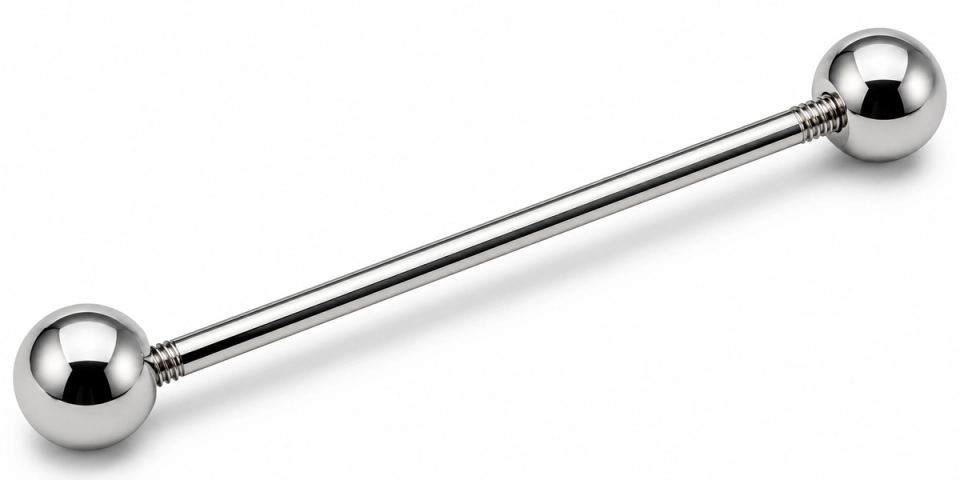
Before a fashion replacement, a professional can assess the two sites, the jewellery's clearance and any ongoing irritation. Tell them if you have noticed recurrent soreness, crusting, pressure or snagging. The APP's healed jewellery guidance describes factors such as the absence of tenderness and discharge and completion of the initial healing period; these are not a substitute for assessing an individual industrial. If one channel seems settled and the other does not, the connected arrangement still deserves attention. Do not test readiness by rotating or pulling at the bar. The industrial fit guide explains why discomfort may have several causes and why a fitting review matters.
Prepare the replacement before removal
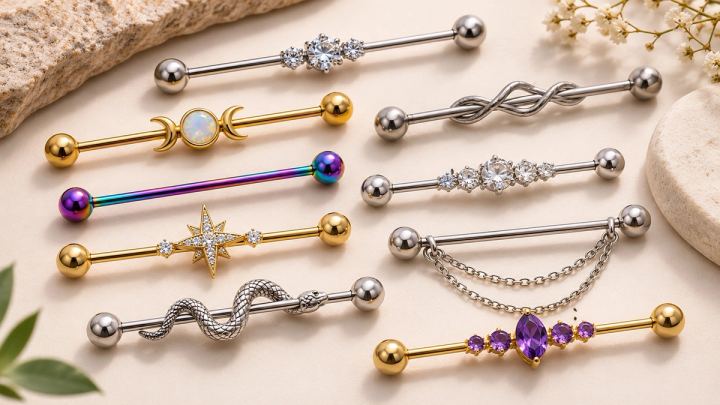
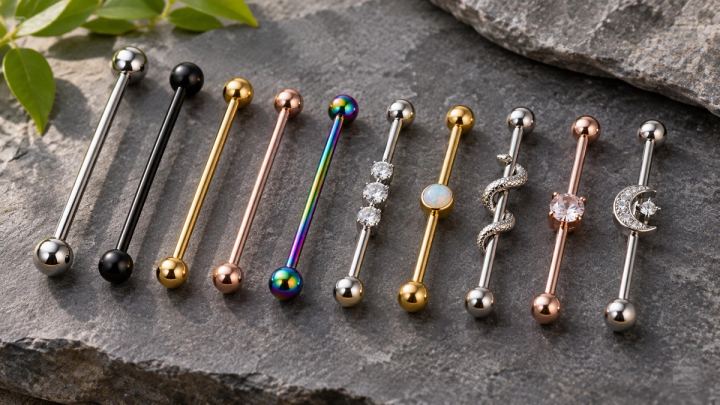
For an established industrial, choose the intended replacement with the professionally confirmed thickness and wearable length, suitable material documentation and appropriate end design. A bar sold as the same gauge may differ in length or attachments. A centre ornament may introduce contact with the middle of the ear even when the size labels match. Let a piercer examine the new piece, particularly if it is your first change or uses an unfamiliar attachment. The industrial barbell buying pillar explains how to assess the available styles. Avoid leaving both channels empty while comparing products, since even established piercings can narrow.
If you are worried about infection
A jewellery change is not a way to treat a suspected infection. Increasing pain, heat, swelling, discharge of pus or feeling generally unwell are reasons to seek prompt medical advice. The NHS advises that jewellery should remain in place if infection is suspected unless a doctor instructs otherwise. A piercer can help evaluate mechanical fit, while a healthcare professional is needed to assess and treat possible infection. If you have difficulty inserting jewellery into an established channel, do not force it. Seek assistance instead. The priority is to protect the placement and obtain the appropriate assessment, not to complete a cosmetic change.
After the first successful professional change
Ask the piercer to confirm the final gauge, wearable length, attachment type and material details and keep a record of the piece. You can use those specifications to compare future designs, while still considering the geometry of larger ends and central decorations. If you want to wear a chain or a sculptural bar, discuss its movement and clearance before adding it to your collection. There is no obligation to replace a well-fitting plain bar merely because the minimum healing period has passed. The everyday barbell guide offers practical criteria for selecting a regular piece, and the fresh cartilage jewellery guide covers the different priorities during healing.
Frequently asked questions
Can I change my industrial at a fixed month count?
No calendar date proves readiness. Have both channels and the intended jewellery assessed.
Should I change jewellery if I suspect infection?
Seek prompt medical help. Leave jewellery in unless a doctor advises removal.
Can a piercer change it before it is completely healed?
A professionally assessed fitting adjustment can be appropriate; that is different from an elective fashion change.
Sources and further reading
Industrial Piercing Jewellery Library
Complete guide
Main guides
- Best Industrial Piercing Barbells
- Industrial Piercing Jewellery Sizes and Measurements
- Industrial Piercing Jewellery Materials: Titanium, Gold and Steel
- Industrial Piercing Jewellery Styles and Designs
Supporting guides
- Best Industrial Barbells for Everyday Wear
- Industrial Piercing Jewellery for Sensitive Ears
- Industrial Piercing Barbell Length Guide
- Industrial Piercing Gauge Guide: 14G vs 16G
- How Should an Industrial Piercing Barbell Fit?
- Titanium Industrial Piercing Jewellery
- Gold Industrial Piercing Jewellery
- Stainless Steel Industrial Piercing Jewellery
- Industrial Piercing Chain Jewellery
- Minimalist Industrial Piercing Jewellery
- Decorative Industrial Barbells: Gems, Opals and Charms
- Vertical Industrial Piercing Jewellery
- Industrial Piercing Anatomy: Will Your Ear Accommodate a Barbell?