Can your ear support an industrial?
An industrial requires two compatible cartilage channels and clearance for the connecting jewellery. Whether your ear can accommodate a conventional bar cannot reliably be decided from ear size or an online photograph. Arrange an assessment with an experienced piercer.
The conventional arrangement
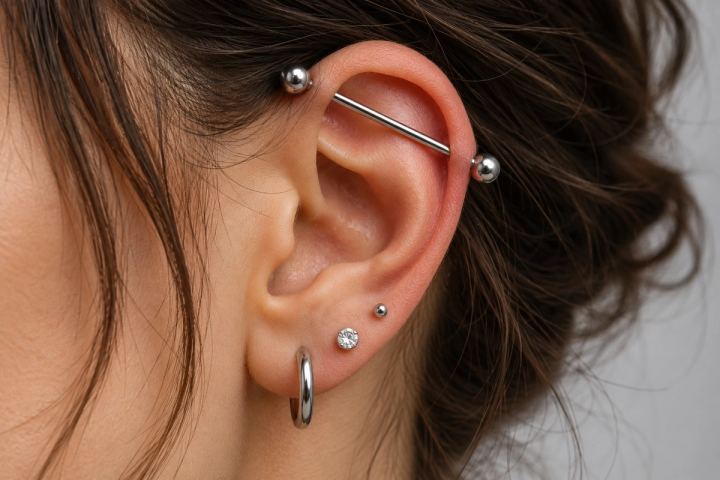
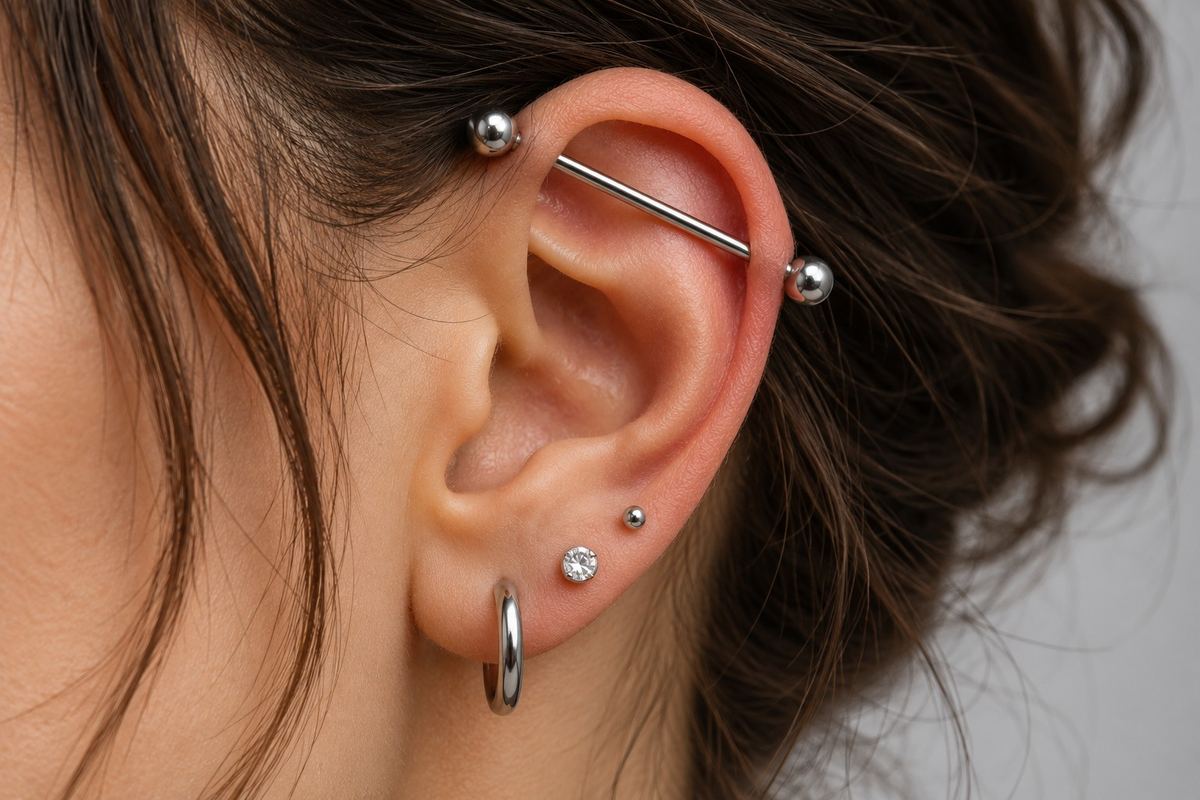
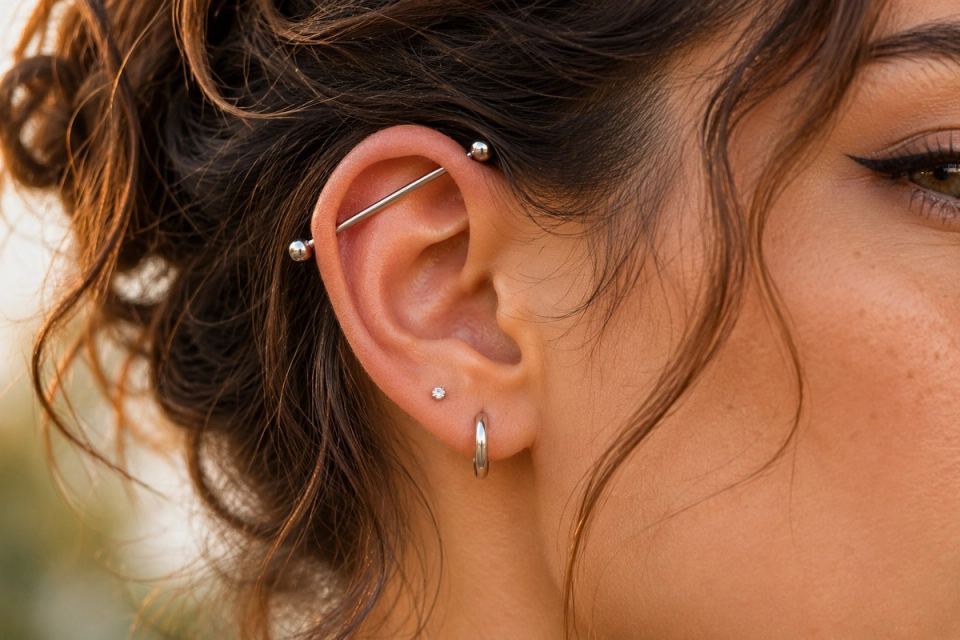
A conventional industrial generally connects a forward helix area with an outer helix area. The precise angle varies with anatomy. The two cartilage ridges need to provide suitable support for the channels, and the shaft needs space across the intervening ear. Two individually possible piercings do not automatically form a suitable connected arrangement. A bar that has to push sideways on one channel in order to enter the other is not a satisfactory solution. The industrial sizing and measurements guide explains what the jewellery dimensions describe, but the existence of an appropriate length does not establish that the placement itself is viable.
Why the middle of the ear matters
A rigid shaft may need to cross an area of the ear that projects farther forward in one person than in another. Viewed straight on, the available span can appear generous while a side view reveals that the shaft would press against the cartilage. This is one reason that photographs taken for style inspiration cannot establish eligibility. An experienced piercer can examine the ear from different angles and discuss the space required for the planned arrangement. If the geometry does not allow appropriate clearance, choosing a longer bar does not necessarily solve the issue. The industrial fit guide explains related considerations for jewellery already in an established placement.
Avoid self-assessment shortcuts
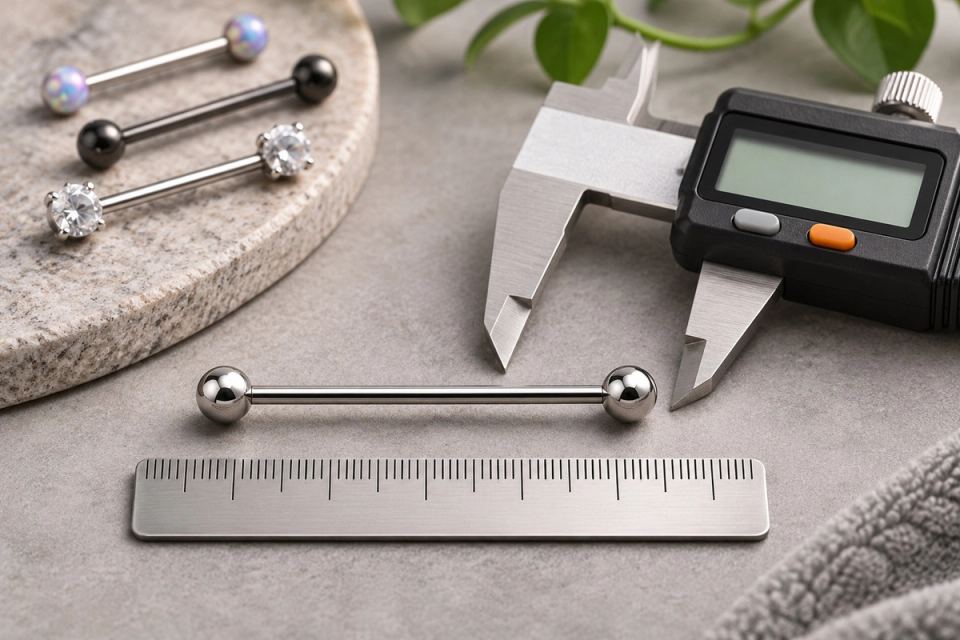
People often compare their ears with photographs of industrial piercings or try to estimate a bar length by measuring the outer edges. Those methods do not provide the information a piercer needs about channel orientation and clearance. It is particularly unreliable to assume that the same placement will work because another ear looks similar. Ear contours vary in three dimensions, and minor differences in the position of a ridge can matter to a rigid connection. Treat visual references as a description of the look you prefer, not a basis for marking, piercing or choosing initial jewellery yourself. A professional can explain the assessment and any limitations.
When a different arrangement may be appropriate
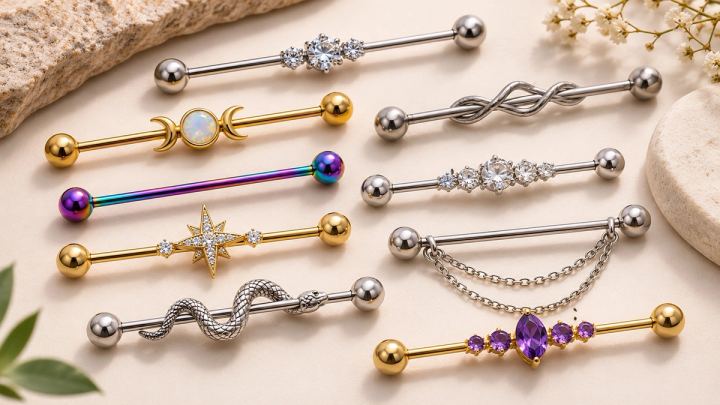
A qualified piercer may be able to discuss alternative placements or jewellery constructions when a conventional industrial is unsuitable. These might achieve a related visual effect without relying on the exact same rigid geometry. The alternatives depend on the individual ear and the professional's assessment. A flexible chain connection, for example, behaves differently from one straight shaft; it should not be assumed to provide the same arrangement or healing plan. Our chain jewellery guide explains the design distinction, and the vertical industrial guide discusses another family of placements. Neither is a universal workaround for an ear that cannot support a conventional industrial.
Consultation questions worth asking
Explain whether you want a traditional straight line, a more vertical look or eventually a particular decorative centrepiece. Ask the piercer to describe which areas of your ear would be involved, why they consider the placement appropriate or inappropriate, and what the first piece would need to accommodate. Discuss relevant daily activities such as helmet use, headsets and sleeping habits. A useful consultation should include a realistic discussion of follow-up and potential fitting changes, not just a choice of jewellery colours. If the piercer advises against a particular placement, ask about alternatives rather than pressing for the original design.
Anatomy remains relevant after the piercing
Even once the channels are established, the clearance that allowed the original piece to fit still matters. A bar with a larger centre setting or different terminal ends can interact with the ear differently. Keep the professional fitting information for future purchases and arrange a review if the jewellery begins to press against the cartilage or becomes uncomfortable. If you notice signs that may indicate infection, seek prompt medical advice rather than attempting to alter the placement. The complete industrial jewellery guide connects the anatomical decision to material, size and style, and the jewellery change guide covers professional assessment before elective replacement.
Frequently asked questions
Can a large ear always accommodate an industrial?
No. The relationship between the specific cartilage folds and the shaft's clearance matters more than overall ear size.
Can one photograph establish whether I am suitable?
No. A professional assessment of the ear from different angles is needed.
Sources and further reading
Industrial Piercing Jewellery Library
Complete guide
Main guides
- Best Industrial Piercing Barbells
- Industrial Piercing Jewellery Sizes and Measurements
- Industrial Piercing Jewellery Materials: Titanium, Gold and Steel
- Industrial Piercing Jewellery Styles and Designs
Supporting guides
- Best Industrial Barbells for Everyday Wear
- Industrial Piercing Jewellery for Sensitive Ears
- Industrial Piercing Barbell Length Guide
- Industrial Piercing Gauge Guide: 14G vs 16G
- How Should an Industrial Piercing Barbell Fit?
- Titanium Industrial Piercing Jewellery
- Gold Industrial Piercing Jewellery
- Stainless Steel Industrial Piercing Jewellery
- Industrial Piercing Chain Jewellery
- Minimalist Industrial Piercing Jewellery
- Decorative Industrial Barbells: Gems, Opals and Charms
- Vertical Industrial Piercing Jewellery
- When Can You Change Industrial Piercing Jewellery?