What does stainless steel tell you?
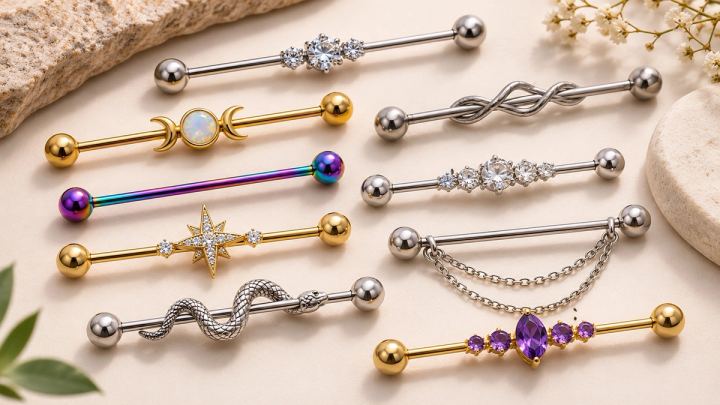
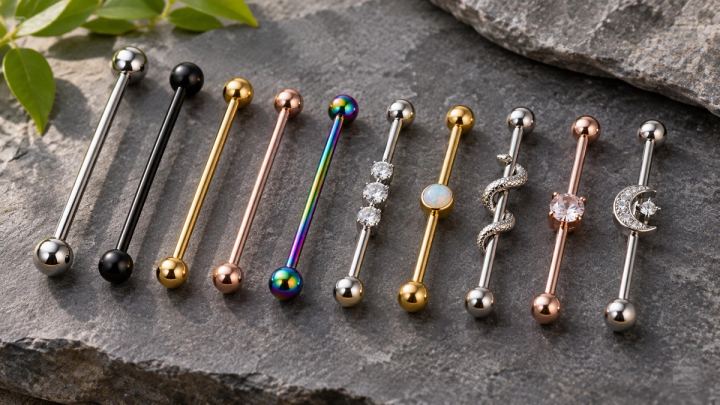
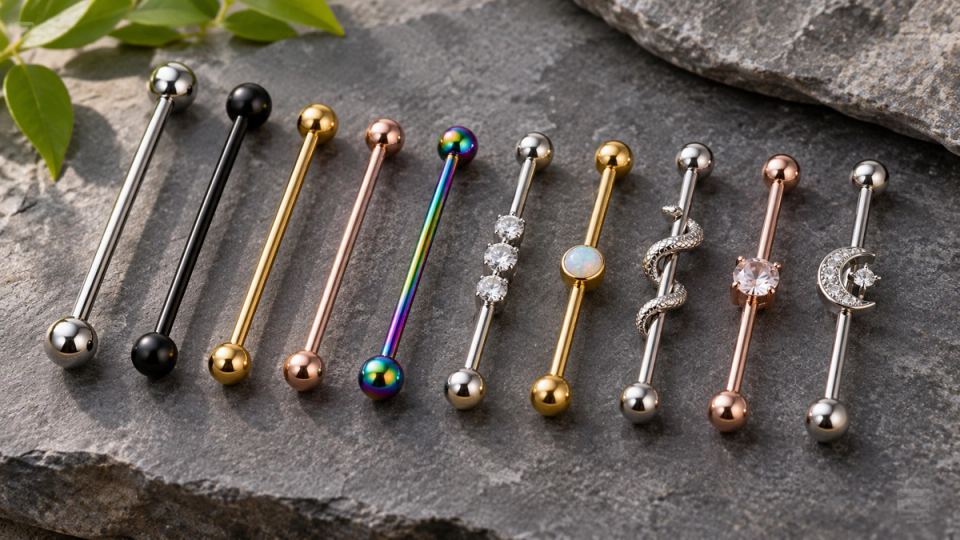
Stainless steel industrial barbells are available in many decorative forms, but stainless steel and surgical steel are broad labels. Confirm the exact alloy, finish and fitted dimensions, particularly when nickel sensitivity is a concern.
What stainless steel actually describes
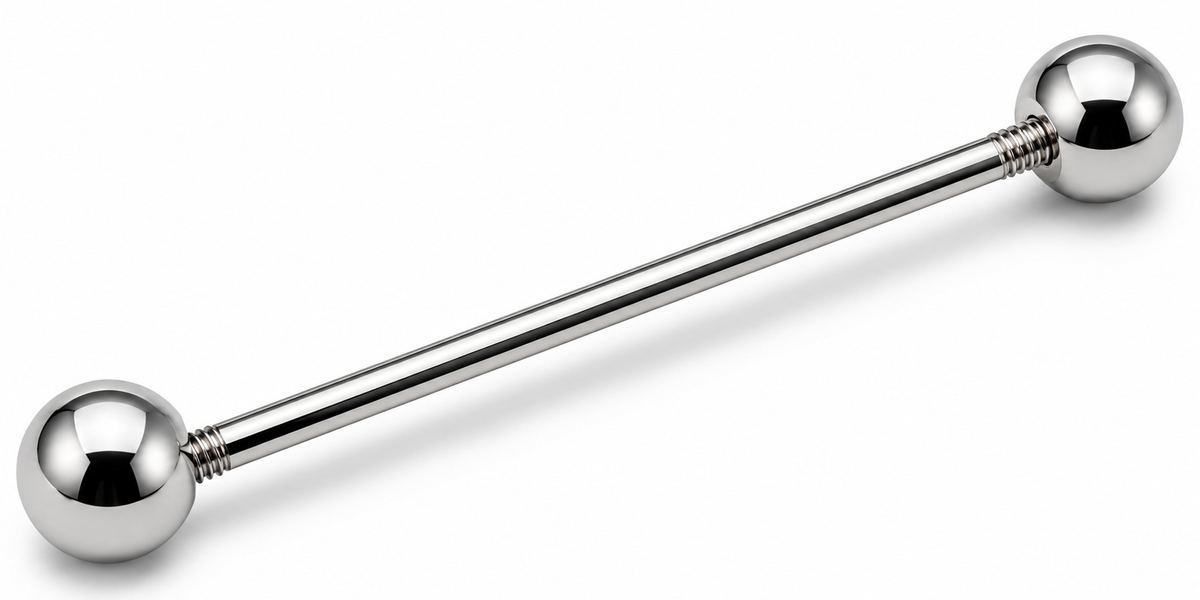
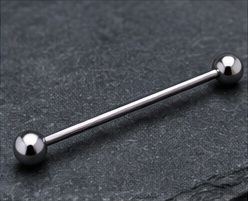
Stainless steel is a family of alloys designed with corrosion resistance in mind. The composition and manufacturing specification vary between grades. For body jewellery, the distinction matters because a bar is worn through tissue rather than simply placed on the surface. The label surgical steel is commonly used, but it does not independently establish a particular grade or demonstrate that the completed item meets the relevant quality requirements. In its initial jewellery guidance, the Association of Professional Piercers describes specific steel standards, including ASTM F138. Ask for evidence behind any such claim. The industrial materials pillar compares the documentation expected for steel, titanium and gold.
Reading 316L and ASTM claims
A merchant may identify 316L stainless steel in the title or product handle. That is more informative than saying silver-coloured metal, but it is not the same as demonstrating a specific ASTM material standard for the jewellery. Other listings may explicitly state ASTM F138, which is a more specific supplier claim and still merits supporting documentation. For example, the supplied OUFER feed describes its Blue Butterfly and Magic Broom designs using ASTM F138 language, whereas the simple chain and star listings identify 316L in their product destinations. These examples illustrate different levels of merchant description rather than independent verification of grade or suitability.
Nickel is an important distinction
Some stainless steel alloys contain nickel. Whether a particular individual tolerates a documented piece is not something a shopping guide can guarantee. If you have reacted to jewellery before or have a known allergy, discuss the actual alloy and your history with a professional before choosing a replacement. A broad promise such as non-toxic or hypoallergenic should not replace precise material information. It is also important to rule out poor fit and friction, because those can create irritation independently of composition. The sensitive ears guide considers the different possible issues and explains why another piece of jewellery is not always the appropriate next step.
Compare the finished piece
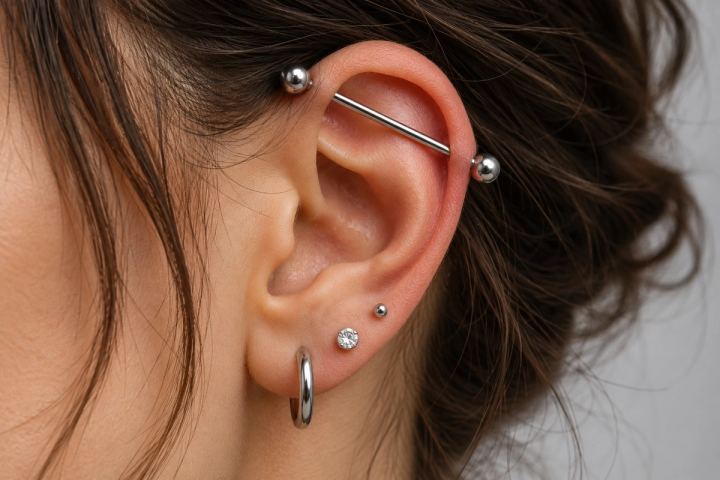
Steel can have a very bright polished appearance, but product photography alone does not prove that the shaft and its connections have been manufactured to an appropriate finish. Ask about threading and the quality of the surfaces that pass through the channels. Inspect the practical shape of decorations, especially centrally mounted ornaments with a raised backing or protruding edges. An industrial made with a suitable documented alloy can still be an unsuitable fit if the bar presses against the ear or an end is too bulky. The industrial fit guide explains why the full geometry of the assembly needs to work with both channels.
How steel compares with titanium
For comparable dimensions, steel is typically denser than titanium. That difference can matter when a bar is long or when you are considering a substantial ornamental centre. The actual finished weight also depends on the components, so avoid generalising from material alone. A plain documented steel piece may be less cumbersome than a highly decorated bar with a titanium shaft. If you prefer a lighter arrangement or want to discuss nickel exposure, see the titanium industrial guide. Ask a piercer to help you compare pieces that meet your fitting requirements rather than assuming the two material names settle every practical issue.
Choose catalogue examples with appropriate limitations
The product choices on this page demonstrate a few steel-labelled decorative styles in the merchant's supplied catalogue. They are not independent material tests or guarantees of long-term wear, and the feed does not establish complete fitting measurements for all variants. Before ordering, confirm the wearable length and gauge, documentation for the shaft and components, and the shape of the setting. If the piercing is healing, let the piercer select and assess initial jewellery instead of ordering a decorative product from a catalogue. For an established industrial, the barbell buying guide provides a comparison of plain, compact and more elaborate styles.
We may earn a commission through affiliate links. These examples are selected from supplied merchant specifications, not independently tested. Confirm current price, availability, material and fit before buying.
OUFER catalogue examples for established piercings

OUFER Blue Butterfly Industrial Barbell
A blue butterfly centrepiece. The merchant claims ASTM F138 stainless steel in the feed and identifies 14G in the destination. Confirm documentation, usable length and the depth of the ornament.
Check price at Oufer
OUFER Moon and Sun Industrial Barbell
The merchant describes a 14G celestial design made with surgical stainless steel. The exact grade and wearable length are not established in the supplied feed.
Check price at Oufer
OUFER Simple Chain Industrial Barbell
A chain-decorated industrial identified as 14G, with 316L stainless steel in the merchant destination. Confirm shaft length, chain dimensions and material documentation.
Check price at Oufer
OUFER Star Industrial Barbell
The merchant identifies a 14G star design and lists 316L stainless steel in its destination. Verify the wearable length and clearance around the star.
Check price at Oufer
WICKED × OUFER Magic Broom Industrial Barbell
The feed describes a 38 mm sculpted broom design and claims ASTM F138 stainless steel. Confirm whether the stated length is wearable length, the gauge and the ornament's clearance.
Check price at OuferFrequently asked questions
Is every 316L bar ASTM F138 certified?
No. A broad alloy description does not independently establish a specific material standard.
Is stainless steel always unsuitable for sensitive ears?
No single answer applies to every individual and alloy. Discuss your history and the documented material with a professional.
Sources and further reading
Industrial Piercing Jewellery Library
Complete guide
Main guides
- Best Industrial Piercing Barbells
- Industrial Piercing Jewellery Sizes and Measurements
- Industrial Piercing Jewellery Materials: Titanium, Gold and Steel
- Industrial Piercing Jewellery Styles and Designs
Supporting guides
- Best Industrial Barbells for Everyday Wear
- Industrial Piercing Jewellery for Sensitive Ears
- Industrial Piercing Barbell Length Guide
- Industrial Piercing Gauge Guide: 14G vs 16G
- How Should an Industrial Piercing Barbell Fit?
- Titanium Industrial Piercing Jewellery
- Gold Industrial Piercing Jewellery
- Industrial Piercing Chain Jewellery
- Minimalist Industrial Piercing Jewellery
- Decorative Industrial Barbells: Gems, Opals and Charms
- Vertical Industrial Piercing Jewellery
- Industrial Piercing Anatomy: Will Your Ear Accommodate a Barbell?
- When Can You Change Industrial Piercing Jewellery?