How do you choose barbell length?
The length to compare when buying a straight industrial barbell is usually the usable shaft between its ends. There is no single correct length for every ear. Ask a piercer to confirm your established dimensions and clearance before buying.
Identify the measuring convention
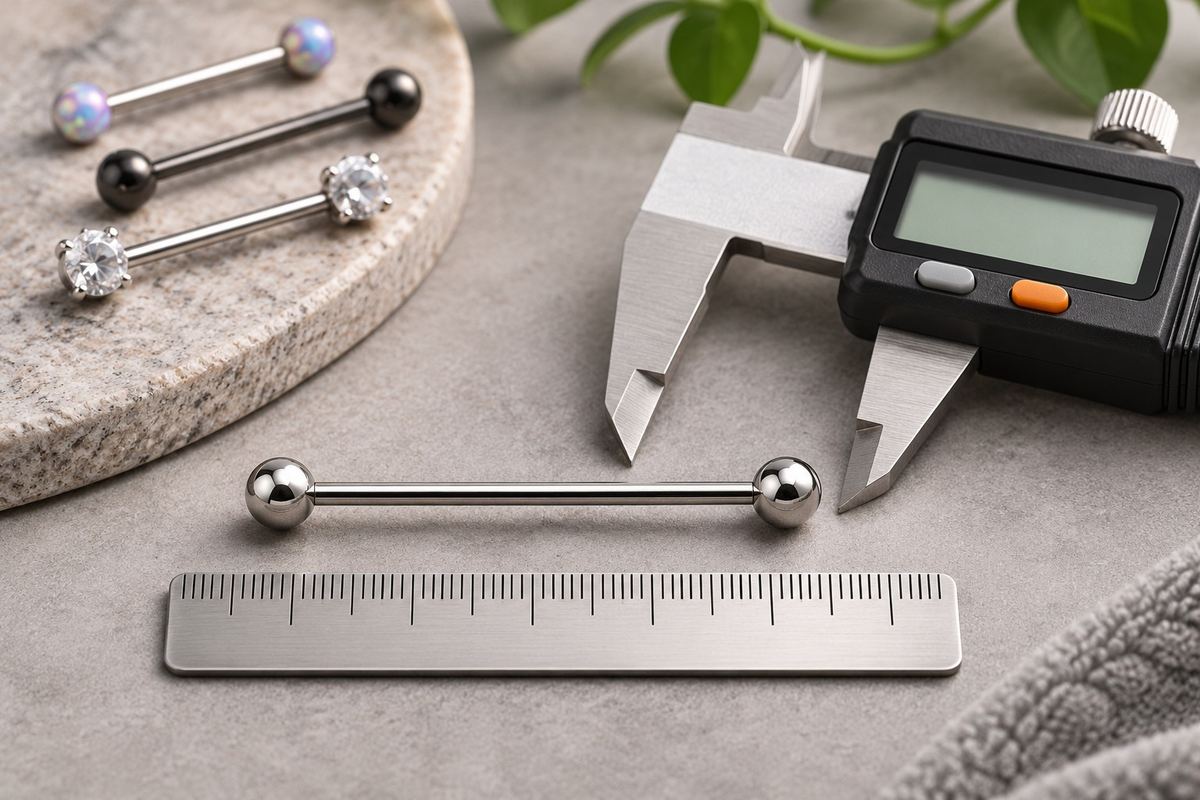
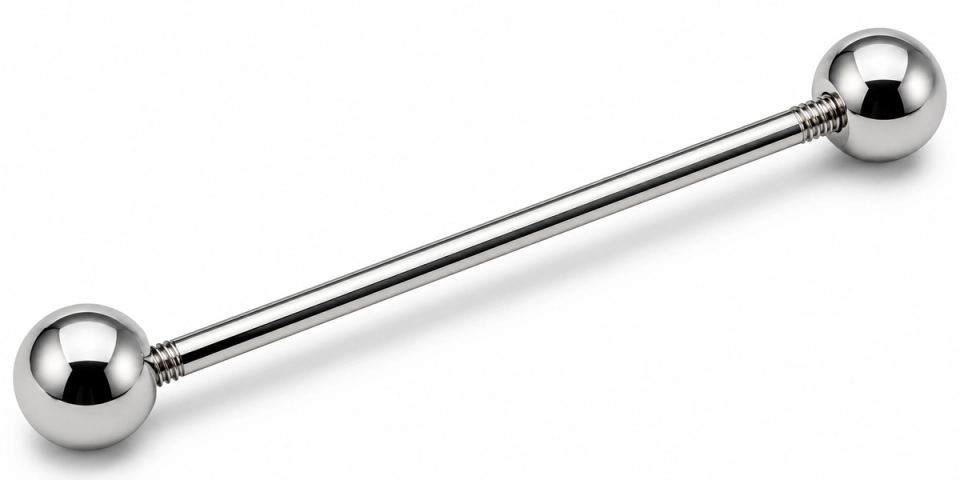
The conventional reference for a straight barbell is the wearable shaft length between the inner faces of the removable ends. A supplier may also publish the overall length from one outside tip to another. These figures are different, especially when decorative ends are substantial. A listing with a dimension diagram is often easier to interpret than a title alone. If a manufacturer states a number without labelling the endpoints, ask what the number includes. Do not compare the overall length of a new piece with the wearable length of the existing one. The industrial sizes and measurements guide explains how length interacts with gauge, end shape and the overall fitting.
A numerical example without fitting advice
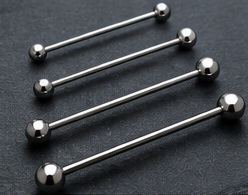
Imagine a straight shaft described as 35 mm long between its ends and fitted with two rounded balls of 4 mm outside diameter. Its complete silhouette will extend beyond the 35 mm shaft at both ends. Another seller could describe a similar-looking piece by the total outside dimension, making two listings appear to disagree when they use different conventions. The example is illustrative, not a recommended bar size. The actual assembled measurement depends on the way the attachments seat. It is useful to compare technical drawings at the same scale, particularly when one item uses a decorative terminal rather than a ball.
Why ear width is not enough
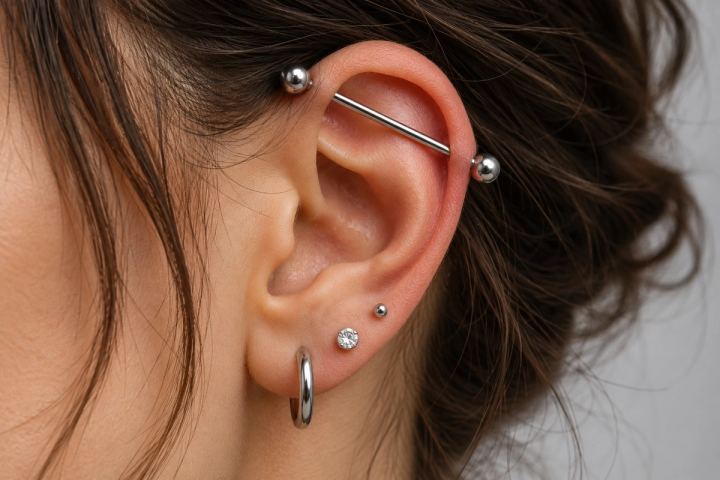
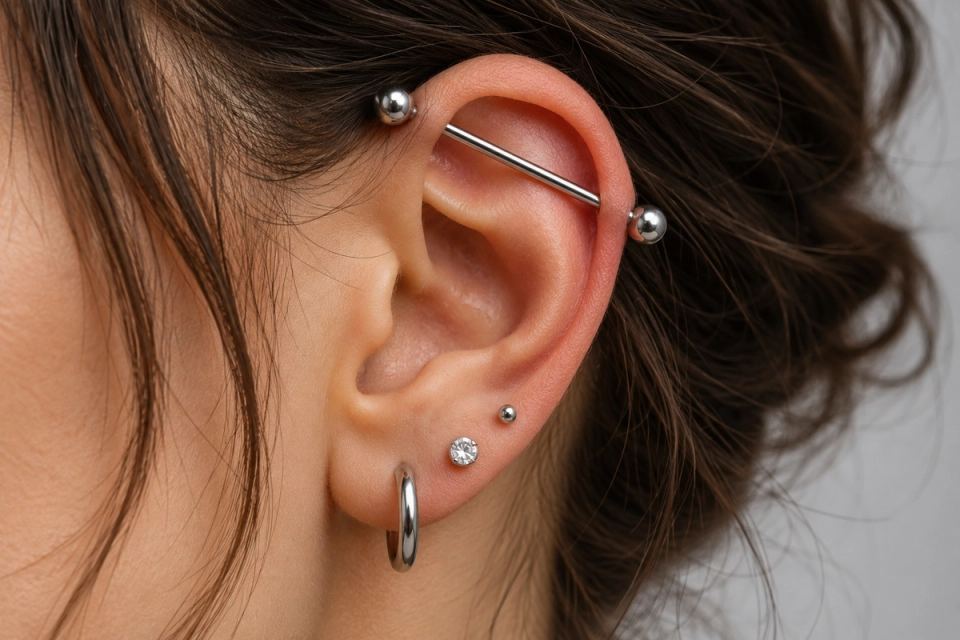
Measuring from one edge of an ear to the other does not establish the length required for a conventional industrial. The channels have a particular angle and pass through two areas of cartilage, which occupy part of the shaft. There also needs to be sufficient room for the ends without inappropriate pressure. Two ears with similar outside dimensions can have differently positioned folds. A bar that appears to span the right distance may still touch the flat cartilage between the channels. Our industrial anatomy guide explains the relationship between placement and clearance. Leave this assessment to a qualified piercer.
The initial bar may not be the final one
Initial jewellery may be selected with space for swelling and other healing considerations. Later, a piercer may reassess the fit and decide that a different length is appropriate. That process is not the same as shopping for the shortest bar available. An established bar needs to be compatible with the placement under normal conditions, including the shape of the ends. If your piercing is still healing, arrange a review before making a change. Record the dimensions after the professional confirms the fit rather than treating an early measurement as permanent. Our when to change jewellery guide discusses how professional adjustments differ from elective replacements.
Consider occupied space as well as shaft length
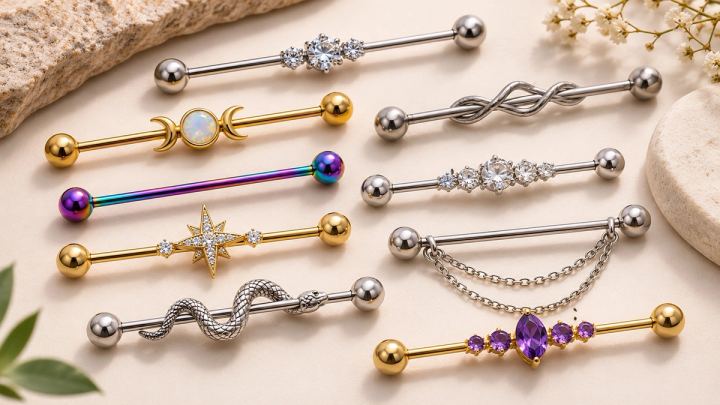
A bar may have enough nominal length but still be unsuitable if a large centre decoration sits against the ear or if a bulky end presses into a neighbouring fold. A chain attachment can also take up some of the available shaft near an end. For complex pieces, ask about the position and depth of every fixed component. A photograph taken from the front is not enough to judge clearance. The barbell fitting guide covers how to recognise potential problems and when to have them assessed. The amount of available space is specific to the design and placement together.
Make your next purchase easier
Keep a record of your confirmed gauge, wearable length, end shape, attachment type and material. If a seller lists a length in inches, convert it into millimetres and verify the convention. If you are comparing a number of similar bars, eliminate those with missing specifications before deciding by appearance. Some merchants sell the same design in several variants, so confirm that the selected variant rather than the parent product has the necessary measurements. A statement that an item is an industrial barbell does not mean that it matches your industrial. The buying guide puts the measurements into the context of product choices.
We may earn a commission through affiliate links. These examples are selected from supplied merchant specifications, not independently tested. Confirm current price, availability, material and fit before buying.
OUFER catalogue examples for established piercings

WICKED × OUFER Magic Broom Industrial Barbell
The feed describes a 38 mm sculpted broom design and claims ASTM F138 stainless steel. Confirm whether the stated length is wearable length, the gauge and the ornament's clearance.
Check price at OuferFrequently asked questions
Is 38 mm standard?
It is a commonly encountered listed length, not a universal fit.
Does the bar need to sit flush against the ear?
A conventional industrial shaft should not be forced against the intervening cartilage. Have a piercer assess clearance.
Sources and further reading
Industrial Piercing Jewellery Library
Complete guide
Main guides
- Best Industrial Piercing Barbells
- Industrial Piercing Jewellery Sizes and Measurements
- Industrial Piercing Jewellery Materials: Titanium, Gold and Steel
- Industrial Piercing Jewellery Styles and Designs
Supporting guides
- Best Industrial Barbells for Everyday Wear
- Industrial Piercing Jewellery for Sensitive Ears
- Industrial Piercing Gauge Guide: 14G vs 16G
- How Should an Industrial Piercing Barbell Fit?
- Titanium Industrial Piercing Jewellery
- Gold Industrial Piercing Jewellery
- Stainless Steel Industrial Piercing Jewellery
- Industrial Piercing Chain Jewellery
- Minimalist Industrial Piercing Jewellery
- Decorative Industrial Barbells: Gems, Opals and Charms
- Vertical Industrial Piercing Jewellery
- Industrial Piercing Anatomy: Will Your Ear Accommodate a Barbell?
- When Can You Change Industrial Piercing Jewellery?