What is an industrial piercing and which jewellery fits?
A well-fitted industrial is a pair of aligned cartilage piercings connected by jewellery chosen for the shape of the ear. Start with anatomy, then size and documented material. Decorative designs are a later choice for established piercings, not an upgrade to make while the channels are healing.
What makes an industrial different
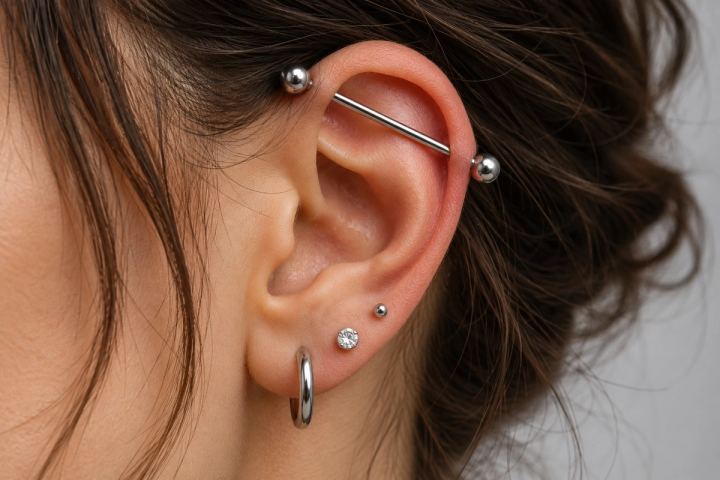
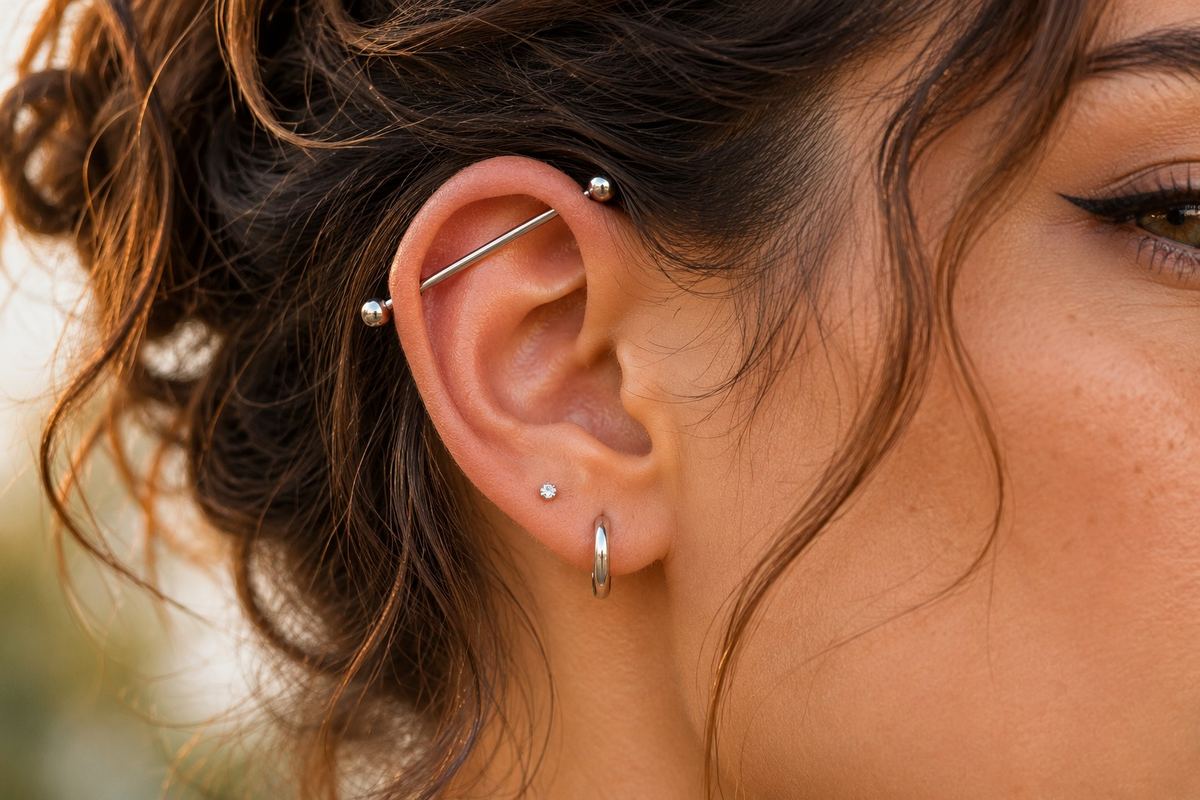
A conventional industrial generally runs from the forward helix to the outer helix, although the exact angle depends on the person's ear. The bar is straight, not because straight bars look better than curved ones, but because both channels have to accommodate a common axis. The ridge at each end must support the placement, and the flat area between them needs clearance. A bar that looks straight in a photograph may still touch the skin along its middle when viewed from another angle. That is a fitting issue, not a feature to accept as the price of getting the look. An experienced piercer should examine your ear from several perspectives before agreeing to a placement. Our industrial anatomy guide explains why photographs of another ear cannot settle this question.
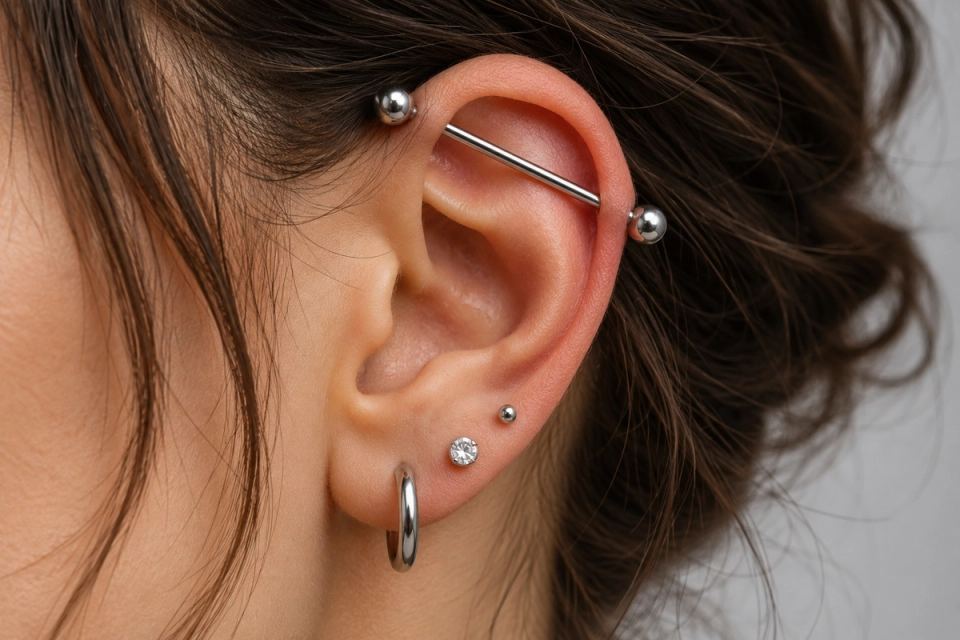
Choosing a straight barbell
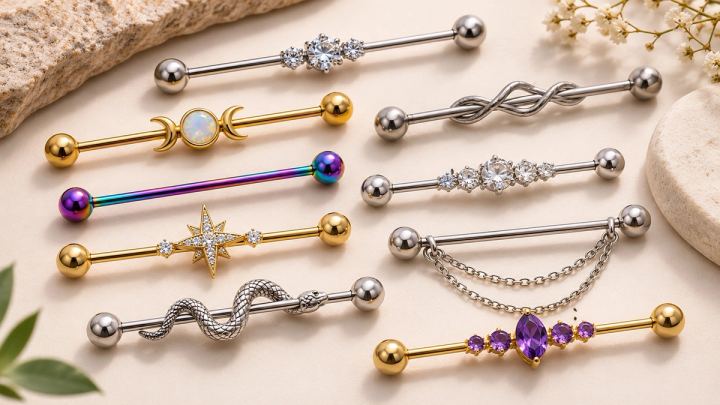
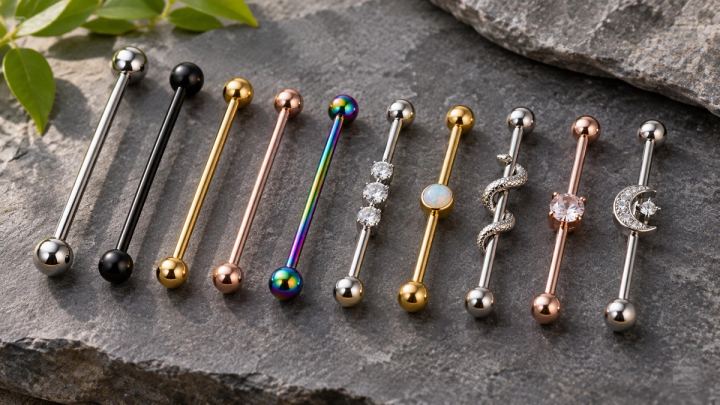
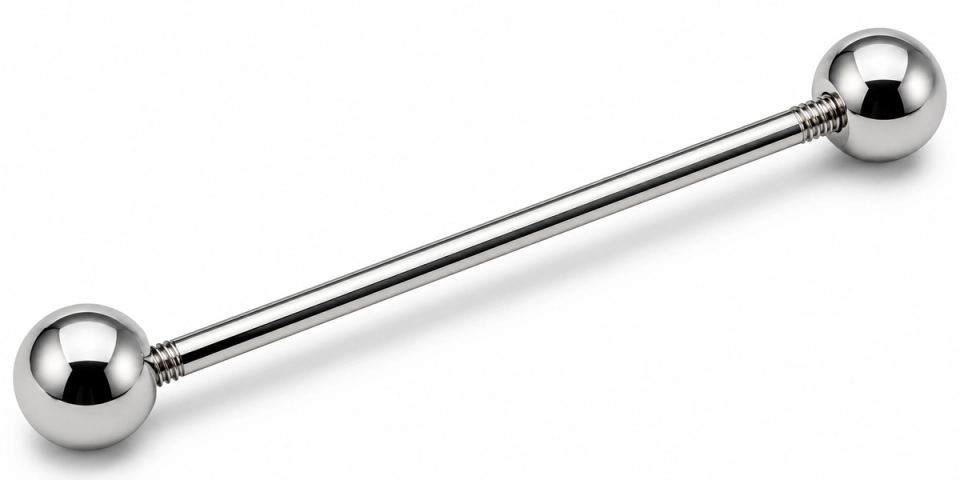
A plain bar with small rounded ends is the visual baseline against which more elaborate designs can be assessed. The two terminal ends need enough clearance to sit comfortably, while the central shaft should remain unobstructed. Once a piercing is established, a decorative centrepiece can completely change the character of the ear without requiring another piercing. The important distinction is between a decorative bar that still offers the necessary wearable span and one whose design occupies that space. A heart in the centre of a bar, for example, might have a backing that extends closer to the skin than the shaft does. The barbell buying guide compares specific design types rather than treating every long bar as equivalent. There is also an existing overview of industrial jewellery in our wider ear collection.
Understand the numbers before shopping
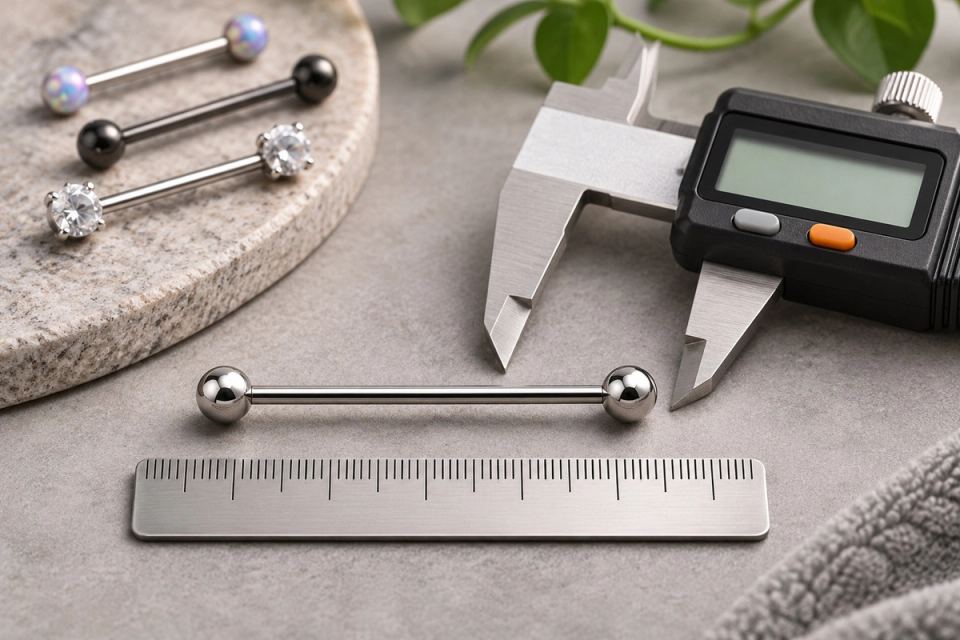
Length and gauge are independent specifications. The usual way to describe a straight barbell is by the thickness of the shaft and the usable distance between the ends. A 14 gauge shaft is approximately 1.6 mm thick; 16 gauge is approximately 1.2 mm. Neither number tells you how wide your ear is. Even two people with the same gauge and apparently similar ear shape may need different lengths. A supplier's use of the word standard does not guarantee that its bar suits your ear. Ask your piercer to record the actual size you wear after any necessary adjustment. The industrial sizing guide covers the difference between wearable length, overall length, gauge and end dimensions.
Material, finish and construction
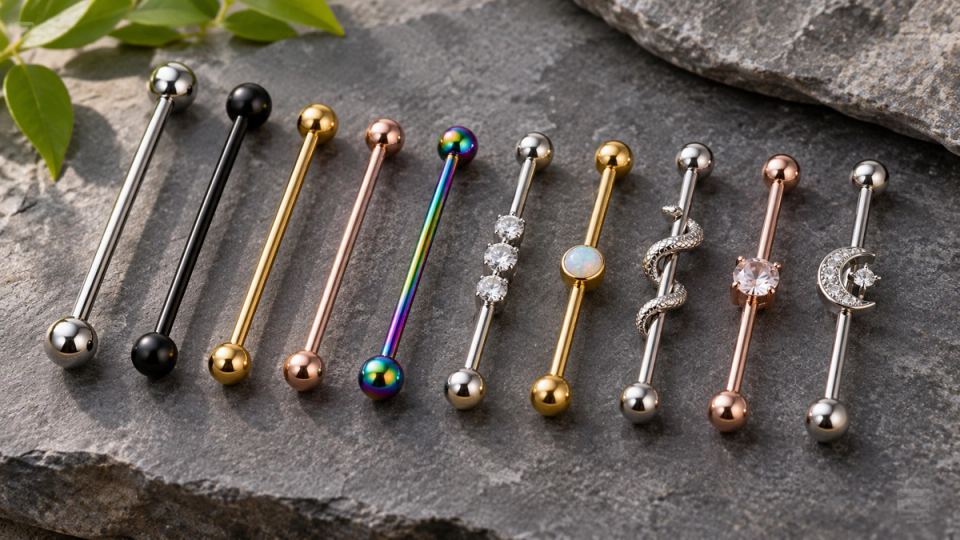
The material name tells only part of the story. A reliable description identifies the alloy or grade, not just the colour or the word surgical. Smooth finishing and suitable construction are also important because the jewellery passes through tissue. A gold-coloured bar could be plated steel, anodised titanium or a gold alloy, and each requires a different assessment. Ask about documentation for the shaft and the components that contact the piercing; the fact that a centre charm is made of a particular metal does not establish what the shaft is made from. Compare the options in our industrial jewellery materials guide, especially if you have previously reacted to earrings. An established piercing offers greater styling flexibility, but that does not make poorly made jewellery a sensible purchase.
Build the style around your ear
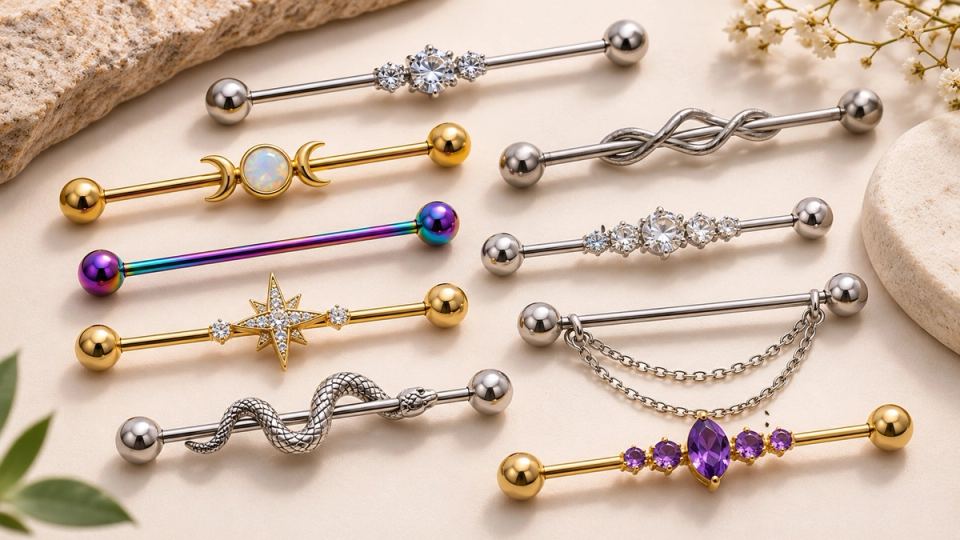
Industrial jewellery creates a visible line, so it can work as a focal point with little else on the ear. Alternatively, a fine chain or a gemstone centre can echo other pieces in a curated arrangement. Start with the positions of existing piercings, not with a set of products you feel obliged to wear together. The weight and movement of a long chain are different from those of a plain bar. If your daily life includes helmets, headphones or frequent hair styling, consider whether an elaborate centre will be practical. In the industrial styles and designs guide, we distinguish minimalist pieces, celestial motifs, decorative stones and chain arrangements. For ideas about coordinating the rest of the ear, see building an ear stack.
Plan for healing and later changes
Choosing your eventual look before the appointment can help you explain what you want, but the first piece should be selected with healing in mind. Cartilage does not follow a shopping calendar. A piercing may look quiet while the channel is still vulnerable. Arrange a professional review of the fit and let your piercer decide whether an adjustment or jewellery change is appropriate. Changes made to accommodate swelling and later professional downsizing are different from swapping jewellery for fashion. When you are considering the latter, consult our guide to changing industrial jewellery. Seek prompt medical help if infection is suspected, rather than trying to solve pain or swelling by buying a different bar.
We may earn a commission through affiliate links. These examples are selected from supplied merchant specifications, not independently tested. Confirm current price, availability, material and fit before buying.
OUFER catalogue examples for established piercings

OUFER Moon and Sun Industrial Barbell
The merchant describes a 14G celestial design made with surgical stainless steel. The exact grade and wearable length are not established in the supplied feed.
Check price at Oufer
OUFER Simple Chain Industrial Barbell
A chain-decorated industrial identified as 14G, with 316L stainless steel in the merchant destination. Confirm shaft length, chain dimensions and material documentation.
Check price at Oufer
OUFER Blue Butterfly Industrial Barbell
A blue butterfly centrepiece. The merchant claims ASTM F138 stainless steel in the feed and identifies 14G in the destination. Confirm documentation, usable length and the depth of the ornament.
Check price at OuferFrequently asked questions
Can everyone get an industrial?
No. The relationship between the cartilage ridges and the clearance across the ear varies. A professional can discuss alternative placements if the conventional bar is unsuitable.
Can I order my first bar online?
Let a qualified piercer select and fit the initial jewellery. Online shopping is easier once your placement and established size are known.
What does industrial mean?
It describes a connected piercing arrangement, commonly two cartilage channels joined by a single straight bar. It does not imply a particular metal.
Sources and further reading
Industrial Piercing Jewellery Library
Complete guide
Main guides
- Best Industrial Piercing Barbells
- Industrial Piercing Jewellery Sizes and Measurements
- Industrial Piercing Jewellery Materials: Titanium, Gold and Steel
- Industrial Piercing Jewellery Styles and Designs
Supporting guides
- Best Industrial Barbells for Everyday Wear
- Industrial Piercing Jewellery for Sensitive Ears
- Industrial Piercing Barbell Length Guide
- Industrial Piercing Gauge Guide: 14G vs 16G
- How Should an Industrial Piercing Barbell Fit?
- Titanium Industrial Piercing Jewellery
- Gold Industrial Piercing Jewellery
- Stainless Steel Industrial Piercing Jewellery
- Industrial Piercing Chain Jewellery
- Minimalist Industrial Piercing Jewellery
- Decorative Industrial Barbells: Gems, Opals and Charms
- Vertical Industrial Piercing Jewellery
- Industrial Piercing Anatomy: Will Your Ear Accommodate a Barbell?
- When Can You Change Industrial Piercing Jewellery?