EAR PIERCING JEWELLERY
Choose a tragus piece with suitable wearable length, a low-profile end and clearance near the ear canal. This guide focuses on practical selection, fit and the differences between jewellery designs.
Best Tragus Earrings
Choose a tragus piece with suitable wearable length, a low-profile end and clearance near the ear canal.
Tragus anatomy
The tragus is the small cartilage projection near the ear canal. Its thickness and angle differ between people. A piercer should assess the usable space on both sides.
The cartilage earring guide puts tragus fitting in context with other cartilage placements; our flat-back earring guide explains compatible posts and compact ends.
Stud versus hoop
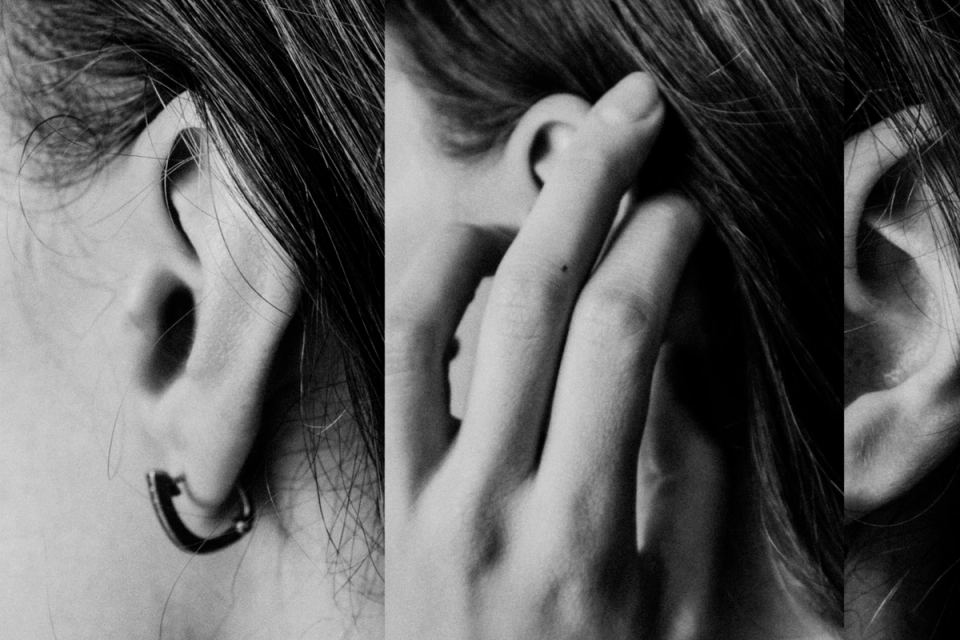
A disc-backed stud can be practical when fitted correctly. A hoop may suit a healed channel with suitable angle and clearance. Decorative ends should not press against the canal or adjacent tissue.
Earbuds and daily contact
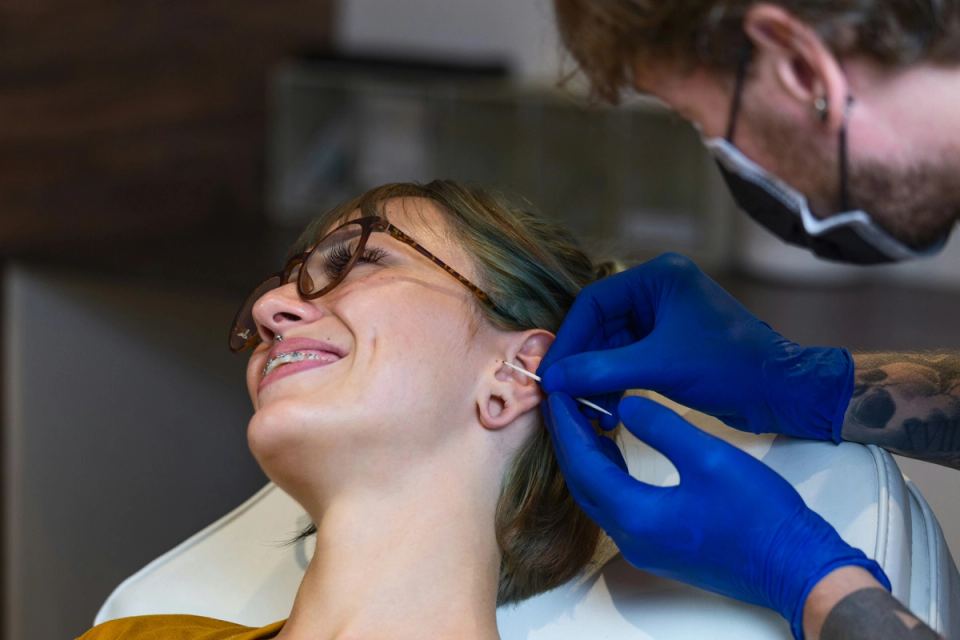
Earbuds can put pressure on the area even if the jewellery looks small. Avoid contact while healing and reassess fit if a healed placement becomes irritated.
The ear canal changes the fit question
The tragus is the small cartilage projection near the opening of the ear canal. Jewellery placed there occupies space close to the area where earbuds, hearing devices or cleaning habits may bring objects into contact with the ear. The front decoration can be visually small while its backing projects further into the surrounding area. A qualified piercer can evaluate how a particular post and disc rest on the individual tragus.
If you regularly use earbuds, do not assume a fitted stud will make their use safe or comfortable during healing. Avoid contact that disturbs the piercing and discuss alternatives with the piercer. After healing, the particular shape of an earbud and its angle of insertion matter. A device with a large outer housing may contact the decorative front even if another earbud leaves it clear. Check the actual device instead of relying on the jewellery's advertised profile.
For a comparison with other cartilage placements, read our cartilage buying guide. If a disc-backed piece is a candidate, consult our flat-back guide before selecting the components.
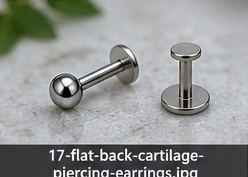
Assess stud fronts and rings differently
A compact bezel or plain disc may present fewer projecting edges than a large floral cluster. The setting's height and width should be considered separately. For a stud, check the wearable post length and the diameter of the backing. A very short post is not desirable if it presses into the tissue, and a large backing might occupy space that is needed near the canal.
A ring follows a different path around the tragus and may move when a nearby object contacts it. Before choosing one for a healed placement, ask a piercer whether the channel angle and available space are appropriate. Compare the inner diameter rather than the outside diameter shown in a product photograph. A ring that is marketed as tragus jewellery still needs to be assessed for the individual ear.
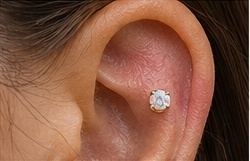
Shop with component compatibility in mind
An interchangeable decorative front can be an efficient way to vary a healed tragus design if it is compatible with an existing well-fitted post. Confirm that the listing includes the required part, and check the manufacturer's system rather than mixing components of superficially similar gauge. Choose a smooth finish and documented material for the shaft that contacts tissue. If you notice recurring pressure, obtain a fit review instead of repeatedly experimenting with different tops or shrinking the post length.
If you wear an in-ear hearing device, the position and fit of its housing can be especially important. Bring it to a fitting discussion and explain how often it must be worn. Do not remove a medically necessary device without appropriate advice simply to accommodate a piercing. If the device and jewellery cannot coexist without repeated pressure, a different design or placement may be the better long-term decision. The priority is a fit that works with the person's actual needs.
We may earn a commission through affiliate links. These examples use OUFER's listed specifications, not hands-on tests. Confirm current price, availability, material evidence and fit before buying.
OUFER product options to compare

14K Gold CZ Tragus Flower Cartilage Earring
A flower-shaped gemstone stud listed for the tragus. Confirm exact post length, backing construction and the gold specification before purchasing.
Check price at Oufer
14K Gold Disc Threadless Cartilage Nose Stud – Top only / 1.5 mm
This exact variant is a 1.5 mm decorative top only, not a complete stud. Confirm compatible threadless post, gauge, length and material separately.
Check price at OuferBefore ordering: a practical fit checklist
| Check | What to confirm |
|---|---|
| Placement | Channel angle and surrounding cartilage clearance |
| Gauge | Matches the existing channel; do not force a thicker shaft |
| Length or diameter | Wearable post length or inside hoop opening, measured for your anatomy |
| Material | Documented alloy and finish of each component |
| Closure | Compatible ends and secure, smooth assembly |
For more detail see Ear Piercing Jewellery Size Guide and Best Jewellery for a Fresh Cartilage Piercing.
Frequently asked questions
What is the most important thing to check?
Choose a tragus piece with suitable wearable length, a low-profile end and clearance near the ear canal.
Can I use a standard size chart to order?
Use a chart to understand measurements, not to determine your personal fit. A piercer can measure the channel and surrounding tissue.
Can I change jewellery while my piercing is healing?
Leave initial jewellery in place unless a qualified piercer or clinician recommends a change. Have any necessary downsizing performed professionally.
Professional references
Association of Professional Piercers: initial jewellery · APP aftercare guidance
Cartilage Piercing Jewellery Library
Complete guide
Main guides
- Best Cartilage Earrings
- Cartilage Piercing Jewellery Sizes: Gauge, Length and Diameter
- Best Materials for Cartilage Piercing Jewellery
- Cartilage Piercing Healing and Jewellery Aftercare
Supporting guides
- Best Helix Earrings and Jewellery
- Best Forward Helix Earrings
- Best Conch Earrings
- Best Daith Earrings
- Best Rook Piercing Jewellery
- Flat Piercing Jewellery: Styles and Placement
- Snug Piercing Jewellery Guide
- Best Titanium Cartilage Earrings
- Best Solid Gold Cartilage Earrings
- Cartilage Hoop vs Stud: Which Should You Choose?
- Best Flat Back Earrings
- When Can You Change Cartilage Piercing Jewellery?
- Cartilage Piercing Bumps: Causes and Jewellery Problems