EAR PIERCING JEWELLERY
A forward helix needs a compact design and accurately fitted post because space near the front of the ear is limited. This guide focuses on practical selection, fit and the differences between jewellery designs.
Best Forward Helix Earrings
A forward helix needs a compact design and accurately fitted post because space near the front of the ear is limited.
Small anatomical space
The forward helix is near the point where the upper ear meets the head. Some people have room for several piercings, others do not. Plan spacing with a piercer.
The helix jewellery guide compares outer-rim options; a forward helix has its own limited space and should not inherit the same dimensions.
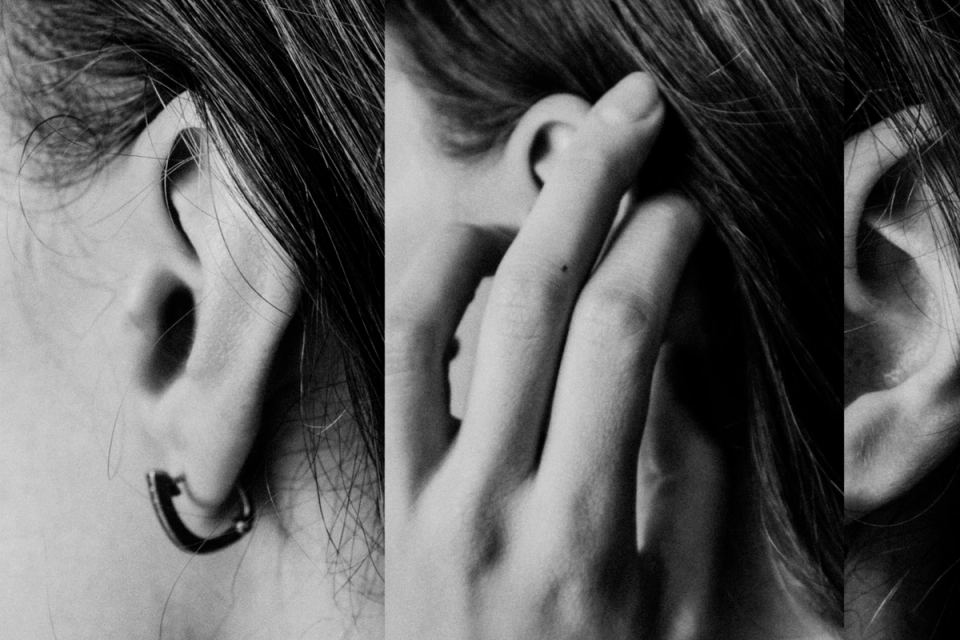
Choosing decorative fronts
Look for a small front that does not overlap neighbouring pieces. A dangling helix design may not suit a forward helix despite the name; assess the actual dimensions before buying.
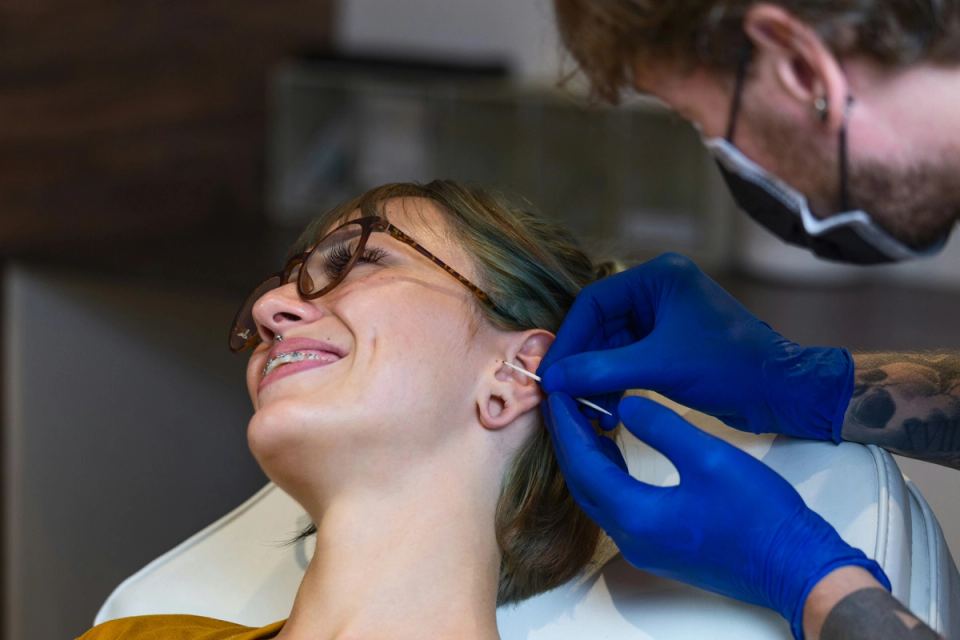
Avoiding pressure
Glasses and hair may touch this area. Check how a piece sits when you move your head and avoid pressure on healing cartilage.
Consider the space behind the front fold
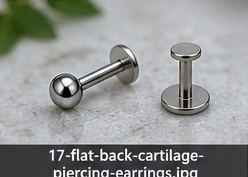
The forward helix occupies a relatively confined area near the point where the outer rim meets the head. It is tempting to choose the smallest-looking stone, but its visible size is only one part of the assembly. The post travels through tissue and its backing must rest somewhere behind the fold. A flat disc that appears tiny in a product photograph may still touch a neighbouring contour. A piercer needs to assess the available space on both sides before recommending the assembly.
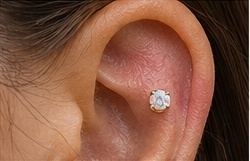
A row of forward helix studs can make a deliberate graduated pattern. Rather than buying three identical earrings, determine how much room each channel has and whether the decorative fronts will overlap. A narrow point at the top might suit a different setting from a lower position. Use the actual layout of healed channels, not a photograph of another person's ear. Even pieces that match visually may require different post lengths.
Compare the compact forward helix with the other shapes described in our cartilage jewellery buying guide; the flat-back guide explains post and backing compatibility.
Think about hair and eyewear
This location can be close to hair roots and the arm of glasses. If you repeatedly push hair behind the ear, notice whether the motion catches the proposed front. A setting with a projecting point or an exposed edge can behave differently from a rounded bezel. A high decorative top may catch a comb even when its face is narrower than a plain disc. When wearing glasses, check the way the arm approaches the ear and which jewellery component it might contact.
Discuss these daily habits during a professional fit appointment. Bring the frames you normally wear and explain whether your job requires protective headwear. A change to a smaller-looking top is not automatically a solution if the underlying post remains too long or the backing presses into a fold. Likewise, a shorter post must not squeeze the tissue. During healing, a professionally indicated downsize should be performed by the piercer rather than attempting an elective change yourself.
Read modular product options carefully
Retail listings may offer several gem sizes with a choice of top only, post only or a complete stud. Confirm the selected configuration and ensure the post is suitable for the channel. The gem measurement is not the gauge; the shape of the front does not determine wearable length. If the description does not establish the necessary component specifications, treat the piece as a style candidate for a professional fitting rather than an assured match.
For a graduated row of healed forward helix piercings, take a photograph from your usual viewing angle and note the visible space between the jewellery fronts. Use that information to discuss decoration widths with a piercer. A retailer may sell the same design with several stone diameters, allowing the visual pattern to be coordinated while the posts are fitted individually. This avoids treating the front row as one uniform area of cartilage and makes a future replacement easier if one end is lost.
We may earn a commission through affiliate links. These examples use OUFER's listed specifications, not hands-on tests. Confirm current price, availability, material evidence and fit before buying.
OUFER product options to compare

14K Gold Disc Threadless Cartilage Nose Stud – Top only / 1.5 mm
This exact variant is a 1.5 mm decorative top only, not a complete stud. Confirm compatible threadless post, gauge, length and material separately.
Check price at OuferBefore ordering: a practical fit checklist
| Check | What to confirm |
|---|---|
| Placement | Channel angle and surrounding cartilage clearance |
| Gauge | Matches the existing channel; do not force a thicker shaft |
| Length or diameter | Wearable post length or inside hoop opening, measured for your anatomy |
| Material | Documented alloy and finish of each component |
| Closure | Compatible ends and secure, smooth assembly |
For more detail see Ear Piercing Jewellery Size Guide and Best Jewellery for a Fresh Cartilage Piercing.
Frequently asked questions
What is the most important thing to check?
A forward helix needs a compact design and accurately fitted post because space near the front of the ear is limited.
Can I use a standard size chart to order?
Use a chart to understand measurements, not to determine your personal fit. A piercer can measure the channel and surrounding tissue.
Can I change jewellery while my piercing is healing?
Leave initial jewellery in place unless a qualified piercer or clinician recommends a change. Have any necessary downsizing performed professionally.
Professional references
Association of Professional Piercers: initial jewellery · APP aftercare guidance
Cartilage Piercing Jewellery Library
Complete guide
Main guides
- Best Cartilage Earrings
- Cartilage Piercing Jewellery Sizes: Gauge, Length and Diameter
- Best Materials for Cartilage Piercing Jewellery
- Cartilage Piercing Healing and Jewellery Aftercare
Supporting guides
- Best Helix Earrings and Jewellery
- Best Conch Earrings
- Best Tragus Earrings
- Best Daith Earrings
- Best Rook Piercing Jewellery
- Flat Piercing Jewellery: Styles and Placement
- Snug Piercing Jewellery Guide
- Best Titanium Cartilage Earrings
- Best Solid Gold Cartilage Earrings
- Cartilage Hoop vs Stud: Which Should You Choose?
- Best Flat Back Earrings
- When Can You Change Cartilage Piercing Jewellery?
- Cartilage Piercing Bumps: Causes and Jewellery Problems