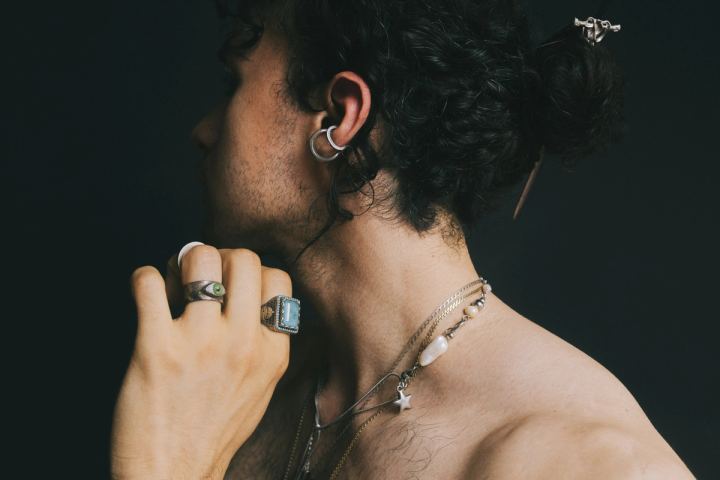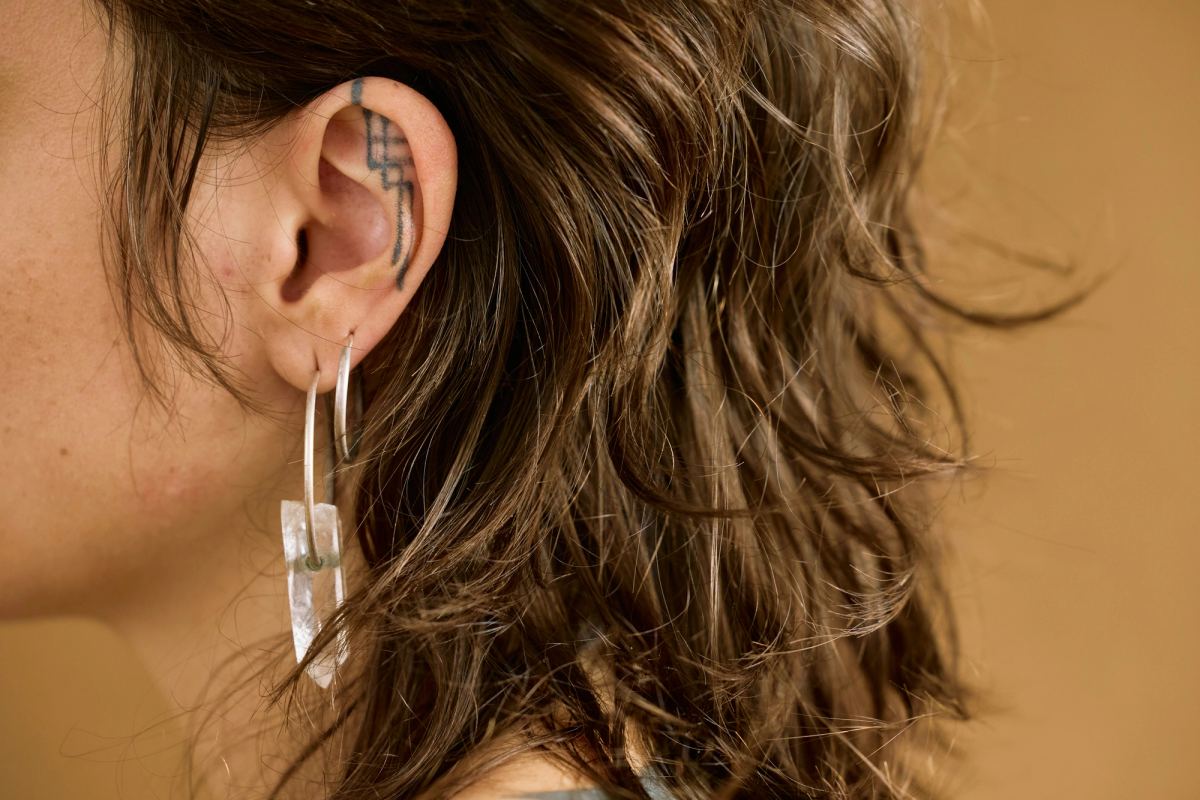
EAR PIERCING JEWELLERY
Daith rings must fit the inner cartilage fold; choose them for jewellery and personal style, not as a migraine treatment. This guide focuses on practical selection, fit and the differences between jewellery designs.
Best Daith Earrings
Daith rings must fit the inner cartilage fold; choose them for jewellery and personal style, not as a migraine treatment.
Inner fold fit
Daith placement passes through the inner cartilage fold above the ear canal. A ring must sit comfortably without pressing the surrounding cartilage. A professional can check both diameter and orientation.
Our cartilage earring guide compares daith geometry with other ear locations; do not assume a ring intended for a different fold fits yours.
Decorative clickers
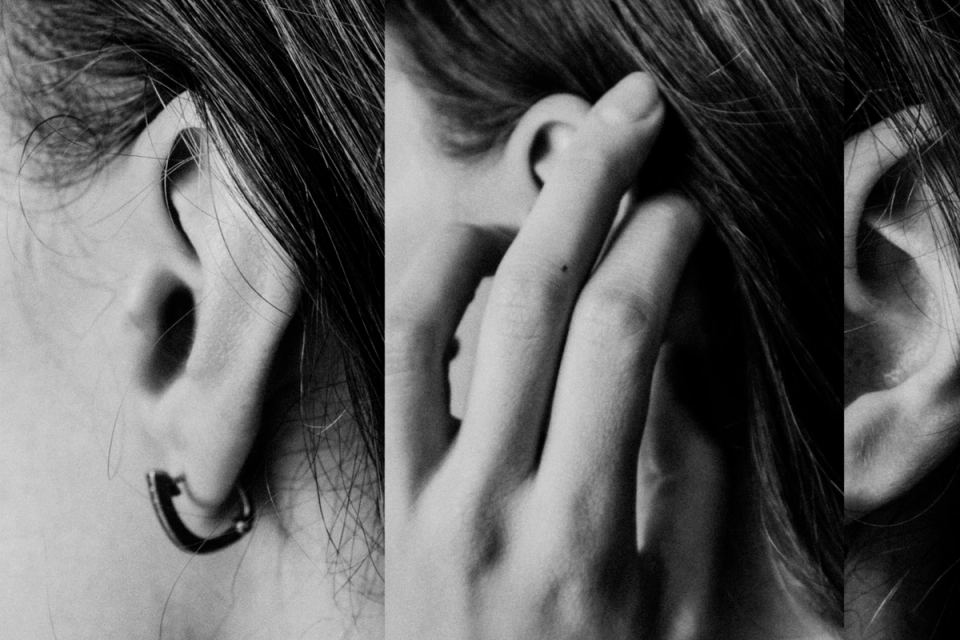
A hinged clicker can have gems facing outward, but decorative width matters as much as diameter. Check whether seams or gem settings can rotate into the channel.
Migraine claims
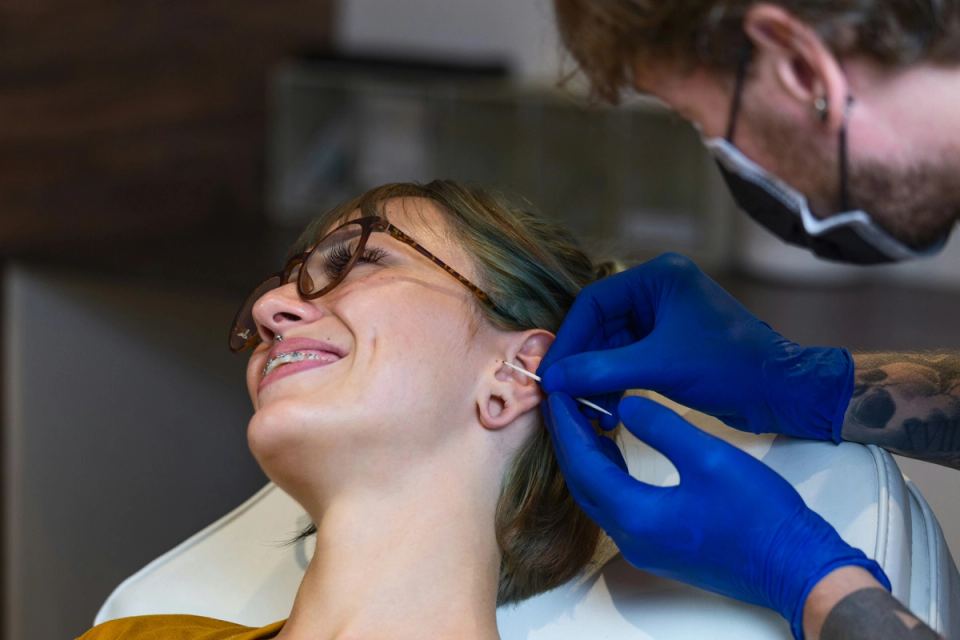
Evidence does not establish daith piercing as an effective migraine treatment. Do not delay medical care in favour of a piercing. Consult a clinician for migraine management.
Inner fold geometry is more important than a silhouette
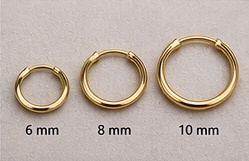
The daith occupies an internal cartilage fold. Its jewellery sits within the ear rather than wrapping around the outside rim like a helix hoop. This makes the shape and position of the decorative elements particularly important. A circular ring, a heart-shaped piece and a wide cluster may look similarly sized in a product photo but leave quite different spaces around the inner ear. An experienced piercer can determine which shape and dimensions suit the channel.
An inner diameter alone does not capture the profile of an irregular design. Look at where the hinge, seam or opening sits and how the decoration projects. A ring with a row of stones on one portion of its outside may occupy more space on that side. The selected piece must not depend on pressure against a neighbouring fold to remain in position. Avoid buying a daith ring on the basis that it is also advertised as suitable for septum piercings; the anatomy and orientation are different.
Compare the daith with other shapes in our cartilage earring buying guide; the cartilage sizing guide explains why identical gauge does not guarantee equivalent clearance.
Consider access and everyday contact
An internal placement can make it more difficult for the wearer to see the back of a jewellery closure or inspect whether a hinged segment is fully seated. Have a piercer assess the fit and demonstrate any necessary handling when the channel is ready. Do not practise opening and rotating a ring in a healing daith. If the closure does not appear secure or jewellery has become stuck, ask a professional to help rather than applying force.
Earbuds and hearing devices can come close to daith jewellery, depending on their shape and the individual ear. Consider this before selecting a wide design. A device that presses against the ring can transfer force to the channel. During healing, avoid pressure and unnecessary movement; after healing, select an assembly with enough clearance for ordinary wear. If a device is medically necessary, discuss the situation with appropriate professionals.
Choose decoration independently from health claims
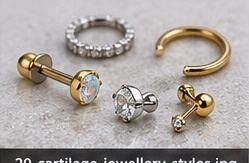
Daith jewellery can be an expressive accessory without any therapeutic purpose. A gemstone cluster, plain hoop or unusual shape is a styling preference; the decorative pattern is not evidence that the jewellery can treat headaches. Do not delay medical care in the hope that changing the piercing will provide relief. For a healed daith, ask for documented material, correct gauge, suitable dimensions and a securely closing piece. A comparison should remain about those observable specifications rather than unproven health benefits.
For an irregular daith design, request a clear drawing of its internal opening and external width. A heart shape may have a narrower area at one point, while a round hoop may leave more uniform space. The decorative section should not be mistaken for the wearable inner opening. If the listing gives only an overall diameter, ask the merchant to clarify it before ordering; a detailed product image can support the question but cannot determine the correct diameter for your ear.
We may earn a commission through affiliate links. These examples use OUFER's listed specifications, not hands-on tests. Confirm current price, availability, material evidence and fit before buying.
OUFER product options to compare

14K Gold CZ Segment Daith Hoop – 8 mm
The listing describes a solid 14K gold CZ-set segment ring. Confirm gauge, inner diameter and fit of the fold; this is a jewellery option, not a health treatment.
Check price at Oufer
16G CZ Hinged Segment Cartilage Ring – Silver / 7 mm
The selected variant is a silver-coloured stainless-steel CZ ring. The feed does not establish an implant-grade steel specification; check documentation and fit.
Check price at OuferBefore ordering: a practical fit checklist
| Check | What to confirm |
|---|---|
| Placement | Channel angle and surrounding cartilage clearance |
| Gauge | Matches the existing channel; do not force a thicker shaft |
| Length or diameter | Wearable post length or inside hoop opening, measured for your anatomy |
| Material | Documented alloy and finish of each component |
| Closure | Compatible ends and secure, smooth assembly |
For more detail see Ear Piercing Jewellery Size Guide and Best Jewellery for a Fresh Cartilage Piercing.
Frequently asked questions
What is the most important thing to check?
Daith rings must fit the inner cartilage fold; choose them for jewellery and personal style, not as a migraine treatment.
Can I use a standard size chart to order?
Use a chart to understand measurements, not to determine your personal fit. A piercer can measure the channel and surrounding tissue.
Can I change jewellery while my piercing is healing?
Leave initial jewellery in place unless a qualified piercer or clinician recommends a change. Have any necessary downsizing performed professionally.
Professional references
Association of Professional Piercers: initial jewellery · APP aftercare guidance
Cartilage Piercing Jewellery Library
Complete guide
Main guides
- Best Cartilage Earrings
- Cartilage Piercing Jewellery Sizes: Gauge, Length and Diameter
- Best Materials for Cartilage Piercing Jewellery
- Cartilage Piercing Healing and Jewellery Aftercare
Supporting guides
- Best Helix Earrings and Jewellery
- Best Forward Helix Earrings
- Best Conch Earrings
- Best Tragus Earrings
- Best Rook Piercing Jewellery
- Flat Piercing Jewellery: Styles and Placement
- Snug Piercing Jewellery Guide
- Best Titanium Cartilage Earrings
- Best Solid Gold Cartilage Earrings
- Cartilage Hoop vs Stud: Which Should You Choose?
- Best Flat Back Earrings
- When Can You Change Cartilage Piercing Jewellery?
- Cartilage Piercing Bumps: Causes and Jewellery Problems