EAR PIERCING JEWELLERY
The best cartilage earring is one that fits its exact placement without pressure; a decorative hoop or stud is not universally suitable. This guide focuses on practical selection, fit and the differences between jewellery designs.
Best Cartilage Earrings
The best cartilage earring is one that fits its exact placement without pressure; a decorative hoop or stud is not universally suitable.
Pick by location
A helix hoop needs room around the outer rim, while a tragus stud needs a suitable post and a low-profile end. Conch hoops wrap around the outer ear and may need a different diameter. Rook and daith jewellery need a different shape altogether.
For the broader placement and jewellery decisions, see our ear piercing jewellery guide.
Compare hoops and studs
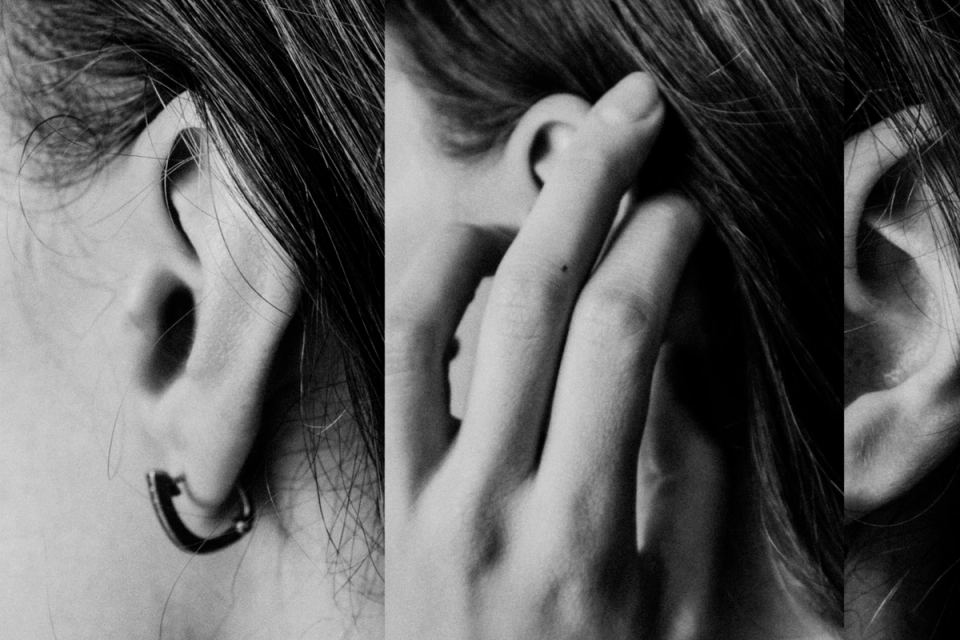
A stud can reduce movement, but a long post or oversized decorative front can snag. A hoop changes the way pressure is transmitted to the channel and needs a suitable diameter. Choose based on fit, not a generic size chart.
Location matters: compare the tragus guide and conch guide for the ear canal and bowl; the daith guide and rook guide describe different inner cartilage folds.

Compare product descriptions
Check gauge and usable length or internal diameter, material documentation, closure, and whether the listing includes a complete piece. A replacement post alone is not an earring.
For composition, read our titanium cartilage earrings guide and solid gold cartilage earrings guide. The sensitive ears guide distinguishes material concerns from mechanical irritation.
The cartilage hoop versus stud comparison explains geometry. For an unhealed channel, consult the fresh cartilage piercing jewellery guide rather than retail style recommendations.
Make a shortlist by actual use
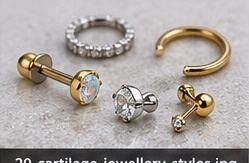
When comparing jewellery for more than one cartilage placement, group the candidates by shape before comparing prices. Straight posts can serve many suitable helix, flat and tragus channels; circular rings require enough clearance to follow the intended path; curved barbells are designed for other contours. A listing that groups ear and nose jewellery together is not necessarily unsuitable, but the variant still needs to match the channel. The useful question is which piece satisfies the necessary dimensions for your own ear, not which design receives the broadest marketing description.
A practical everyday shortlist might include a small compatible post assembly for a healed flat, a modest ring for a healed helix that has been assessed for ring wear, and a curved barbell for an appropriately fitted rook. A single ring size will not cover all three locations. Before paying, compare the cost of each complete assembly. A decorative top with a separately sold post may look inexpensive until the required components are added.
This placement-based shortlist complements the complete cartilage jewellery guide. At the outer rim, compare helix earrings with the much more compact options in our forward helix guide.
Prioritise the areas that touch your ear
Look at front projection, backing size and closure position alongside the material and dimensions. Someone who uses a headset throughout the working day may have very different requirements from someone who rarely wears headphones. A flat disc behind a post may reduce projection in some areas but can still press against a ridge. A ring may look sleek from the front while touching the outer ear at its lower edge. The best piece in a product comparison is therefore conditional on the shape and routine of the wearer.
If two options appear equally attractive, favour the one with clearer material documentation, dimensions and component descriptions. A seller's image cannot verify the metal grade or demonstrate that a particular piece is appropriate for a fresh piercing. Keep initial jewellery decisions with a qualified piercer. For later styling, record the dimensions of each successfully fitted piece and use them as a filter before comparing gems and colours.
The bowl and canal area have separate fitting requirements: conch jewellery needs different clearance from tragus jewellery.
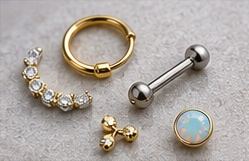
Avoid a collection of near-identical mistakes
There is no need to buy every colour of a style before you know whether the underlying geometry fits. Order one suitable candidate after confirming the necessary measurements. If it is a modular design, check whether additional decorative fronts are actually compatible with its post. For a coordinated ear, a repeated stone shape or colour can create visual continuity without forcing every placement to use identical shafts or hoop diameters. Invest in the part of the assembly that controls comfort before multiplying the decorative choices.
For internal folds, read the daith ring guide and the rook jewellery guide before choosing a decorative shape.
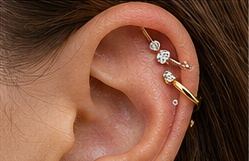
Compare other cartilage locations
The open upper surface may suit flat piercing studs, while a snug piercing needs a separate assessment of the ridge and curved jewellery.
We may earn a commission through affiliate links. These examples use OUFER's listed specifications, not hands-on tests. Confirm current price, availability, material evidence and fit before buying.
OUFER product options to compare

16G CZ Segment Titanium Cartilage Hoop – 8 mm
The feed identifies a 16G titanium hoop with CZ decoration and an 8 mm variant. Ask for the titanium grade and confirm internal diameter and healed-placement clearance.
Check price at Oufer
14K Gold Hinged Hoop Cartilage Earring – 8 mm
OUFER describes a 14K-stamped yellow gold hinged ring. Confirm alloy documentation and the internal diameter for your healed placement.
Check price at Oufer
14K Gold CZ Flower Cartilage Earring
The merchant lists a 16G straight barbell, 8 mm length and 4 mm ball end, with a 14K solid-gold claim. Check the exact alloy and backing clearance.
Check price at Oufer
14K Gold Waterdrop CZ Rook Earring
OUFER lists a 16G rook design with clear waterdrop accents and a 14K gold claim. Confirm the curve, wearable length and clearance with your piercer.
Check price at Oufer
14K Gold Disc Threadless Cartilage Nose Stud – Top only / 1.5 mm
This exact variant is a 1.5 mm decorative top only, not a complete stud. Confirm compatible threadless post, gauge, length and material separately.
Check price at Oufer
14K Gold Woven Conch Earring – 10 mm
A woven-design ring listed in a 10 mm variant. Confirm the gauge, alloy documentation and clearance around your particular conch and rim.
Check price at OuferBefore ordering: a practical fit checklist
| Check | What to confirm |
|---|---|
| Placement | Channel angle and surrounding cartilage clearance |
| Gauge | Matches the existing channel; do not force a thicker shaft |
| Length or diameter | Wearable post length or inside hoop opening, measured for your anatomy |
| Material | Documented alloy and finish of each component |
| Closure | Compatible ends and secure, smooth assembly |
For more detail see Ear Piercing Jewellery Size Guide and Best Jewellery for a Fresh Cartilage Piercing.
Frequently asked questions
What is the most important thing to check?
The best cartilage earring is one that fits its exact placement without pressure; a decorative hoop or stud is not universally suitable.
Can I use a standard size chart to order?
Use a chart to understand measurements, not to determine your personal fit. A piercer can measure the channel and surrounding tissue.
Can I change jewellery while my piercing is healing?
Leave initial jewellery in place unless a qualified piercer or clinician recommends a change. Have any necessary downsizing performed professionally.
Professional references
Association of Professional Piercers: initial jewellery · APP aftercare guidance
Cartilage Piercing Jewellery Library
Complete guide
Main guides
- Cartilage Piercing Jewellery Sizes: Gauge, Length and Diameter
- Best Materials for Cartilage Piercing Jewellery
- Cartilage Piercing Healing and Jewellery Aftercare
Supporting guides
- Best Helix Earrings and Jewellery
- Best Forward Helix Earrings
- Best Conch Earrings
- Best Tragus Earrings
- Best Daith Earrings
- Best Rook Piercing Jewellery
- Flat Piercing Jewellery: Styles and Placement
- Snug Piercing Jewellery Guide
- Best Titanium Cartilage Earrings
- Best Solid Gold Cartilage Earrings
- Cartilage Hoop vs Stud: Which Should You Choose?
- Best Flat Back Earrings
- When Can You Change Cartilage Piercing Jewellery?
- Cartilage Piercing Bumps: Causes and Jewellery Problems