EAR PIERCING JEWELLERY
A flat back is a disc-backed labret-style post; choose its length, gauge and compatible top separately. This guide focuses on practical selection, fit and the differences between jewellery designs.
Best Flat Back Earrings
A flat back is a disc-backed labret-style post; choose its length, gauge and compatible top separately.
Complete pieces versus posts
A replacement post is only one part of a complete earring. Confirm that a top is included or that your existing top is compatible. Threadless and threaded components cannot be assumed interchangeable.
For the broader placement and jewellery decisions, see our ear piercing jewellery guide.
Wearable length
The distance between the disc and decorative end is the wearable length. A short post can compress tissue; a long post can snag and lever the channel. Have a piercer measure it.
For compact jewellery near the ear canal, consult our tragus earring guide; the earrings for sleeping guide explains why a low profile does not eliminate pressure.
Disc size and comfort
A broad disc distributes contact over a larger surface but can overlap neighbouring jewellery. A smaller disc may fit a narrow area but must not sink into the tissue.
Our flat-back versus butterfly-back comparison distinguishes the two constructions, and the curated ear guide explains how compatible ornaments can complement nearby piercings.
Our labret stud guide describes similar post terminology for lip piercings; oral-facing backs require a separate dental and fitting assessment.
Distinguish the three parts of an assembly
A flat-back earring consists of a post, a disc at its back and a front or end. In many designs the front is interchangeable, but not every flat-back product uses the same connection. Some posts have internal threads; some use a manufacturer's threadless system. The fact that two pieces are both described as 16G does not establish that their ends are compatible. Identify the system before buying replacement parts.
The disc has its own diameter and thickness. It needs enough room behind the particular cartilage channel to avoid pressing into nearby contours. A disc that works behind a flat piercing may not sit comfortably behind a tragus or forward helix. The front also has a footprint and height that can interfere with other jewellery or daily objects. The advantage of a fitted post is not a universal guarantee of comfort; it is the ability to select the components according to the actual anatomy.
The cartilage jewellery measurement guide explains how to distinguish gauge, wearable length and the dimensions of decorative ends.
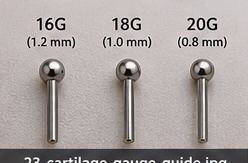
Read variant menus carefully
Online retailers may show a gold top attached to a silver-coloured post even when the selected option is top only. Some listings let customers choose the gemstone size first and the post configuration separately. A number in millimetres next to the stone may refer to its width, not the post length. Confirm what the selected variant actually includes and whether it has the required shaft thickness and wearable dimension.
If you already own a compatible post that fits a healed channel, a separately sold end may be a practical purchase. If the post's system is unknown, take it to a piercer for identification rather than ordering a collection of potentially incompatible ends. Check the material of the shaft and disc separately from a precious-metal decorative front. A smooth, securely assembled piece with clear specifications is preferable to a vague listing that only emphasises appearance.
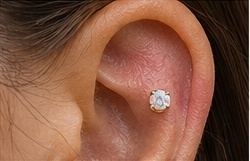
Plan for fitting and follow-up
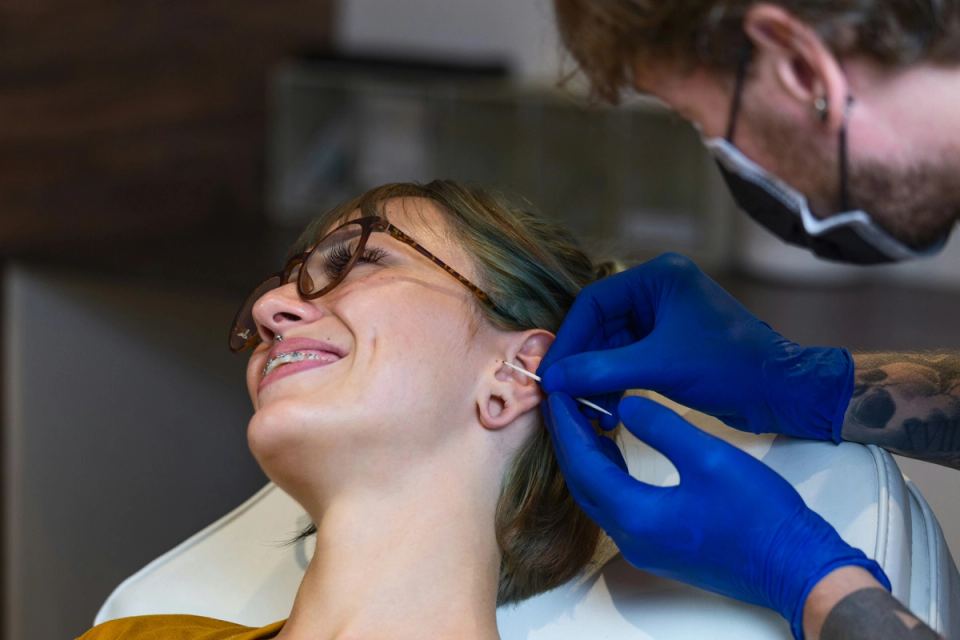
During healing, the initial post may have extra room for swelling. A qualified piercer can decide whether a downsize is needed and perform it. A flat disc does not justify choosing the shortest available post; too little accommodation can cause compression. A post that repeatedly snags or a disc that appears to sink into tissue needs assessment. For a healed channel, keep a record of the compatible post system, gauge, wearable length and backing size so future purchases are based on a known fit rather than a generic earring chart.
We may earn a commission through affiliate links. These examples use OUFER's listed specifications, not hands-on tests. Confirm current price, availability, material evidence and fit before buying.
OUFER product options to compare

14K Gold Disc Threadless Cartilage Nose Stud – Top only / 1.5 mm
This exact variant is a 1.5 mm decorative top only, not a complete stud. Confirm compatible threadless post, gauge, length and material separately.
Check price at OuferBefore ordering: a practical fit checklist
| Check | What to confirm |
|---|---|
| Placement | Channel angle and surrounding cartilage clearance |
| Gauge | Matches the existing channel; do not force a thicker shaft |
| Length or diameter | Wearable post length or inside hoop opening, measured for your anatomy |
| Material | Documented alloy and finish of each component |
| Closure | Compatible ends and secure, smooth assembly |
For more detail see Ear Piercing Jewellery Size Guide and Best Jewellery for a Fresh Cartilage Piercing.
Frequently asked questions
What is the most important thing to check?
A flat back is a disc-backed labret-style post; choose its length, gauge and compatible top separately.
Can I use a standard size chart to order?
Use a chart to understand measurements, not to determine your personal fit. A piercer can measure the channel and surrounding tissue.
Can I change jewellery while my piercing is healing?
Leave initial jewellery in place unless a qualified piercer or clinician recommends a change. Have any necessary downsizing performed professionally.
Professional references
Association of Professional Piercers: initial jewellery · APP aftercare guidance
Cartilage Piercing Jewellery Library
Complete guide
Main guides
- Best Cartilage Earrings
- Cartilage Piercing Jewellery Sizes: Gauge, Length and Diameter
- Best Materials for Cartilage Piercing Jewellery
- Cartilage Piercing Healing and Jewellery Aftercare
Supporting guides
- Best Helix Earrings and Jewellery
- Best Forward Helix Earrings
- Best Conch Earrings
- Best Tragus Earrings
- Best Daith Earrings
- Best Rook Piercing Jewellery
- Flat Piercing Jewellery: Styles and Placement
- Snug Piercing Jewellery Guide
- Best Titanium Cartilage Earrings
- Best Solid Gold Cartilage Earrings
- Cartilage Hoop vs Stud: Which Should You Choose?
- When Can You Change Cartilage Piercing Jewellery?
- Cartilage Piercing Bumps: Causes and Jewellery Problems