What to know before choosing
Titanium is worth considering when you want a relatively light metal and clear material documentation. Look for an applicable specification such as ASTM F136 or F67, a professionally confirmed fit and a smooth finish. A retailer's generic titanium claim is not the same as verified implant-grade material.
Read the evidence behind the label
A good comparison begins with the name of the alloy, not the attractiveness of the jewellery. Some suppliers use the word titanium as a broad category, while others specify a material standard and can provide supporting records. The difference is particularly important for initial jewellery, which contacts healing tissue. Ask the piercer or supplier whether the documentation applies to the actual model and finish that you are considering. A catalogue photograph showing silver-coloured metal cannot establish the alloy, and a product that costs more is not automatically better documented. Keep those claims separate in your shortlist. Compare titanium with other alloys in our nipple jewellery materials guide. The same need to verify material descriptions is discussed in our titanium cartilage jewellery guide; sizing and geometry still need to be assessed for each placement.
Consider weight without overlooking design
Titanium is comparatively light, so it may appeal when a wearer wants to avoid unnecessarily heavy jewellery. Nevertheless, the weight of an assembled piece depends on its dimensions, attachments, stone settings and decorative frame as well as the material. A broad titanium shield can occupy more space than a small barbell in another documented metal. Compare the total shape and projection rather than treating titanium as a universal comfort solution. For a piercing that is currently irritated, do not try a different weight or metal as a substitute for checking its size and condition professionally.
Plain bars and internally threaded ends
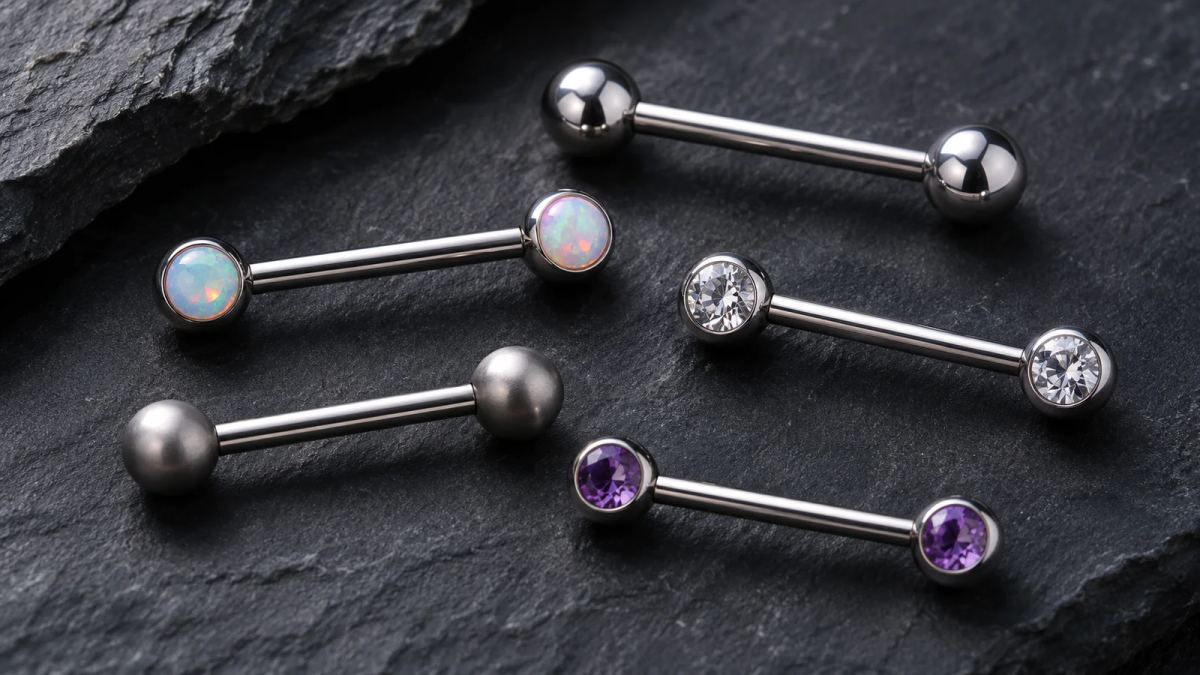
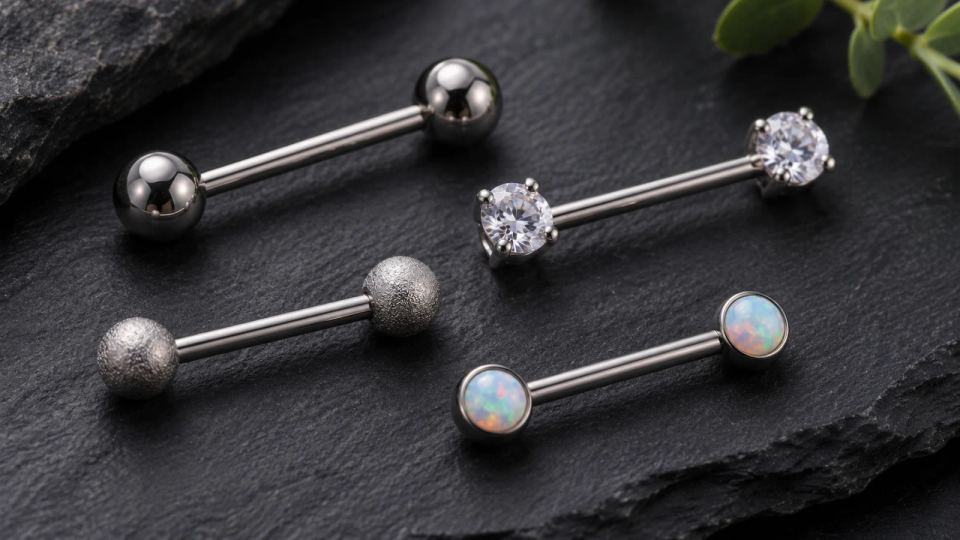
A straightforward ball-ended bar is a useful everyday reference design. If the bar is internally threaded, the removable end has a threaded projection that enters the hollow shaft, leaving the wearable exterior free of exposed screw threads. Check the actual mechanism rather than assuming every titanium bar uses the same fastening. A different manufacturer's end may not fit even when the shaft thickness is nominally identical. Keep the product identifier and fastening specification if you expect to order replacement parts. A smooth, correctly assembled piece is more important than simply buying a fashionable metal.
Gemstone and shield alternatives
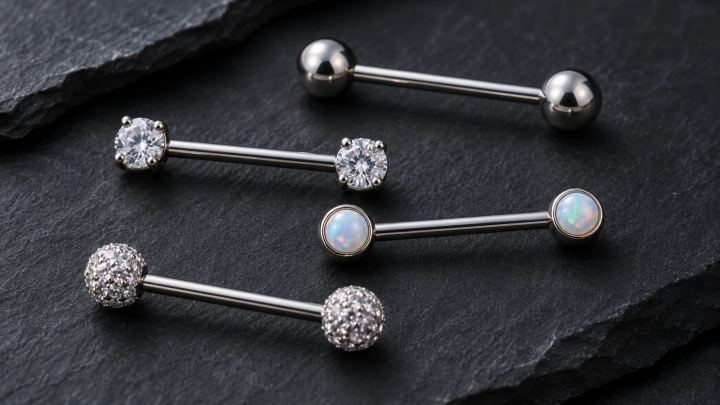
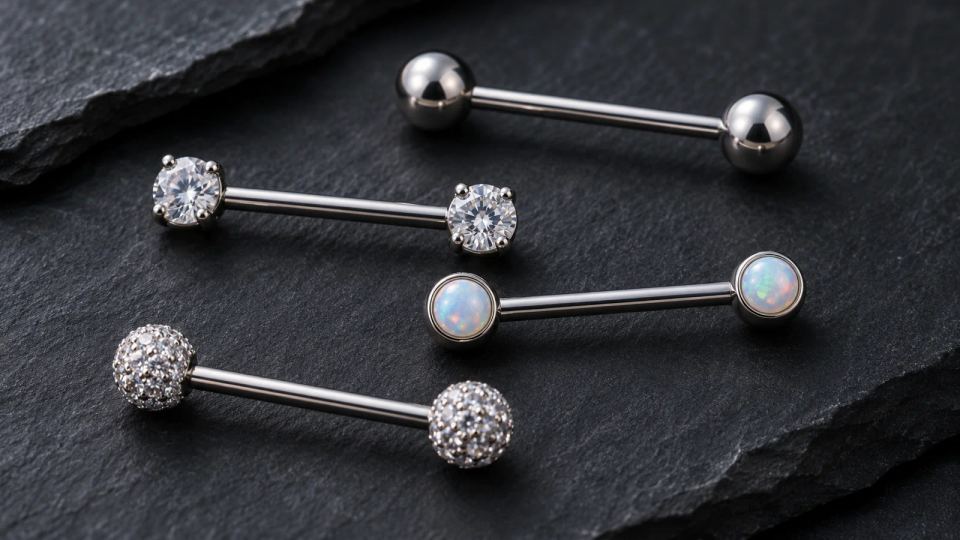
Titanium jewellery is also sold with decorative crystal or opal-like accents and with circular or hinged profiles. The decorative parts may be made of different materials, so a titanium product name does not describe the entire assembly. Inspect the size of the attachments and ask whether settings or a surround press against nearby tissue. The examples below illustrate available catalogue styles, not independent verification of the metal grade. For established piercings, a professional can assess whether a wider design or a different geometry is practical. For healing piercings, keep decoration secondary to the initial fitting.
Understand colour and surface treatment
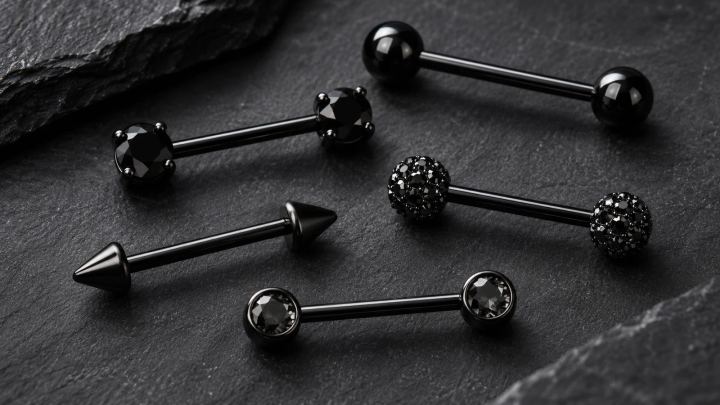
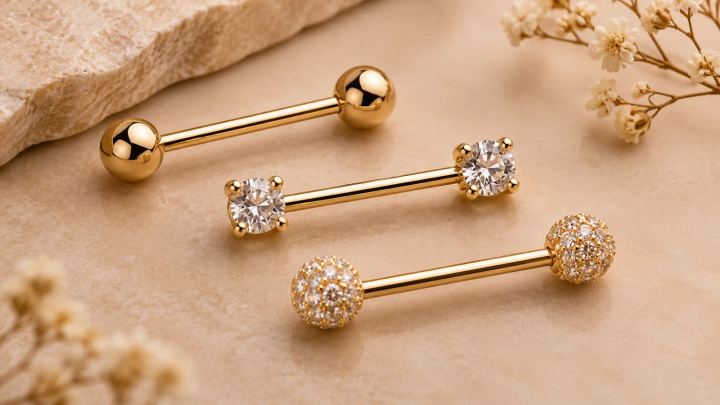
A metallic gold, blue or purple appearance can result from anodising titanium rather than adding gold or another metallic coating. Ask which process was used for the selected finish. A listing may offer multiple colours, and the same image may be reused across variants, making the description particularly important. Check whether the supplier documents the substrate and surface treatment separately. If a finish appears damaged or rough, have the piece inspected rather than continuing to wear it. Never infer that a dark or gold-coloured bar is titanium solely because it resembles one of our illustrations.
Make a purchase decision you can repeat
Before ordering, compare the gauge and wearable length with the record from your piercer, then confirm the fastening, end size and actual variant. If the piece is sold as a pair, both items must match their respective placements. Save the seller's specification and ask what evidence is available for any implant-grade claim. If it is not supplied, label the claim unverified and consider a better-documented alternative. A straightforward titanium piece that is properly fitted and traceable is a more useful baseline for future purchases than an elaborate design with missing technical information.
We may earn a commission through affiliate links. These examples are based on listed specifications, not hands-on testing. Confirm material documentation, fit and current availability with the seller and your piercer.
OUFER catalogue examples to compare

2Pcs Internally Threaded Titanium Nipple Barbell Pair - Opal
Merchant-listed titanium pair with internally threaded construction and opal accents; the product handle specifies 14G and 14 mm. Verify material documentation and usable length.
Check price at Oufer
CZ and Beads Titanium Nipple Barbell Pair - CZ
Merchant describes titanium, cubic zirconia and bead decoration. Confirm the material standard and dimensions of the complete assembly.
Check price at Oufer
2PCS Half-Round Titanium Nipple Clicker
Merchant-listed half-round titanium clicker. Confirm the wearable geometry, dimensions and material specification.
Check price at Oufer
2PCS Internally Threaded Titanium Nipple Rings Pack - Gold
Gold-coloured titanium variant with advertised internal threading. This is not a solid-gold claim; verify the surface treatment and material documentation.
Check price at OuferFrequently asked questions
Is titanium good for nickel sensitivity?
Documented suitable titanium is a common option for people concerned about nickel; a clinician or piercer can help assess your situation.
Are the catalogue examples certified?
The feed identifies them as titanium but does not independently establish a material certificate.
Can titanium be gold coloured?
Yes, colour can be produced through anodising; verify the finish with the maker.
Sources and further guidance
Nipple Piercing Jewellery Library
Complete guide
Main guides
- Best Nipple Piercing Jewellery
- Nipple Piercing Jewellery Types and Styles
- Nipple Piercing Jewellery Materials: Titanium, Gold and Steel
- Nipple Piercing Jewellery Sizes and Fitting Guide
Supporting guides
- Best Gold Nipple Piercing Jewellery
- Best Black Nipple Piercing Jewellery
- Best Nipple Piercing Jewellery for Sensitive Skin
- Nipple Barbells: Styles, Materials and Fit
- Nipple Shields: A Complete Buying Guide
- Nipple Rings vs Barbells: Which Is Better?
- Decorative and Dangle Nipple Piercing Jewellery
- Nipple Piercing Retainers: Types and Uses
- Internally vs Externally Threaded Nipple Jewellery
- What Gauge Is a Nipple Piercing?
- How to Measure Nipple Piercing Jewellery
- When Can You Change Nipple Piercing Jewellery?
- How to Clean Nipple Piercing Jewellery