What to know before choosing
For a straight barbell, compare the gauge and the wearable span between the ends. For a ring, compare the gauge and inside diameter. A shield also needs separate frame measurements. Ask a qualified piercer to measure the fitted jewellery, especially while healing.
Identify the object you are measuring
There are several useful dimensions on a single piece of body jewellery. A straight bar has a shaft thickness and a wearable span, as well as an overall length that includes its attachments. A ring has an opening and an outside diameter, and a shield may add a separate frame. Before comparing measurements, identify which shape the retailer is selling and which part passes through the piercing. A broad product category can include designs with quite different geometry. The most useful measurements are those that describe the actual fitted assembly, not merely its largest visual dimension. See our nipple jewellery sizes and fitting guide for the broader fitting decisions that follow from those measurements.
Straight barbell length and gauge
A dimensioned drawing of a straight barbell should distinguish the distance between its ends from the total width including those ends. The former is generally what a body-jewellery seller means by wearable length. Gauge describes the thickness of the shaft separately. If you have an identical spare piece that is not being worn, a suitable measuring instrument can help you read those dimensions without handling the piercing itself. When there is uncertainty, have the professionally fitted assembly identified and measured by your piercer. Do not remove healing jewellery just to obtain a measurement.
Ring opening versus outside diameter
A ring's nominal inside diameter is measured across its internal opening, not from its outer edges. The outer measurement includes the thickness of the ring on both sides, so it is naturally larger. Some hinged or shield-style designs have a shape other than a perfect circle, making the manufacturer's dimensioned diagram particularly important. Check whether a listing describes the inside diameter, the size of a straight segment or the overall decorative width. Do not try to derive a suitable ring size simply from the length of a straight bar already fitted to the placement. The distinction between inside and outside diameter is also covered in our nose ring diameter measurement guide; sizing and geometry still need to be assessed for each placement.
Record decorative dimensions separately
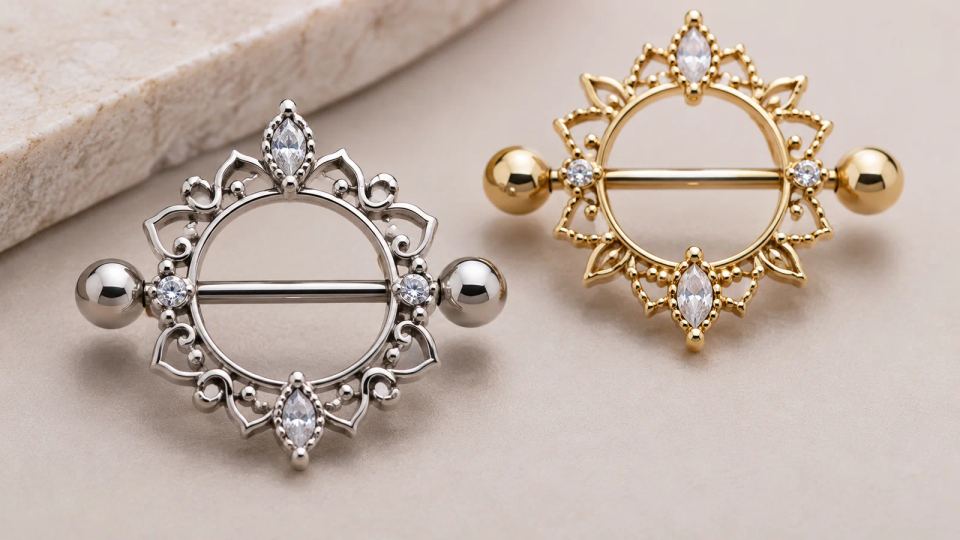
The height and width of a shield, the diameter of a ball and the size of a gemstone cluster can all affect how the piece sits around the piercing. These measurements are not interchangeable with gauge or wearable length. A long decorative chain introduces another dimension that may matter when considering movement and contact with clothing. Compare these additional measurements with the intended circumstances of wear and ask a professional to assess the fit. A product listing that specifies the central bar but omits the surrounding frame may not give enough information to make a useful purchase decision.
Understand nominal sizes and tolerances
A fraction of an inch can be converted into millimetres, but sellers may round nominal measurements differently. For example, half an inch is 12.7 mm, not exactly 12 mm. A labelled nominal size is also not a reason to ignore the manufacturer's actual dimensional description. Ask for clarification when different parts of a listing give conflicting values. Avoid treating the next available length as a suitable substitute merely because the numerical difference looks small. The correct fit is determined by the particular channel, the condition of the tissue and the shape of the complete assembly.
A practical record before ordering online
Prepare a short record containing the placement, gauge, wearable length or inside diameter, fastening type and maker of the jewellery confirmed by your piercer. Add any attachment or frame measurements necessary to compare a new design. Save the selected product variant and the seller's size diagram with the record. If two piercings have different dimensions, list them individually rather than trying to fit both to an identical pair. This approach makes online comparison much more reliable, but it does not replace professional fitting when a placement is healing, uncomfortable or changing shape.
At a glance
| Shape | Measurements |
|---|---|
| Barbell | Gauge and wearable span |
| Ring | Gauge and inside diameter |
| Shield | Central fit plus frame dimensions |
We may earn a commission through affiliate links. These examples are based on listed specifications, not hands-on testing. Confirm material documentation, fit and current availability with the seller and your piercer.
OUFER catalogue examples to compare

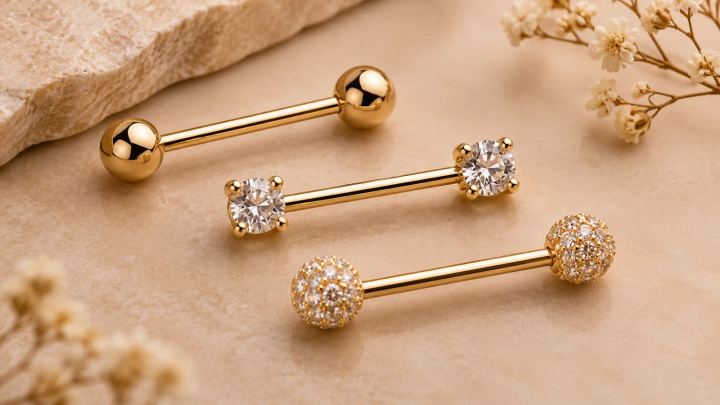
OUFER 14K Gold Ball Nipple Ring - 12mm
Listed solid gold ball design, 12 mm variant. Confirm the wearable dimension rather than choosing by price.
Check price at OuferOUFER 14K Gold Ball Nipple Ring - 14mm
Listed solid gold ball design, 14 mm variant. Verify the gauge and wearable length against your fitting record.
Check price at OuferOUFER 14K Gold Ball Nipple Ring - 16mm
Listed solid gold ball design, 16 mm variant. This is a different length option, not a universal fit.
Check price at OuferFrequently asked questions
Should I measure a bar including its ends?
Not when comparing wearable length. Keep overall dimensions and usable span separate.
Is a ring's outside diameter the measurement I order by?
Usually the inside diameter is relevant; confirm the manufacturer's definition.
What if I cannot measure my current jewellery?
Ask your piercer to identify and measure it without unnecessary manipulation at home.
Sources and further guidance
Nipple Piercing Jewellery Library
Complete guide
Main guides
- Best Nipple Piercing Jewellery
- Nipple Piercing Jewellery Types and Styles
- Nipple Piercing Jewellery Materials: Titanium, Gold and Steel
- Nipple Piercing Jewellery Sizes and Fitting Guide
Supporting guides
- Best Titanium Nipple Piercing Jewellery
- Best Gold Nipple Piercing Jewellery
- Best Black Nipple Piercing Jewellery
- Best Nipple Piercing Jewellery for Sensitive Skin
- Nipple Barbells: Styles, Materials and Fit
- Nipple Shields: A Complete Buying Guide
- Nipple Rings vs Barbells: Which Is Better?
- Decorative and Dangle Nipple Piercing Jewellery
- Nipple Piercing Retainers: Types and Uses
- Internally vs Externally Threaded Nipple Jewellery
- What Gauge Is a Nipple Piercing?
- When Can You Change Nipple Piercing Jewellery?
- How to Clean Nipple Piercing Jewellery