Understanding the 14G label
A 14G nipple barbell has a nominal thickness of approximately 1.6 mm and is commonly encountered in conventional nipple piercing jewellery. However, the right gauge is the one confirmed for your particular placement. Do not select or change thickness based on a general online size chart.
Read gauge as a thickness measurement
Body-jewellery gauge refers to the diameter of the part that passes through a piercing channel. It does not describe the size of the decorative balls, the distance between them or the overall width of a shield. The numbering system can seem counterintuitive because within commonly used sizes, a larger gauge number corresponds to a thinner shaft. A listing marked 14G and 14 mm therefore contains two different pieces of information. The first describes thickness, while the second must be interpreted according to the particular product's length or diameter specification. Both are relevant to fit. The nipple jewellery size and fitting guide covers the other dimensions that must be considered alongside gauge. The nominal gauge convention is also explained in our 14G versus 16G septum jewellery guide; sizing and geometry still need to be assessed for each placement.
Common nominal conversions
A nominal 14G shaft is approximately 1.6 mm in diameter, while 16G is approximately 1.2 mm and 12G approximately 2.0 mm. These comparisons help you interpret listings, not determine which size to wear. In particular, a difference of a few tenths of a millimetre in thickness is not a casual substitution. If a retailer provides a dimension in millimetres rather than gauge, check which part of the assembly it describes. Use the actual size confirmed by your piercer and clarify any conflict between a product title, diagram and selected size option before purchasing.
Why a common size is not a universal rule
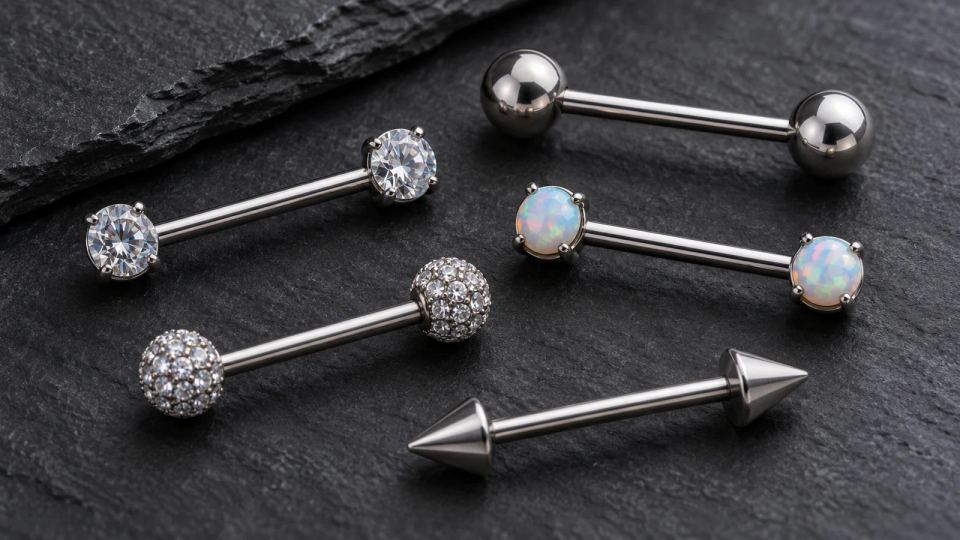
Many jewellery listings use 14G, making it a familiar category when browsing. However, a professional selects an appropriate gauge based on placement, anatomy and other fitting considerations. An established piercing may have been fitted at a different size. Someone else's fitting record, or the most widely available catalogue size, is not a reliable guide to yours. The appropriate thickness should not be inferred from a photograph or from the visible dimensions of the end balls. Ask for the recorded gauge when you next speak to the piercer who fitted the jewellery.
Do not confuse thickness with a downsize
A professional may recommend changing the wearable length of initial jewellery after swelling settles. In ordinary fitting discussions, the word downsize may refer to shortening a bar rather than changing the thickness of its shaft. Clarify what is being changed before ordering. Keeping the same gauge does not mean every shorter bar will be appropriate, since the usable span and attachments also matter. Conversely, do not choose a thinner bar merely because it seems easier to fit. Changes to the thickness or geometry of a piercing require an appropriate professional assessment.
Read product variants rather than the category
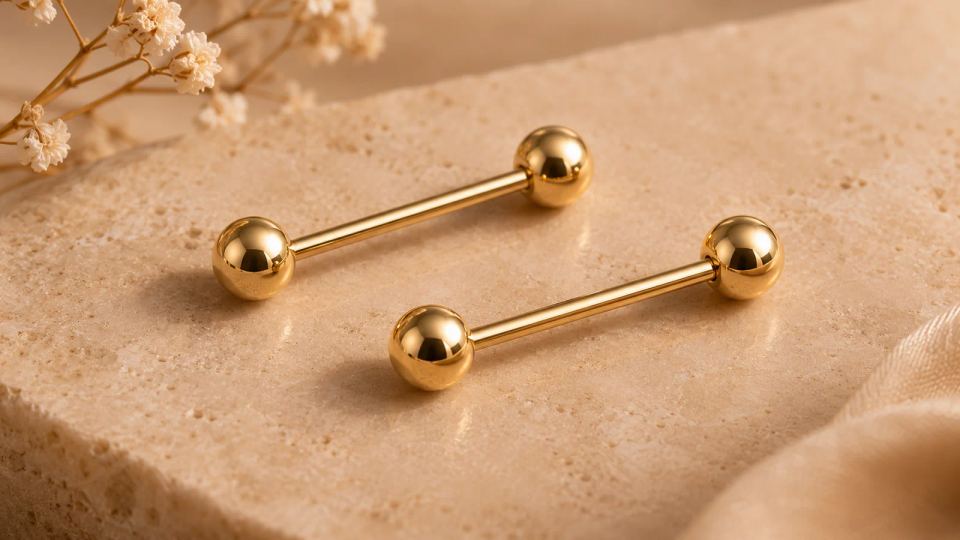
A catalogue may group items of one style into a single listing with multiple lengths, colours and sometimes thicknesses. Make sure the selected variant retains the required gauge. If a gold barbell is sold in several lengths at 14G, those choices concern the span, not the shaft thickness. Similarly, a ring can share the gauge of a straight bar while having completely different wearable geometry. The sample products in this guide are labelled with their merchant specifications; they are examples for reading the listings, not recommendations that a particular gauge suits every reader.
Keep the gauge with the rest of your fitting record
Write down the gauge, wearable length or inner diameter, fastening and manufacturer for the piece professionally fitted to your piercing. Record two placements separately if you have them. When a listing appears to match, compare each specification before looking at design or finish. If your record is missing, have a professional establish the size rather than testing a succession of pieces in the channel. This is especially important during healing, when unnecessary handling may cause problems. A correct gauge is necessary for a suitable piece but is not sufficient without the other fitting information.
At a glance
| Nominal gauge | Approximate thickness |
|---|---|
| 16G | 1.2 mm |
| 14G | 1.6 mm |
| 12G | 2.0 mm |
We may earn a commission through affiliate links. These examples are based on listed specifications, not hands-on testing. Confirm material documentation, fit and current availability with the seller and your piercer.
OUFER catalogue examples to compare

2Pcs Internally Threaded Titanium Nipple Barbell Pair - Opal
Merchant-listed titanium pair with internally threaded construction and opal accents; the product handle specifies 14G and 14 mm. Verify material documentation and usable length.
Check price at Oufer
Titanium Clicker Nipple Shield Pair
Listed as a titanium hinged shield pair. The product handle indicates 14G and 9/16 inch; confirm which dimension that describes.
Check price at Oufer
2PCS Star Chain Nipple Barbell
Listed 14G star-ended chain design. Consider only for a suitable established piercing and assess snagging and projecting dimensions.
Check price at OuferFrequently asked questions
Is 14G the same as 14 mm?
No. 14G is nominal thickness, whereas 14 mm is a dimensional measurement that may describe a bar or ring.
Can I move from 14G to 16G?
Do not make an unassessed gauge change; discuss it with your piercer.
Can I tell gauge from the ball size?
No. End dimensions and shaft thickness are separate specifications.
Sources and further guidance
Nipple Piercing Jewellery Library
Complete guide
Main guides
- Best Nipple Piercing Jewellery
- Nipple Piercing Jewellery Types and Styles
- Nipple Piercing Jewellery Materials: Titanium, Gold and Steel
- Nipple Piercing Jewellery Sizes and Fitting Guide
Supporting guides
- Best Titanium Nipple Piercing Jewellery
- Best Gold Nipple Piercing Jewellery
- Best Black Nipple Piercing Jewellery
- Best Nipple Piercing Jewellery for Sensitive Skin
- Nipple Barbells: Styles, Materials and Fit
- Nipple Shields: A Complete Buying Guide
- Nipple Rings vs Barbells: Which Is Better?
- Decorative and Dangle Nipple Piercing Jewellery
- Nipple Piercing Retainers: Types and Uses
- Internally vs Externally Threaded Nipple Jewellery
- How to Measure Nipple Piercing Jewellery
- When Can You Change Nipple Piercing Jewellery?
- How to Clean Nipple Piercing Jewellery