What to know before choosing
Choose a piece that matches the actual placement, current healing stage and professionally measured fit. Straight barbells are a common starting point for conventional nipple piercings. Decorative shields, clickers and chains are possibilities for established piercings, not substitutes for correctly fitted initial jewellery.
Start with fit, not the photograph
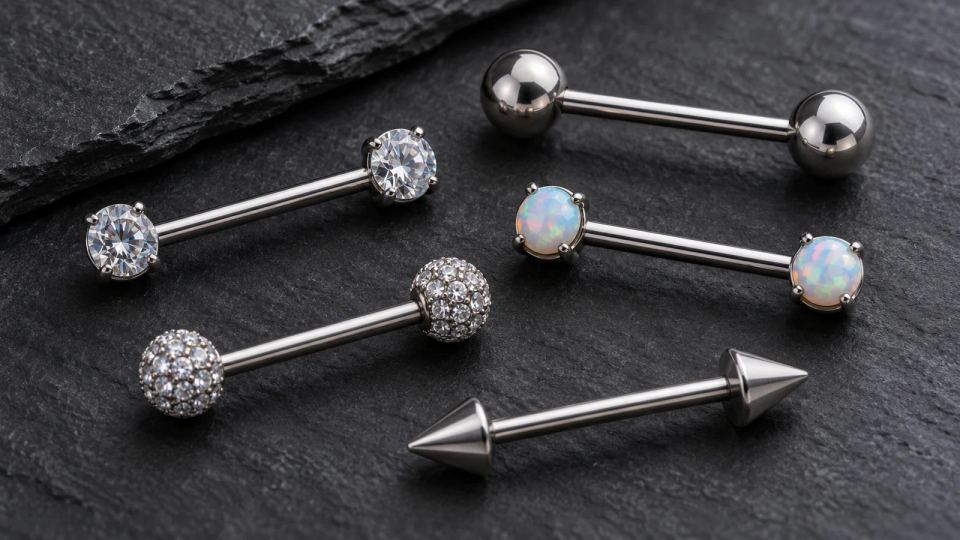
The category covers jewellery with quite different functions. A straight barbell passes through the established channel and has an attachment on each side. A shield adds a decorative surround, while a ring changes the shape and direction of the jewellery around the placement. Two pieces shown at the same scale in a catalogue may have very different wearable lengths. Before browsing, establish what kind of jewellery a professional fitted, which measurements were recorded and whether you are ready for a change. A polished product photograph cannot establish that a design fits your anatomy. For a closer look at each construction, consult our guide to nipple jewellery types and styles.
Healing and everyday wear are different decisions
A fresh piercing requires jewellery selected and fitted by a qualified professional. Allowance for swelling, quality of finish and a suitable material matter considerably more than matching a particular outfit. Later, a professional may recommend a shorter bar as the tissue settles. That is a fitting appointment, not an invitation to experiment with multiple styles. Even an older piercing can be irritated by an unsuitable piece. If the placement is tender, swollen or changing, postpone shopping for decorative upgrades and have the situation assessed. Time since the appointment alone does not establish that the channel is fully healed.
Materials and the information worth requesting
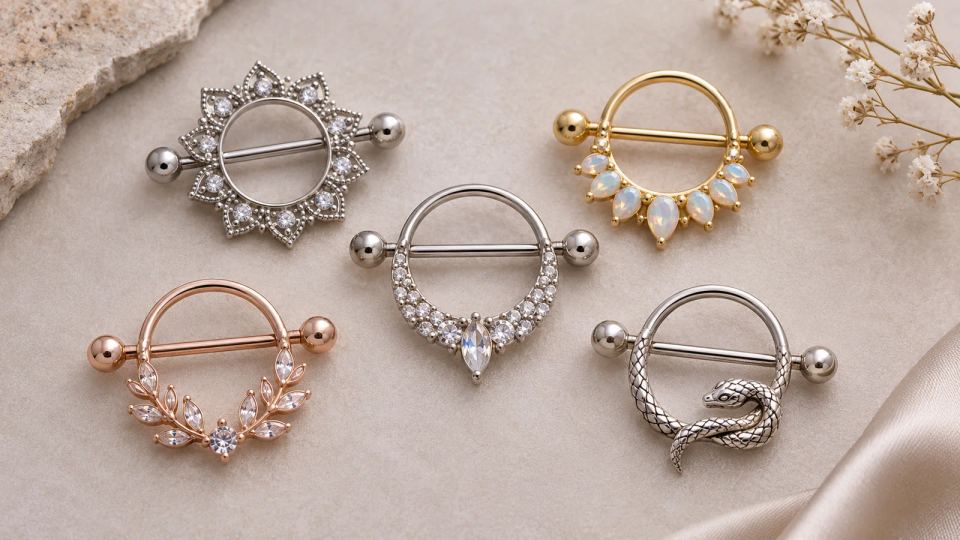
Look beyond descriptions such as silver, surgical or gold. Silver can describe appearance rather than the metal itself, and gold colour may indicate a finish rather than solid gold. Ask the maker or piercer for the exact material, the relevant standard where appropriate and the construction of any decorative attachments. A well-made piece should have a smooth finish where it contacts tissue. Material documentation and fit are independent questions: a verified alloy does not make an oversized shield suitable. If a listing offers several variants, check the selected variant rather than assuming that a specification applies to every colour. Our material comparison explains how to distinguish metal descriptions from documentation.
Compare the shape and the way it closes
A basic straight barbell has relatively little additional hardware, making it a useful reference point when comparing more elaborate jewellery. A ring has a curved profile, and a shield may surround the placement without necessarily changing the shape of the wearable bar. Hinged mechanisms add another element to inspect: the seam and hinge need to be suitable for the intended placement. Decorative ends should sit without pressing into the surrounding skin. The amount of visible metal is a poor proxy for comfort; consider the actual geometry and how that geometry interacts with clothing and ordinary movement.
Build a practical record for future purchases
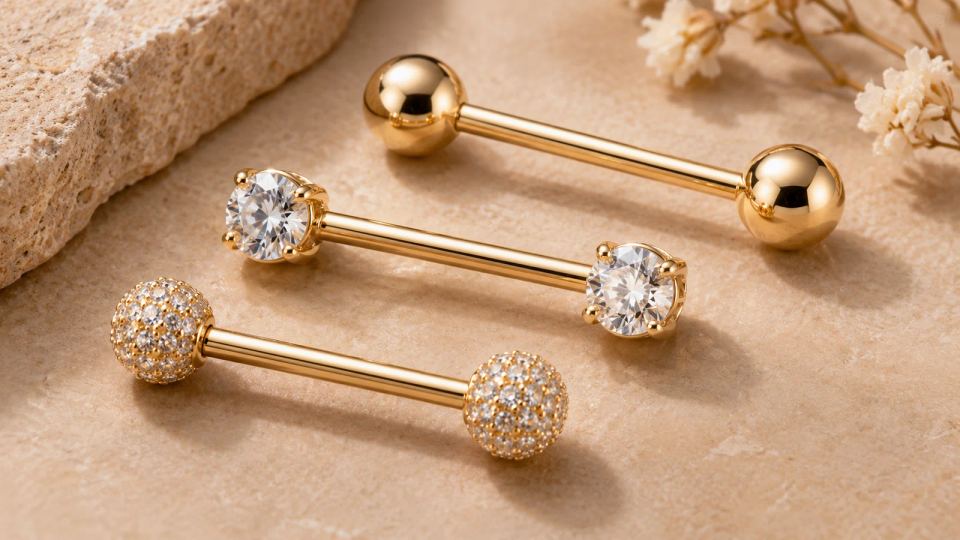
Ask your piercer to write down the gauge, wearable length, material and attachment system of the jewellery that fits you. Keep that information with the date and maker, and update it after any professional fitting. When comparing an unfamiliar brand, check whether its measurements exclude the ends and whether the closure is compatible with your existing parts. If you have two piercings, record the measurements separately rather than assuming symmetry. The small amount of administration makes later purchases easier and helps avoid returning a beautiful piece that is the wrong size. Use the nipple jewellery sizes and fitting guide to keep those dimensions separate.
Shopping for a useful collection
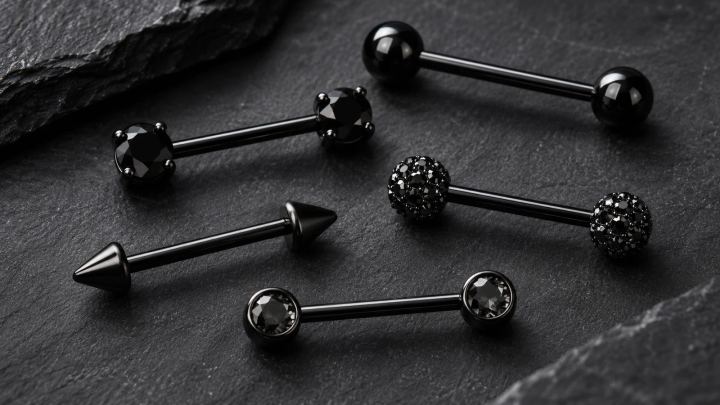
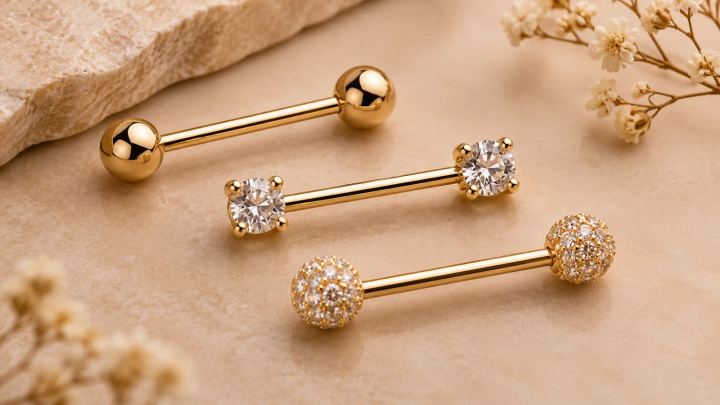
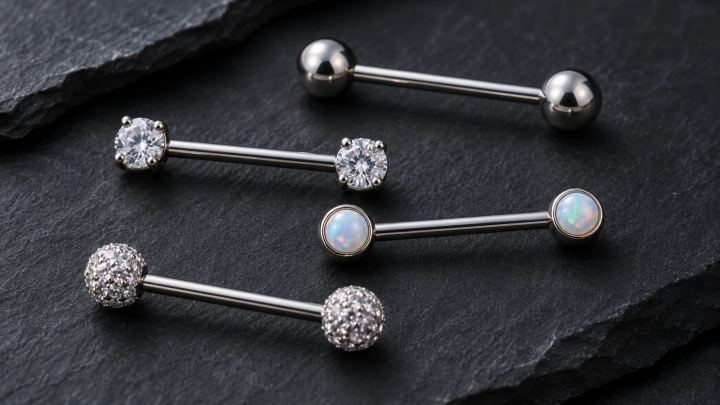
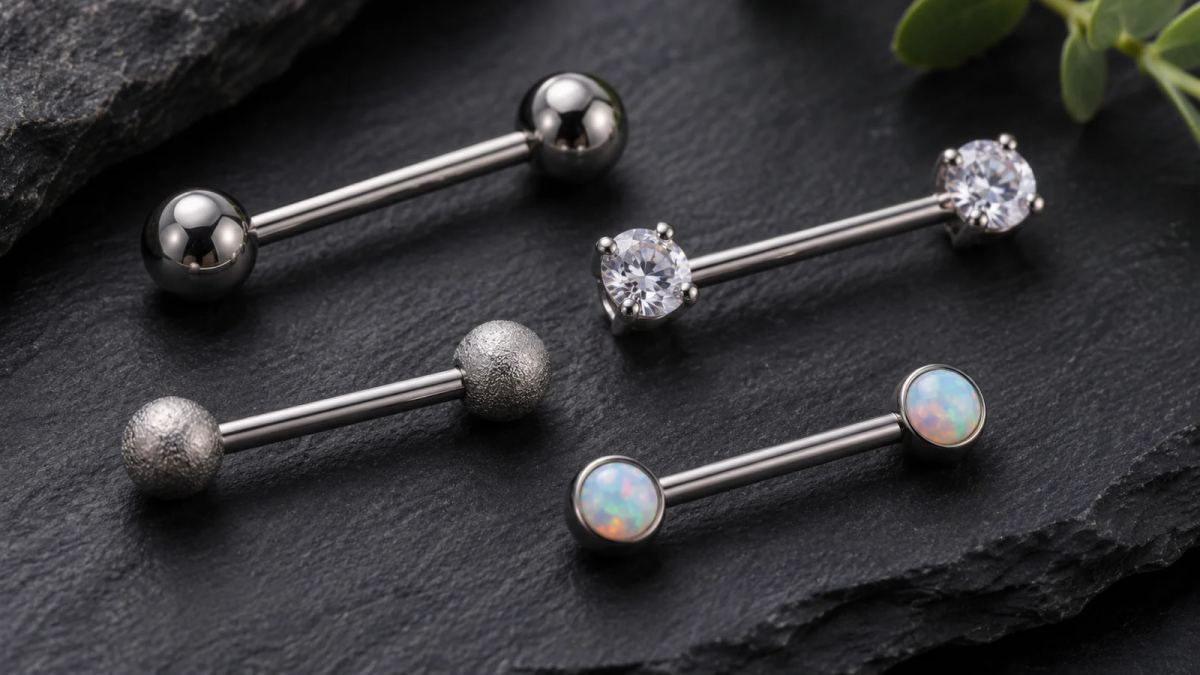
For a healed piercing, begin with a simple piece that suits your daily routine. A more decorative option can then be evaluated against that baseline, rather than becoming the only piece you own. Assess whether the jewellery will catch on textured clothing, whether the manufacturer sells replacement attachments and whether the retailer explains dimensions clearly. Price differences can reflect materials, workmanship, stone settings and branding, but none proves quality in isolation. Treat our editorial illustrations as examples of shapes and finishes; catalogue photographs and individual specifications are the appropriate evidence for a named product. The nipple jewellery buying guide compares representative catalogue options using these criteria.

At a glance
| Type | What to assess |
|---|---|
| Straight barbell | Gauge, wearable span and attachment size |
| Ring or clicker | Inner diameter, curvature and seam |
| Shield | Central wearable component and frame opening |
| Dangle | Underlying fit, projection and movement |
We may earn a commission through affiliate links. These examples are based on listed specifications, not hands-on testing. Confirm material documentation, fit and current availability with the seller and your piercer.
OUFER catalogue examples to compare

2Pcs Internally Threaded Titanium Nipple Barbell Pair - Opal
Merchant-listed titanium pair with internally threaded construction and opal accents; the product handle specifies 14G and 14 mm. Verify material documentation and usable length.
Check price at Oufer
Titanium Clicker Nipple Shield Pair
Listed as a titanium hinged shield pair. The product handle indicates 14G and 9/16 inch; confirm which dimension that describes.
Check price at Oufer
OUFER 14K Gold Ball Nipple Ring - 14mm
Listed solid gold ball design, 14 mm variant. Verify the gauge and wearable length against your fitting record.
Check price at Oufer
2PCS CZ Heart Shield Rose Gold Nipple Barbell
Merchant-listed 14G heart shields with cubic zirconia. Confirm the frame measurements, actual material and construction.
Check price at OuferFrequently asked questions
Can I buy initial jewellery online?
Discuss the choice with the piercer who will perform the piercing; they can assess placement, fit and suitability rather than relying on a catalogue.
Is a matched pair always the same size?
No. Two placements can require different lengths. Matching appearance does not require identical wearable measurements.
What if jewellery feels uncomfortable?
Stop experimenting with changes and seek professional assessment; suspected infection needs prompt medical care.
Sources and further guidance
Nipple Piercing Jewellery Library
Complete guide
Main guides
- Best Nipple Piercing Jewellery
- Nipple Piercing Jewellery Types and Styles
- Nipple Piercing Jewellery Materials: Titanium, Gold and Steel
- Nipple Piercing Jewellery Sizes and Fitting Guide
Supporting guides
- Best Titanium Nipple Piercing Jewellery
- Best Gold Nipple Piercing Jewellery
- Best Black Nipple Piercing Jewellery
- Best Nipple Piercing Jewellery for Sensitive Skin
- Nipple Barbells: Styles, Materials and Fit
- Nipple Shields: A Complete Buying Guide
- Nipple Rings vs Barbells: Which Is Better?
- Decorative and Dangle Nipple Piercing Jewellery
- Nipple Piercing Retainers: Types and Uses
- Internally vs Externally Threaded Nipple Jewellery
- What Gauge Is a Nipple Piercing?
- How to Measure Nipple Piercing Jewellery
- When Can You Change Nipple Piercing Jewellery?
- How to Clean Nipple Piercing Jewellery