What to know before choosing
An internally threaded barbell has its screw thread inside the shaft; an externally threaded bar has exposed threads on its end when the attachment is removed. Threadless jewellery uses another fastening system. These designs are not universally interchangeable, and smooth construction is important.
What the names describe
Threading refers to the mechanism connecting a removable attachment to the shaft. With an internally threaded bar, the shaft contains a threaded opening and the end has a corresponding small screw projection. In an externally threaded design, the shaft itself has an exposed threaded portion and the attachment fits over it. The distinction is about the position of the fastening, not whether the external surface is silver or gold. A product image showing an assembled barbell may conceal the mechanism. Seek an exploded view or a clear written description to establish how the actual piece is constructed. Our nipple jewellery types guide explains how the closure relates to the underlying structural design.
Why the wearable surface matters
Professional guidance favours jewellery construction that avoids passing exposed screw threads through healing tissue. An internally threaded shaft can have a smooth external surface when its attachment is removed, whereas an externally threaded portion has a different surface geometry. This is a reason to consider fastening design alongside material and polish. An internal thread by itself does not establish that the product is appropriately finished or made of a suitable alloy. Initial jewellery is selected and fitted by a professional who can assess all these factors. Do not use the fastening label alone as a medical-quality assurance.
Threadless jewellery is a separate system
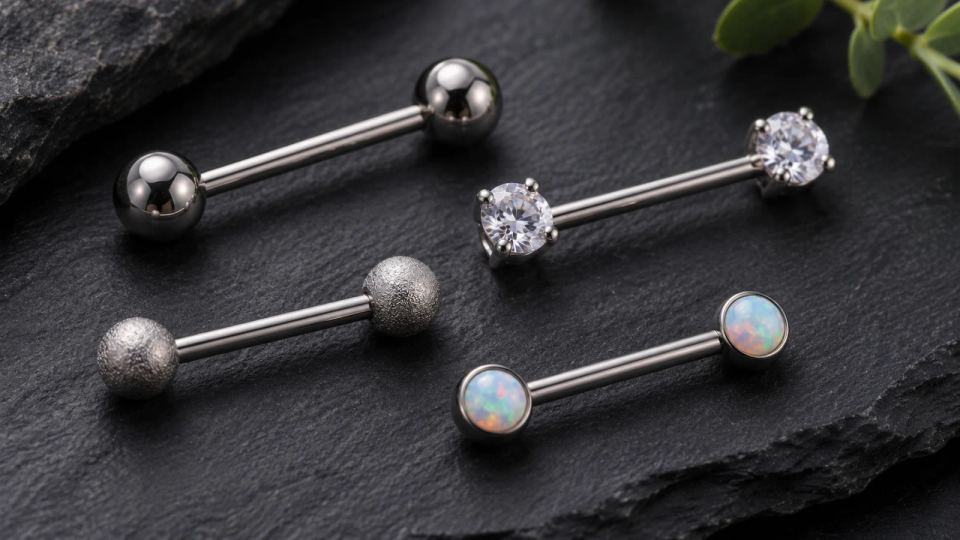
A threadless design does not use a conventional screw connection between the end and shaft. It uses a compatible pin and receiving component according to the particular manufacturer's design. This may provide another option when considering body jewellery construction, but the parts still need to belong to a compatible system. Do not try to convert a threaded bar by fitting a similarly sized threadless end. If a closure becomes loose or difficult to operate, ask a professional to examine it. The product instructions and exact attachment type matter more than the broad category name.
Gauge does not establish end compatibility
Two bars of the same nominal gauge may use different thread diameters or pitches. Their decorative ends can therefore look interchangeable while having incompatible connections. Even within a manufacturer, confirm that a replacement is intended for the specific model. A seller may offer individual ends in addition to complete bars, and the listing must distinguish those components clearly. Keep the purchase record and fastening specification if you want to replace an attachment later. Do not force an end to fit or try to repair a damaged screw thread yourself; seek advice about replacement. For a separate placement-specific explanation, see our guide to threaded and threadless navel jewellery; sizing and geometry still need to be assessed for each placement.
Compare available designs without overinterpreting claims
Catalogue models may be explicitly identified as internally threaded, while another product listing may not specify the mechanism at all. The absence of that information is a reason to request clarification, not to classify it by appearance. A model identified as internally threaded titanium has two separate claims: the fastening and the material. The first does not independently verify the second. Similarly, a solid-gold threadless bar still needs appropriate alloy composition, smooth construction and individual fit. The merchant-listed examples below are useful for comparing advertised mechanisms rather than claiming the products have been independently inspected.

What to record for future jewellery changes
Ask your piercer to identify the fastening of the jewellery already fitted and record its manufacturer, shaft gauge and wearable length. If the assembly uses a removable decorative end, record its model or part number where possible. When ordering a replacement, match the exact system and do not rely on a photograph of two assembled pieces. For a healing piercing, leave elective changes to a professional. For an established placement, the fit of a new assembly remains relevant even when its fastening is familiar. A secure, compatible attachment is only one part of a well-chosen piece.
At a glance
| Mechanism | Description |
|---|---|
| Internal thread | Thread located in shaft opening |
| External thread | Thread on end of shaft |
| Threadless | Compatible pin and receiving component |
We may earn a commission through affiliate links. These examples are based on listed specifications, not hands-on testing. Confirm material documentation, fit and current availability with the seller and your piercer.
OUFER catalogue examples to compare

2Pcs Internally Threaded Titanium Nipple Barbell Pair - Opal
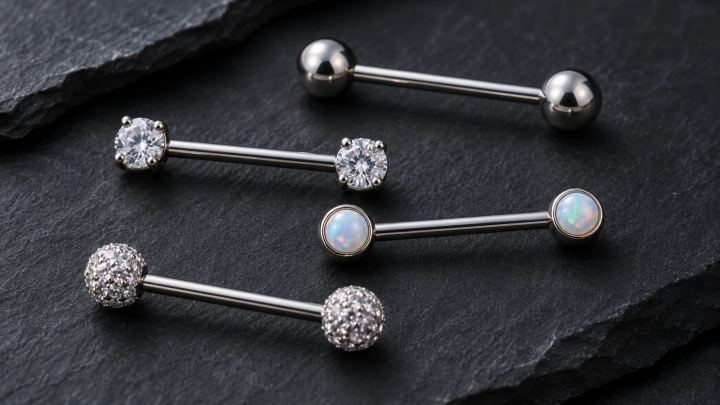
Merchant-listed titanium pair with internally threaded construction and opal accents; the product handle specifies 14G and 14 mm. Verify material documentation and usable length.
Check price at Oufer
2PCS Internally Threaded Titanium Nipple Rings Pack - Gold
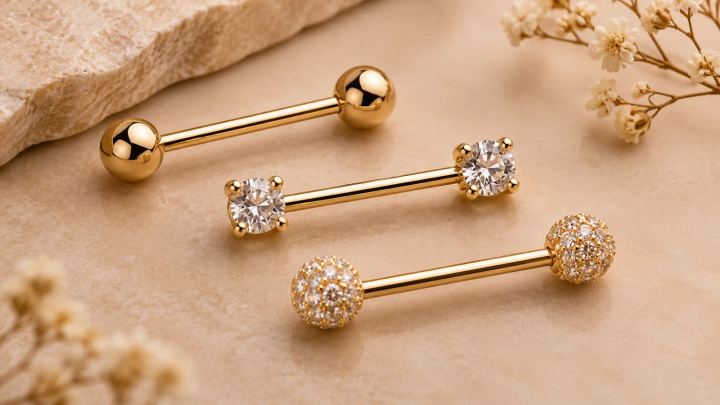
Gold-coloured titanium variant with advertised internal threading. This is not a solid-gold claim; verify the surface treatment and material documentation.
Check price at Oufer
OUFER 14K Gold Heart CZ Nipple Ring
Merchant describes a threadless solid 14K gold pair with heart-shaped cubic zirconia. Confirm compatible fitting and attachment details.
Check price at OuferFrequently asked questions
Is internally threaded jewellery always implant grade?
No. Threading describes the connection; material documentation is a separate requirement.
Are threaded ends universal at 14G?
No. The thread specifications can vary even when the shaft thickness matches.
Is threadless jewellery the same as externally threaded?
No. It uses a different attachment mechanism.
Sources and further guidance
Nipple Piercing Jewellery Library
Complete guide
Main guides
- Best Nipple Piercing Jewellery
- Nipple Piercing Jewellery Types and Styles
- Nipple Piercing Jewellery Materials: Titanium, Gold and Steel
- Nipple Piercing Jewellery Sizes and Fitting Guide
Supporting guides
- Best Titanium Nipple Piercing Jewellery
- Best Gold Nipple Piercing Jewellery
- Best Black Nipple Piercing Jewellery
- Best Nipple Piercing Jewellery for Sensitive Skin
- Nipple Barbells: Styles, Materials and Fit
- Nipple Shields: A Complete Buying Guide
- Nipple Rings vs Barbells: Which Is Better?
- Decorative and Dangle Nipple Piercing Jewellery
- Nipple Piercing Retainers: Types and Uses
- What Gauge Is a Nipple Piercing?
- How to Measure Nipple Piercing Jewellery
- When Can You Change Nipple Piercing Jewellery?
- How to Clean Nipple Piercing Jewellery