What to know before choosing
A nipple barbell is generally a straight shaft with an attachment at each end. Compare wearable length, gauge, attachment dimensions, fastening and material. A barbell that looks straightforward still needs a professionally assessed fit.
Anatomy of a barbell
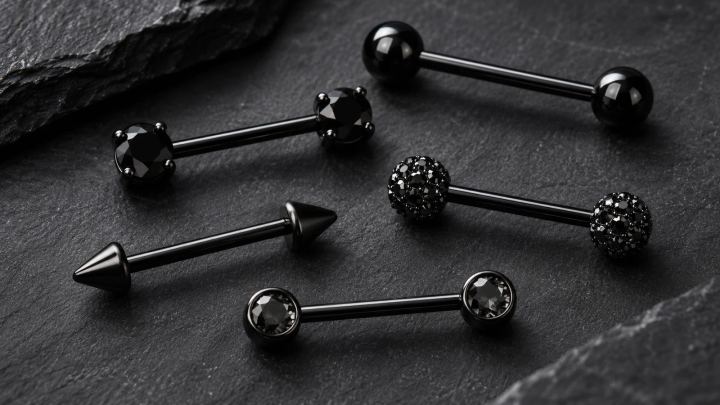
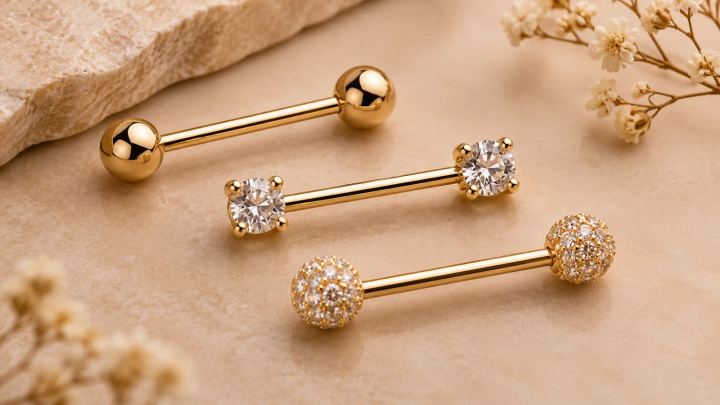
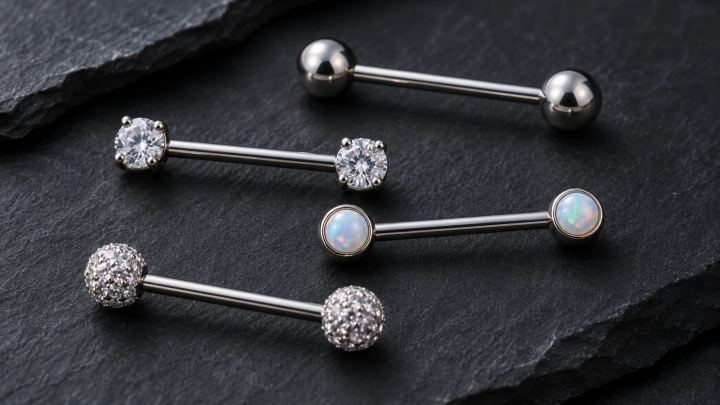
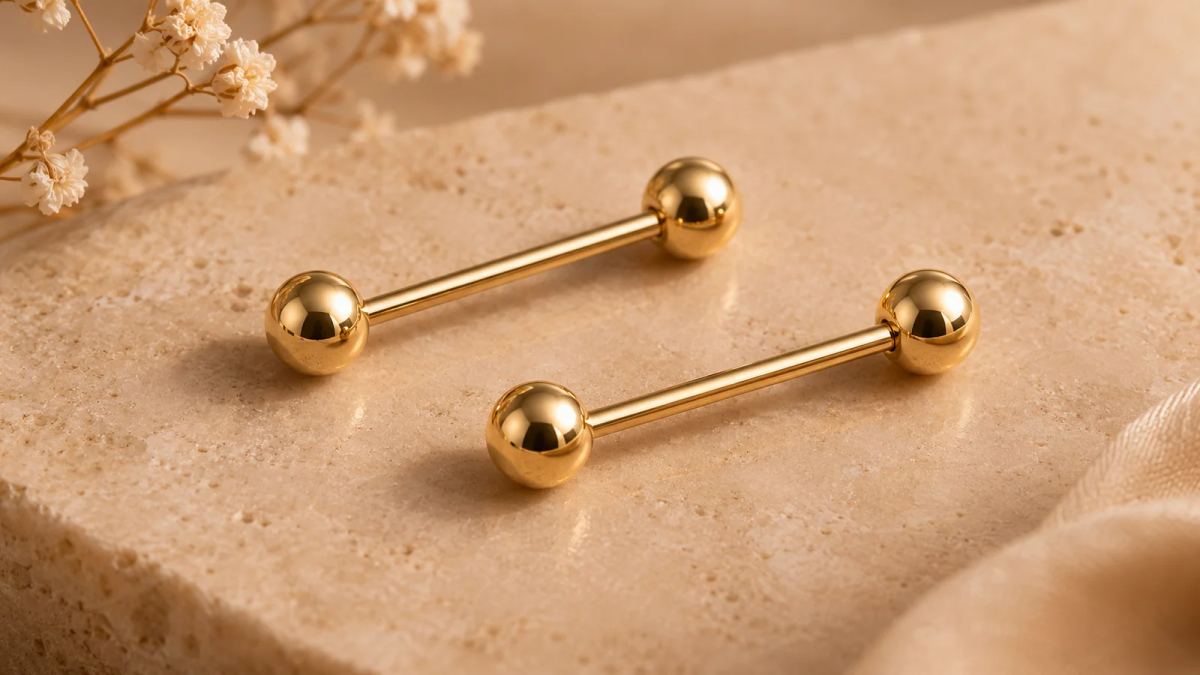
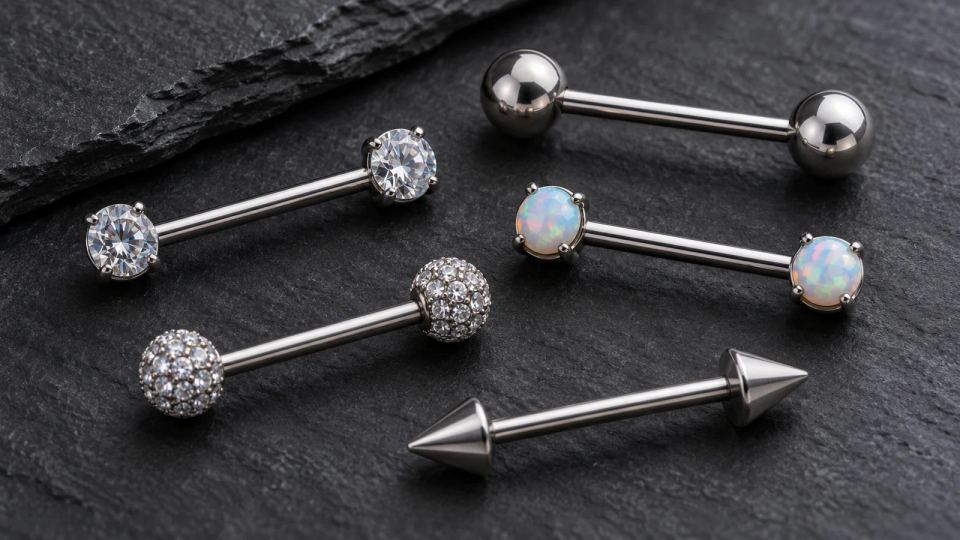
A straight barbell consists of a shaft and two end components, at least one of which is usually removable. The visible balls or ornaments keep the piece in position and create its exterior appearance. A catalogue may call a straight bar a nipple ring even though it has no circular wearable portion. Look at the shape itself rather than relying on the category label. For the wearer, the useful questions are which part sits in the channel, how the ends attach and how much space the assembled piece occupies. All three are needed to compare apparently similar models. See our guide to nipple jewellery types to compare a barbell with rings and decorative frames.
Length and end size work together
A bar's length is normally expressed as the wearable distance between the ends. That dimension does not specify the diameter of a ball or width of a decorative attachment. A model with large end components may project significantly beyond the tissue even when its central span matches the current piece. Conversely, a small attachment may create different pressure considerations. An experienced piercer can check the fit of both the shaft and the ends. If a product page provides only its total length, do not assume the centre span matches your established measurements.
Plain balls and low-profile alternatives
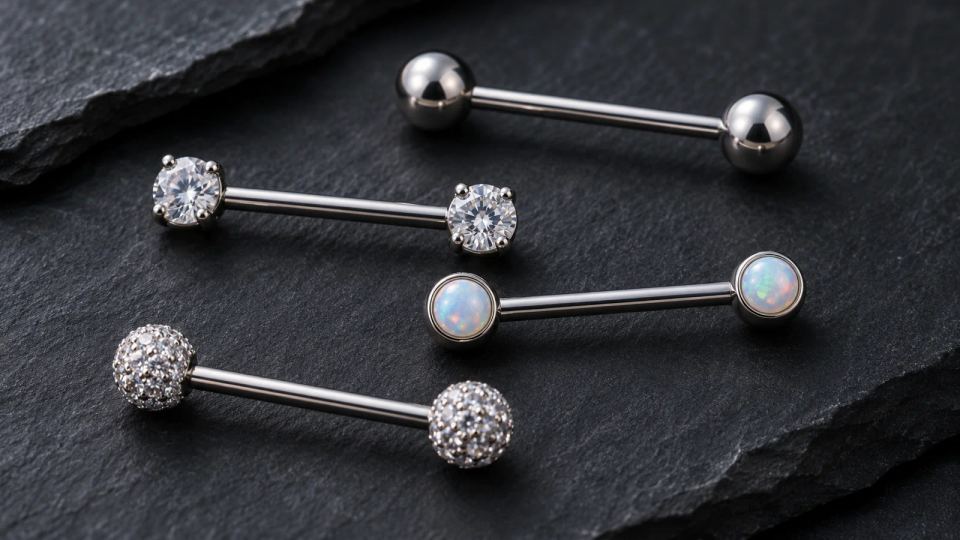
Plain spherical ends are easy to recognise and can offer a straightforward visual design. Other options include discs, bezel-set gems and shaped motifs. A flatter end can change the way a piece interacts with clothing, but this depends on its width, edge shape and the anatomy it is fitted to. A piece marketed as low profile is not automatically suitable. Look for side images and dimensions rather than choosing solely from a face-on photograph. For an everyday barbell, assess the profile of the entire assembly and how it compares with the piece already comfortably fitted.
Threaded and threadless construction
Internally threaded and externally threaded barbells differ in where their screw threads are located. A threadless model uses a different attachment mechanism and is not interchangeable with a threaded end. The outside diameter of a shaft does not by itself establish the compatibility of replacement parts. Keep the manufacturer's product identifier and closure type in your jewellery record. If you are unsure whether a replacement attachment matches the existing shaft, consult the retailer or piercer. Never force components together because they appear to be the same size, particularly when an end has become damaged.
Selecting a material and finish
A simple barbell can be made with many metal alloys and finishes. Ask for the documented material and relevant standard rather than inferring it from a polished silver or gold colour. A decorative gemstone end may introduce another material or construction method, so the description of the shaft is not the whole story. Initial jewellery is selected for suitability during healing, not for the largest range of visual choices. For established piercings, compare a well-described basic model against decorative alternatives while keeping your measured requirements consistent. The product examples illustrate catalogue designs rather than independently tested quality.
When a different barbell may be appropriate
A change in style or size may be reasonable after a professional has assessed the placement and healing stage. If your initial bar feels long after swelling subsides, request a fitting review rather than assuming a specific shorter length is correct. If an established bar catches frequently, identify whether its length, attachment shape or daily activities are contributing. A different design might be helpful, but guessing can create new fitting problems. Record the current dimensions and explain the difficulty to your piercer so they can recommend an appropriate adjustment or alternative.
We may earn a commission through affiliate links. These examples are based on listed specifications, not hands-on testing. Confirm material documentation, fit and current availability with the seller and your piercer.
OUFER catalogue examples to compare

2Pcs Internally Threaded Titanium Nipple Barbell Pair - Opal
Merchant-listed titanium pair with internally threaded construction and opal accents; the product handle specifies 14G and 14 mm. Verify material documentation and usable length.
Check price at Oufer
OUFER 14K Gold Ball Nipple Ring - 14mm
Listed solid gold ball design, 14 mm variant. Verify the gauge and wearable length against your fitting record.
Check price at Oufer
Synthetic Opal Rose Gold Nipple Barbell Pair - Rose Gold-White Opal
Rose-gold-coloured opal pair; the product handle identifies 316L stainless steel, not solid gold. Confirm actual substrate and finish.
Check price at OuferFrequently asked questions
Is a nipple barbell always straight?
Straight bars are common for conventional placements, but the appropriate shape is individually assessed.
Can I use a tongue barbell with the same gauge?
Do not assume interchangeability; length, end geometry, material and intended placement may differ.
Are replacement balls universal?
No. Threads and attachment mechanisms vary by manufacturer and model.
Sources and further guidance
Nipple Piercing Jewellery Library
Complete guide
Main guides
- Best Nipple Piercing Jewellery
- Nipple Piercing Jewellery Types and Styles
- Nipple Piercing Jewellery Materials: Titanium, Gold and Steel
- Nipple Piercing Jewellery Sizes and Fitting Guide
Supporting guides
- Best Titanium Nipple Piercing Jewellery
- Best Gold Nipple Piercing Jewellery
- Best Black Nipple Piercing Jewellery
- Best Nipple Piercing Jewellery for Sensitive Skin
- Nipple Shields: A Complete Buying Guide
- Nipple Rings vs Barbells: Which Is Better?
- Decorative and Dangle Nipple Piercing Jewellery
- Nipple Piercing Retainers: Types and Uses
- Internally vs Externally Threaded Nipple Jewellery
- What Gauge Is a Nipple Piercing?
- How to Measure Nipple Piercing Jewellery
- When Can You Change Nipple Piercing Jewellery?
- How to Clean Nipple Piercing Jewellery