When is a change appropriate?
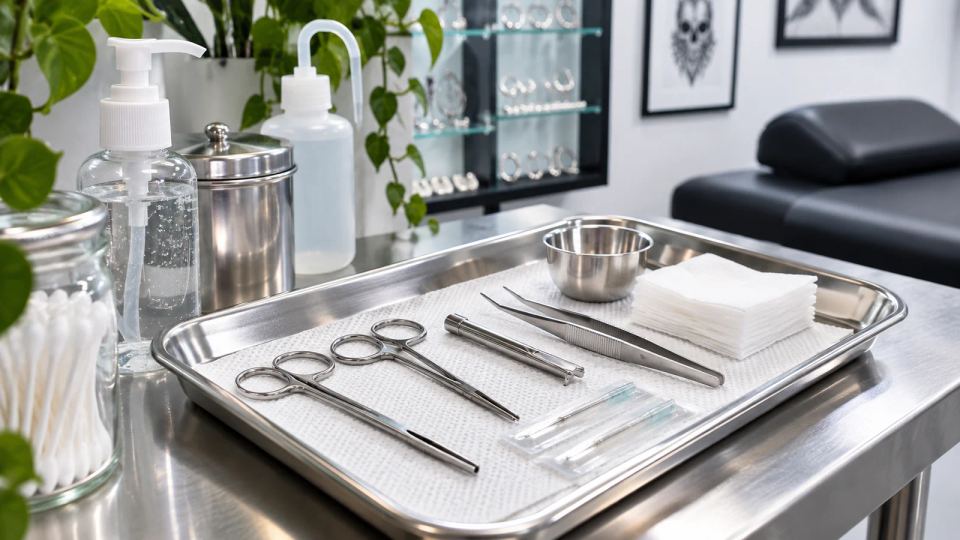
Wait until a qualified piercer confirms that the piercing is fully healed before elective jewellery changes. Nipple piercings can take many months to heal, and outward appearance alone does not establish readiness. A necessary adjustment during healing should be performed by a professional.
Healing is not just the absence of tenderness
A piercing may look settled on the outside while the interior of its channel remains fragile. Feeling comfortable for several days is not the same as having completed healing. Healing varies between people and can be affected by repeated irritation, pressure and other health or lifestyle factors. An online calendar cannot establish the condition of an individual placement. Before changing jewellery for appearance, arrange a review with your piercer, especially if you have experienced intermittent tenderness, crusting or swelling. Tell them about any recent problems rather than relying solely on how the piercing looks on the appointment day.
A professional downsize is a different decision
Initial jewellery may be selected with extra length to accommodate swelling. When the tissue changes, the piercer may consider a different wearable span to improve fit. This can occur before the entire healing process is complete, but it is a professional decision and not permission for elective home changes. Ask what is being adjusted and why. A shorter bar still has to accommodate the particular placement without unwanted pressure. If your jewellery feels too tight or seems to be embedding, contact the piercer promptly and obtain medical attention where there is concern about infection or another complication.
Do not use a fixed date as proof
The time since the original appointment is useful information, but it is only part of the assessment. Nipple piercings often require an extended healing period; two people pierced on the same day may be ready for jewellery changes at very different times. An older piercing can also become irritated after an accidental snag or unsuitable change. Keep track of the course of healing and any incidents that have affected the placement. If the area has recently become uncomfortable, postpone a decorative change until the cause has been assessed rather than assuming an old piercing cannot have a problem. For a different placement's healing considerations, see our guide to changing navel jewellery; sizing and geometry still need to be assessed for each placement.
Plan the replacement before the appointment
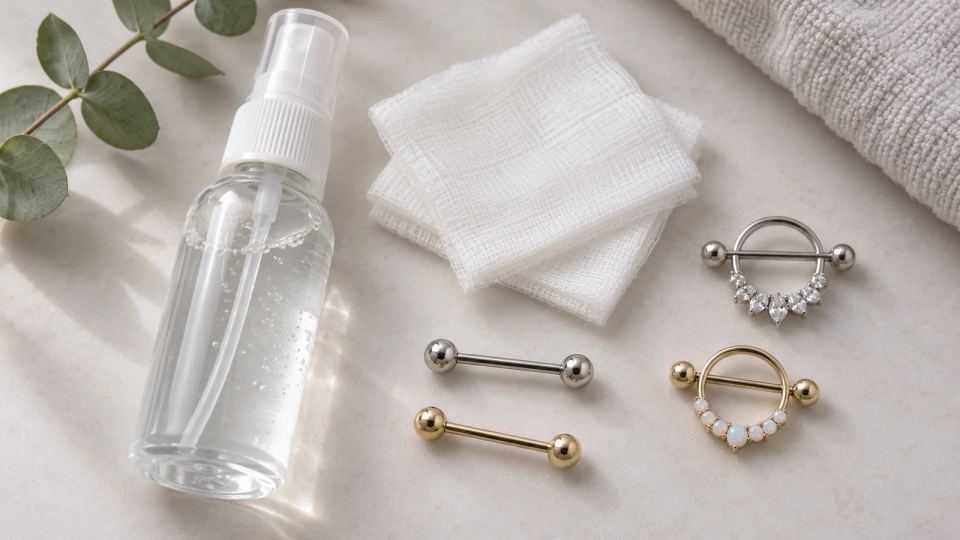
If you want a different look, bring the product specifications or ask your piercer to source the jewellery. Record the current gauge, wearable length, material and fastening. A different shape such as a ring or shield may require additional fitting considerations even if it is marketed for the same body location. Ask about the finish, material documentation and the dimensions of any decorative attachments. Avoid purchasing several unsuitable variants in the hope that one will fit. A well-prepared appointment can establish both the readiness of the piercing and the requirements for a suitable replacement. Our nipple jewellery fitting guide explains how to record a wearable span without confusing it with gauge.
When a change should be postponed
Increasing pain, heat, swelling, unusual discharge or feeling unwell can indicate a problem that requires medical assessment. Do not diagnose an infection from a photograph or try to treat it by replacing the jewellery with a different metal. The NHS advises urgent medical help for suspected infected piercings and leaving the jewellery in unless a doctor recommends removal. A piercer can help evaluate fit and mechanical irritation, but medical concerns need the appropriate healthcare professional. A planned decorative change can wait until the problem has been addressed and the placement is suitable.
After a professionally assessed change
Once your piercer has confirmed readiness and fitted a suitable replacement, observe how the new design behaves during ordinary activities. A broader attachment, longer bar or different geometry may interact differently with clothing. Follow the professional's care advice and contact them if you notice persistent pressure or discomfort. Keep the product identifier and dimensions in your fitting record to make later comparisons easier. Avoid frequent unnecessary changes, particularly to a recently healed placement. Changing jewellery should be a considered choice based on fit, condition and construction, not a way to test whether a piercing has healed.
Frequently asked questions
Can I change jewellery after six months?
A calendar alone cannot establish readiness; have a piercer assess the actual healing status.
Can a piercer change jewellery during healing?
Yes, where a necessary fitting adjustment is professionally indicated.
Should I change jewellery if I think it is infected?
Seek prompt medical help and do not remove it unless instructed by a clinician.
Sources and further guidance
Nipple Piercing Jewellery Library
Complete guide
Main guides
- Best Nipple Piercing Jewellery
- Nipple Piercing Jewellery Types and Styles
- Nipple Piercing Jewellery Materials: Titanium, Gold and Steel
- Nipple Piercing Jewellery Sizes and Fitting Guide
Supporting guides
- Best Titanium Nipple Piercing Jewellery
- Best Gold Nipple Piercing Jewellery
- Best Black Nipple Piercing Jewellery
- Best Nipple Piercing Jewellery for Sensitive Skin
- Nipple Barbells: Styles, Materials and Fit
- Nipple Shields: A Complete Buying Guide
- Nipple Rings vs Barbells: Which Is Better?
- Decorative and Dangle Nipple Piercing Jewellery
- Nipple Piercing Retainers: Types and Uses
- Internally vs Externally Threaded Nipple Jewellery
- What Gauge Is a Nipple Piercing?
- How to Measure Nipple Piercing Jewellery
- How to Clean Nipple Piercing Jewellery