What to know before choosing
For initial jewellery, prioritise a professionally verified biocompatible material and smooth construction. Documented implant-grade titanium, suitable steel grades or appropriately alloyed solid gold can be options. A colour or generic metal label alone is not proof of suitability.
Distinguish material names from standards
A product name is a marketing label, not a certificate. Titanium covers multiple grades; stainless steel covers numerous alloys; and a golden finish can be applied to very different substrates. In a healing piercing, material selection is part of wound management and belongs with the professional who fits the jewellery. The maker should be able to describe the actual material and the relevant specifications. For an established piercing, transparency remains useful because it helps identify what changed when two otherwise similar items behave differently. Do not make a purchase based solely on a vague claim such as premium metal. Our complete nipple jewellery guide explains how material choices relate to fitting and wear.
Titanium and documentation
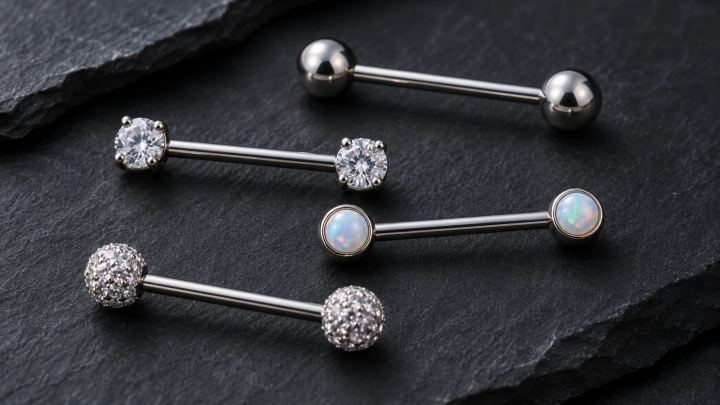
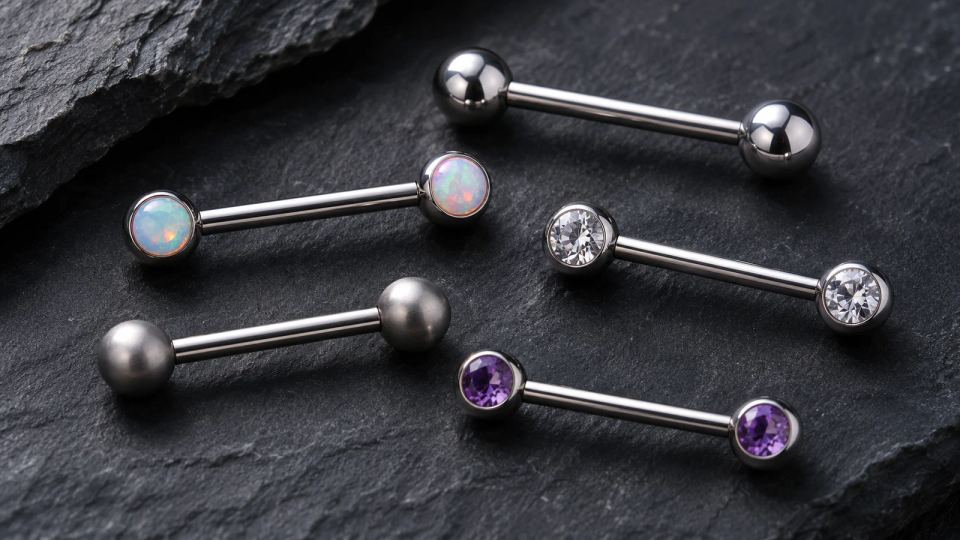
The Association of Professional Piercers identifies particular titanium specifications, including ASTM F136 and F67, among appropriate materials for initial jewellery. These designations refer to defined material requirements rather than a colour or style. A retailer that offers an implant-grade claim should be able to provide meaningful documentation or explain its manufacturer's sourcing. Titanium can also be anodised to produce different colours. Confirm whether a particular coloured version is anodised or coated, because identical looking finishes can have different construction. A product listing stating titanium without documentation should not be presented as certified implant-grade. The titanium nipple jewellery buying guide compares merchant-listed titanium styles and the limits of their claims.
Solid gold versus gold-coloured finishes
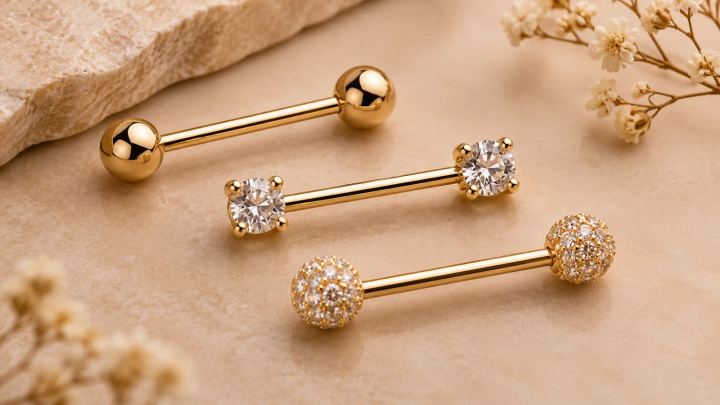
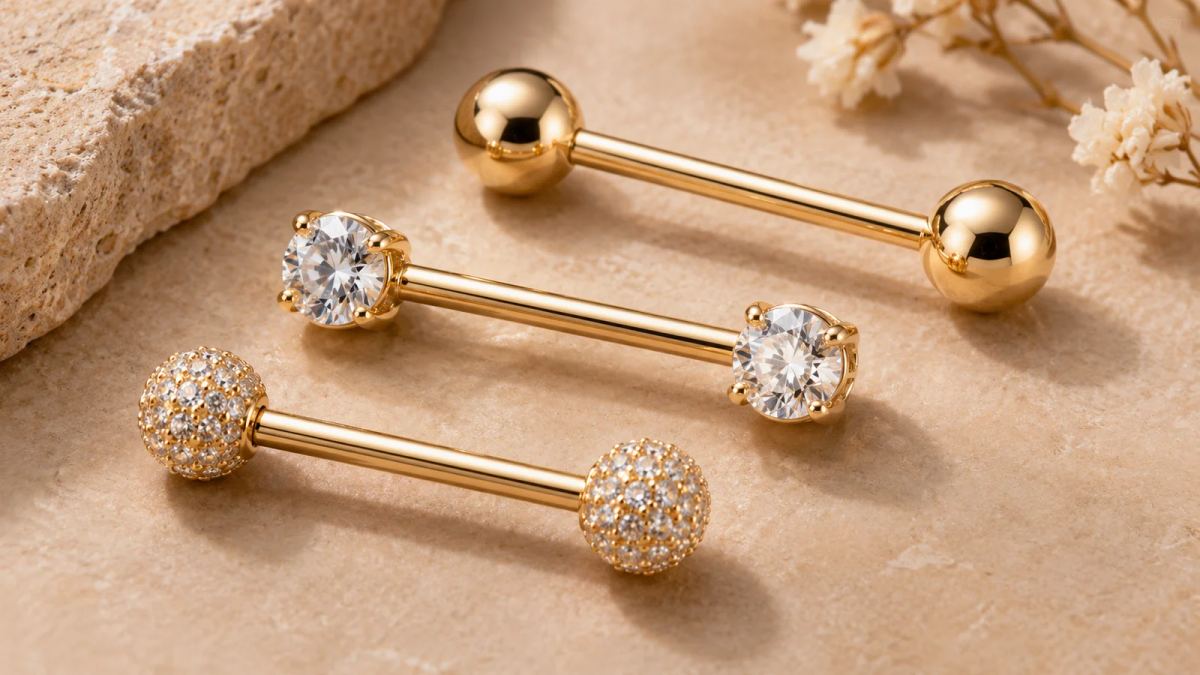
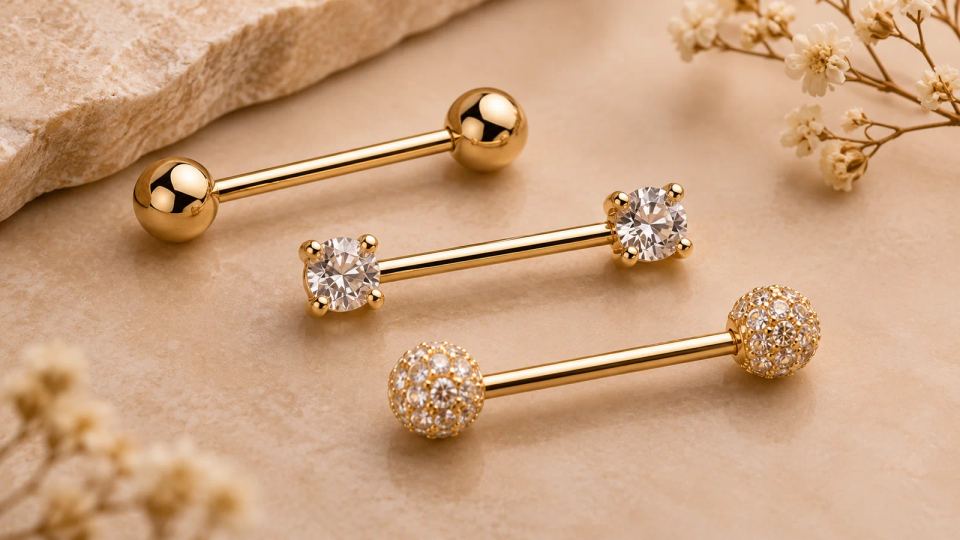
Solid gold jewellery is an alloy of gold and other elements in proportions associated with its karat value. Fourteen-karat jewellery is different from a gold-coloured coating applied to another metal. However, the karat number by itself does not identify every alloy component, and the suitability of the finished piece still depends on composition, finish and construction. Ask about nickel and cadmium where relevant, and whether attachments or settings introduce other metals. A white-gold version is not simply yellow gold with a different photograph; its alloy or surface treatment may differ. Obtain specific information about the variant you intend to buy. Read our gold nipple jewellery buying guide for a closer comparison of solid gold and gold-coloured options.
Stainless steel and nickel concerns
The generic description surgical steel does not identify a particular alloy standard. Some documented grades are recognised in professional piercing guidance, but a bare 316L or surgical description is not equivalent to independent verification. Steel commonly contains nickel, and individual sensitivities are relevant when comparing jewellery. A smooth finish and correct size matter alongside material selection. If your piercing is persistently uncomfortable, do not assume that changing to a different metal will solve it. Pressure, movement, dermatitis and other causes can produce overlapping symptoms and need appropriate assessment. If sensitivity is a concern, our guide to nipple jewellery for sensitive skin separates material questions from possible mechanical causes. For another placement-specific comparison, our titanium versus steel for navel jewellery; sizing and geometry still need to be assessed for each placement.
Surface finish, threading and mixed construction
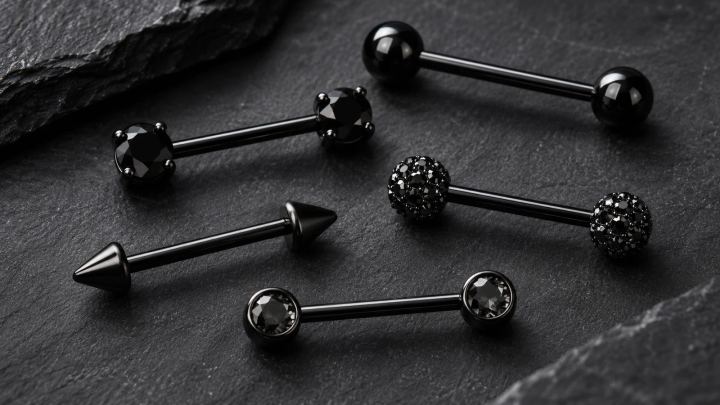
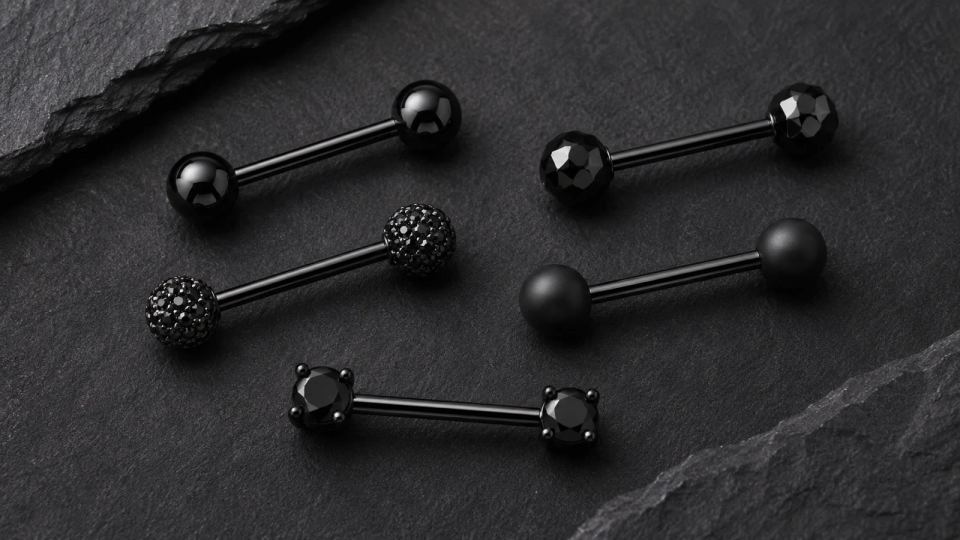
Material quality is only one part of jewellery quality. A rough surface, damaged attachment or unsuitable closure can create problems even when the underlying alloy is well documented. Check the surfaces that will contact the channel, not only the decorative ends in the front photograph. Some pieces combine a metal bar with stone settings, glued accents or different attachment materials; ask which components contact tissue. The fastening should be compatible with the intended bar. Avoid using an editorial image as evidence of a particular alloy, grade or construction; it illustrates appearance, not technical certification.
How to compare unfamiliar product claims
Record the exact brand, model, selected finish, stated alloy and any standard supplied by the maker. Save documentation where available and check whether it applies to the actual product variant. If a retailer does not distinguish plating from solid metal, request clarification before purchase. A professional piercer can help identify reliable suppliers and determine whether an item is suitable for your placement. For a healing piercing, arrange changes through the piercer rather than buying an online substitute. When shopping for an established placement, use the same material evidence alongside dimensions and intended wear.
At a glance
| Material | Evidence to request |
|---|---|
| Titanium | Grade and documentation |
| Steel | Specific alloy or applicable standard |
| Solid gold | Karat, alloy and component construction |
| Coloured finish | Substrate and surface treatment |
We may earn a commission through affiliate links. These examples are based on listed specifications, not hands-on testing. Confirm material documentation, fit and current availability with the seller and your piercer.
OUFER catalogue examples to compare

2Pcs Internally Threaded Titanium Nipple Barbell Pair - Opal
Merchant-listed titanium pair with internally threaded construction and opal accents; the product handle specifies 14G and 14 mm. Verify material documentation and usable length.
Check price at Oufer
2PCS Internally Threaded Titanium Nipple Rings Pack - Gold
Gold-coloured titanium variant with advertised internal threading. This is not a solid-gold claim; verify the surface treatment and material documentation.
Check price at Oufer
OUFER 14K Gold Ball Nipple Ring - 14mm
Listed solid gold ball design, 14 mm variant. Verify the gauge and wearable length against your fitting record.
Check price at Oufer
Synthetic Opal Rose Gold Nipple Barbell Pair - Rose Gold-White Opal
Rose-gold-coloured opal pair; the product handle identifies 316L stainless steel, not solid gold. Confirm actual substrate and finish.
Check price at OuferFrequently asked questions
Is titanium always implant grade?
No. Verify the specification and documentation rather than treating titanium as a certification.
Does gold colour mean solid gold?
No. It may be a coating or anodised finish. Check the variant's listed construction.
Is steel unsuitable for everyone?
No. Appropriate documented grades exist, but individual sensitivities and the particular alloy matter.
Sources and further guidance
Nipple Piercing Jewellery Library
Complete guide
Main guides
- Best Nipple Piercing Jewellery
- Nipple Piercing Jewellery Types and Styles
- Nipple Piercing Jewellery Sizes and Fitting Guide
Supporting guides
- Best Titanium Nipple Piercing Jewellery
- Best Gold Nipple Piercing Jewellery
- Best Black Nipple Piercing Jewellery
- Best Nipple Piercing Jewellery for Sensitive Skin
- Nipple Barbells: Styles, Materials and Fit
- Nipple Shields: A Complete Buying Guide
- Nipple Rings vs Barbells: Which Is Better?
- Decorative and Dangle Nipple Piercing Jewellery
- Nipple Piercing Retainers: Types and Uses
- Internally vs Externally Threaded Nipple Jewellery
- What Gauge Is a Nipple Piercing?
- How to Measure Nipple Piercing Jewellery
- When Can You Change Nipple Piercing Jewellery?
- How to Clean Nipple Piercing Jewellery