Which tongue jewellery styles are appropriate to compare?
A conventional vertical tongue piercing commonly uses a straight barbell. Other placements and unusual configurations need separate professional assessment. Compare smooth ends, documented materials and actual geometry; the retail category alone does not establish suitability.
Recognise the conventional straight design
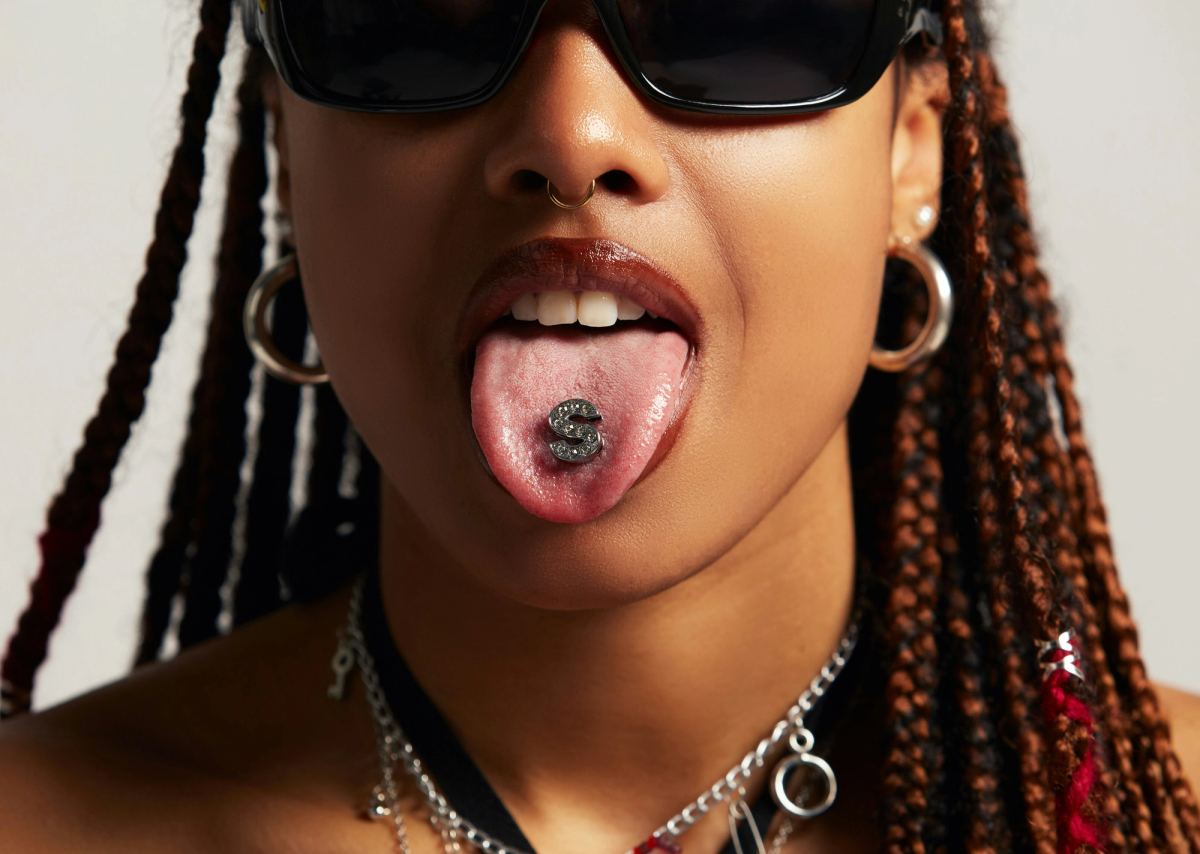
A straight barbell consists of a shaft with an attachment at each end. In a conventional placement one end is visible above the tongue and the other below it. The external appearance may change dramatically when a plain ball is replaced with a motif, even if the shaft is unchanged. The two surfaces are exposed to different parts of the mouth as you speak and eat. A shape intended for a lip, cartilage or eyebrow piercing should not be used just because its thickness matches. A qualified piercer can identify your channel and explain whether a proposed design is appropriate.
Compare plain balls and flatter profiles
A smooth round end and a flat or domed attachment have different outlines. A flatter lower end may reduce contact in some fittings, but dimensions and edge profile still matter. The visible top can also come into contact with teeth. A product photograph taken from above does not show the underside or the height of the setting. Obtain those measurements before judging the piece's suitability. Consider whether a broad disk would occupy more space than your existing end. A low-profile attachment is not a guarantee against dental damage, and a dentist should evaluate any persistent contact or changes in the mouth.

Decorative and novelty designs
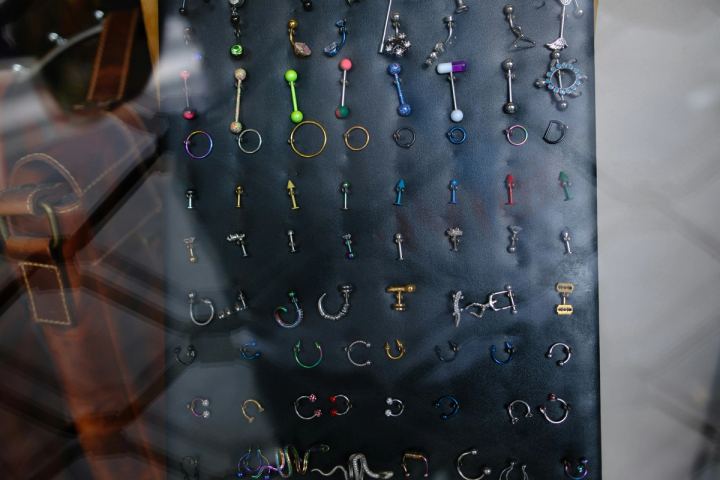
The current feed includes synthetic opal designs, a heart, a star, a butterfly and dice-shaped products. These show how differently the visible end can be styled, but they are not interchangeable recommendations. A broad motif can project beyond the shaft and an angular shape may have corners that catch or press against oral structures. Novelty packs also introduce questions about composition, loose parts and surface durability. Treat these designs as catalogue examples rather than assuming they are appropriate for daily wear. If a piece has uncertain construction or pronounced projections, discuss the concerns with a professional before deciding whether to wear it.
The Tongue Piercing Jewellery: The Complete Guide sets out the wider oral health decision.
For a closer look at attachment mechanisms, consult Internally vs Externally Threaded Tongue Jewellery before mixing components.
Closures and retainers are distinct
Internally threaded ends engage the receiving portion of the shaft; externally threaded shafts have a different construction. Threadless attachments use another compatibility system. Ask the manufacturer or piercer to identify the exact mechanism instead of treating the gauge as the thread specification. A retainer is a distinct product intended for a particular purpose, and no confirmed tongue-retainer match appears in the supplied feed. Clear jewellery is not necessarily appropriate for healing or clinical procedures. Before trying to conceal a piercing or satisfy a dress rule, establish the actual restriction and seek professional advice about available options.

Do not assume unusual placements share the same requirements
A horizontal or otherwise unusual tongue placement raises different anatomical questions from a conventional vertical channel. A curved barbell or a speciality product listed for multiple locations is not a generic alternative. This guide deliberately does not provide instructions for performing or converting placements. Consult an experienced qualified piercer about anatomy and a dentist about oral risks. The ADA advises against cosmetic oral piercing because of potential negative outcomes. A product that looks like a particular style online cannot tell you whether your tongue is suitable for that placement or whether wearing it would cause unacceptable contact.
Choose for the actual environment
Think about the hours you spend talking, eating and performing normal daily activities rather than only the moment a design is visible. Avoid habitual play with jewellery, and consider whether a shape makes that habit more tempting. A professionally assessed existing piece that remains comfortable is not automatically free of dental effects. If you notice new sensitivity or gum changes, arrange a dental review. Where an end repeatedly becomes loose or the piece appears damaged, get appropriate help instead of modifying it. Use the style library to understand differences and the size guide to interpret dimensions, not to bypass professional advice.
For the limits of any style change, read Tongue Piercing Jewellery and Tooth Damage and discuss contact with a dentist.
If the goal is concealment or a specific restriction, read Best Tongue Piercing Retainers before assuming a clear accessory is permitted.
We may earn a commission through affiliate links. These are catalogue examples, not hands-on tests or safety endorsements. Confirm current stock, price, materials and fitting with the merchant and professionals.
OUFER catalogue examples

OUFER Flat Synthetic Opal Titanium Tongue Barbell - White
Merchant claims ASTM F136 titanium and flat synthetic opal top. The feed link identifies 14G and 16mm; confirm actual dimensions and suitability.
Check price at Oufer
OUFER Synthetic Opal Internally Threaded Titanium Tongue Barbell
Listed as internally threaded ASTM F136 titanium with a flat synthetic opal top. No independent material certification or dental safety is established.
Check price at OuferFrequently asked questions
Can I wear a curved eyebrow bar in my tongue?
Do not assume it is compatible. Have the placement and geometry assessed.
Sources and professional guidance
- American Dental Association: oral piercing and jewellery
- Association of Professional Piercers: oral piercing risks
- Association of Professional Piercers: oral aftercare
- Association of Professional Piercers: fitting and downsizing FAQ
- Association of Professional Piercers: initial jewellery
- NHS: infected piercings
Tongue Jewellery Library
Complete guide
Main guides
- Best Tongue Piercing Jewellery
- Best Titanium Tongue Piercing Jewellery
- Tongue Piercing Jewellery Size Guide
Supporting guides
- Best Straight Barbells for Tongue Piercings
- Best Gold Tongue Piercing Jewellery
- Best Black Tongue Piercing Jewellery
- Best Tongue Jewellery for Sensitive Skin
- Best Minimalist Tongue Piercing Jewellery
- Best Decorative Tongue Piercing Jewellery
- Titanium vs Surgical Steel Tongue Barbells
- 12mm vs 14mm vs 16mm Tongue Barbells
- 12G vs 14G Tongue Piercing Jewellery
- Internally vs Externally Threaded Tongue Jewellery
- Tongue Piercing Jewellery and Tooth Damage
- Best Tongue Piercing Retainers
- When Can You Change Your Tongue Piercing Jewellery?
- When Should You Downsize Your Tongue Barbell?