
12G versus 14G tongue jewellery
Nominal 12G is approximately 2mm thick; 14G is approximately 1.6mm. A smaller gauge number indicates a thicker shaft. Match your professionally confirmed piercing dimensions and do not force a change in gauge.
Separate shaft thickness from bar length
A label that combines gauge and millimetres describes more than one dimension. The gauge refers to the diameter of the shaft passing through the tongue, whereas the advertised wearable length refers to the span between the attachments according to the supplier's convention. The ball diameter or decorative end width may be stated separately. Changing from 14G to 12G is not the same as buying a longer bar. A person looking for a larger visible attachment does not necessarily need a thicker shaft. Ask your piercer to identify the installed jewellery rather than selecting a gauge based on the appearance of the top.
Why four tenths of a millimetre matters
The nominal difference between 2mm and 1.6mm is 0.4mm, which is one quarter of the smaller diameter. For a circular shaft, the cross-sectional area varies with the square of its diameter, so the difference in area is more substantial than the small numerical increment may suggest. These are geometric comparisons, not a plan for changing the size of a piercing. Living tissue should not be forced to accept a thicker piece. A qualified piercer should assess the individual channel and whether any change is appropriate. Do not use household tools or repeated attempts to fit a larger bar.
Gauge does not tell you how prominent the jewellery looks
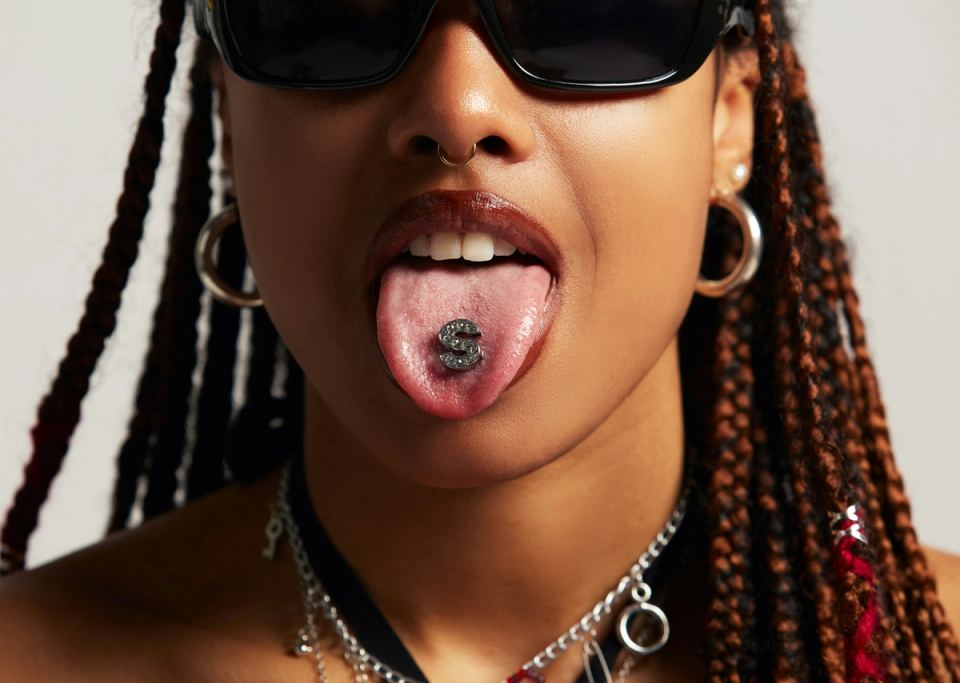
Two complete pieces in different gauges might have attachments of the same visible size. A 12G shaft may be largely concealed within the tongue, while a 14G bar can carry a broad decorative motif. If your goal is a particular aesthetic, compare the dimensions and construction of suitable attachments rather than altering the part that passes through tissue. An apparently thicker shaft is also not a guarantee of higher quality or a more secure closure. The material, surface finish, manufacturer and compatibility of the complete system remain relevant regardless of the advertised gauge.
The Tongue Piercing Jewellery Size Guide distinguishes shaft gauge, length and attachment diameter.
For the independent question of thread compatibility, consult Internally vs Externally Threaded Tongue Jewellery before mixing ends.
Check the attachment specifications separately
A 14G label describes the shaft's nominal thickness; it does not identify a universal thread size. Different manufacturers may use different fittings, even when the exterior shaft diameter matches. A 12G end cannot be assumed compatible with a 14G shaft, and two pieces of the same gauge are not necessarily interchangeable either. Ask the manufacturer or a qualified piercer to identify the closure system. Do not force a mismatched end into the receiving portion of the bar or try to repair an attachment with an improvised adhesive. Secure construction matters especially for a piece worn inside the mouth.

Read the current feed cautiously
The supplied OUFER feed includes a flat synthetic opal example whose destination specifies 14G and 16mm. It does not establish a matching 12G variant of the same piece. That makes it useful as an example of a combined size label, not as evidence that 14G is the universal tongue size or that a 12G comparison product is available. If your piercer has specified 12G, obtain an appropriate bar from a professional supplier rather than substituting the listed 14G option. Verify the variant and actual dimensions before ordering; a heading or generic photo may not describe the selected piece.
Keep dental risk separate from gauge
Neither gauge makes oral jewellery harmless. Tooth and gum contact depends on the full piece and the way it moves in your mouth. A shorter or thicker-looking product does not establish that it will prevent dental damage. The American Dental Association advises against cosmetic oral piercing, and regular dental review matters for existing wearers. If a piece repeatedly contacts teeth or feels uncomfortable, consult a dentist and a qualified piercer rather than changing gauge as an experiment. A helpful fitting record includes shaft thickness, length, end profile, closure and material. Use it to compare products that meet the confirmed specification, not to justify a size change.
The Tongue Piercing Jewellery: The Complete Guide sets the question in the broader context of material, fit and oral health.
We may earn a commission through affiliate links. These are catalogue examples, not hands-on tests or safety endorsements. Confirm current stock, price, materials and fitting with the merchant and professionals.
OUFER catalogue examples

OUFER Flat Synthetic Opal Titanium Tongue Barbell - White
Merchant claims ASTM F136 titanium and flat synthetic opal top. The feed link identifies 14G and 16mm; confirm actual dimensions and suitability.
Check price at OuferFrequently asked questions
Is 12G thinner than 14G?
No. It is nominally thicker.
Sources and professional guidance
- American Dental Association: oral piercing and jewellery
- Association of Professional Piercers: oral piercing risks
- Association of Professional Piercers: oral aftercare
- Association of Professional Piercers: fitting and downsizing FAQ
- Association of Professional Piercers: initial jewellery
- NHS: infected piercings
Tongue Jewellery Library
Complete guide
Main guides
- Best Tongue Piercing Jewellery
- Best Titanium Tongue Piercing Jewellery
- Tongue Piercing Jewellery Size Guide
- Tongue Piercing Jewellery Types and Styles
Supporting guides
- Best Straight Barbells for Tongue Piercings
- Best Gold Tongue Piercing Jewellery
- Best Black Tongue Piercing Jewellery
- Best Tongue Jewellery for Sensitive Skin
- Best Minimalist Tongue Piercing Jewellery
- Best Decorative Tongue Piercing Jewellery
- Titanium vs Surgical Steel Tongue Barbells
- 12mm vs 14mm vs 16mm Tongue Barbells
- Internally vs Externally Threaded Tongue Jewellery
- Tongue Piercing Jewellery and Tooth Damage
- Best Tongue Piercing Retainers
- When Can You Change Your Tongue Piercing Jewellery?
- When Should You Downsize Your Tongue Barbell?