Choosing a straight tongue barbell
For a conventional established tongue piercing, a straight barbell with professionally confirmed dimensions is the usual starting comparison. The fit, finish and profile of both ends matter more than the visual design. No barbell removes the risks of dental damage.
What straight means in a product listing
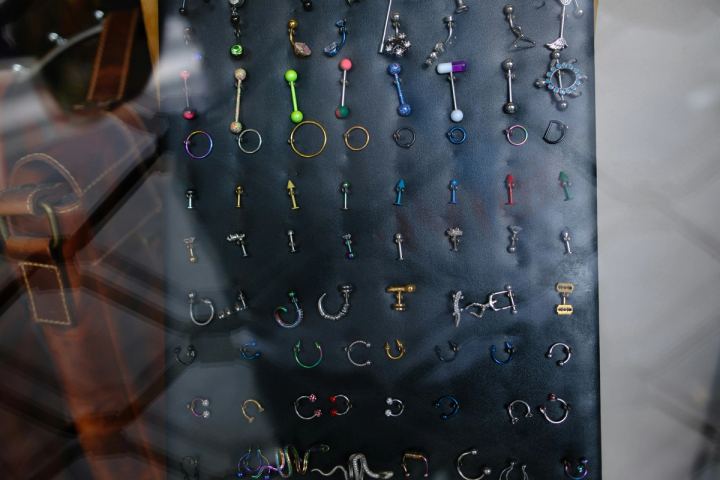
A straight shaft connects two attachments without the arc found in a curved eyebrow bar or circular ring. This geometry is common for conventional vertical tongue placements, but the appropriate shape still depends on the individual channel. Retailers sometimes call a straight barbell a tongue ring even though it has no circular part. Inspect the description and images carefully. If the title lists several body locations, do not assume that the same shape is appropriate for each. A qualified piercer can confirm the geometry of your existing placement and identify whether the product is compatible before it is introduced into the mouth.
Start with both attachments
A conventional straight barbell may have rounded ends, a domed lower end or a decorative upper attachment. Each touches or approaches different oral structures when the tongue moves. A plain ball often offers a simpler shape to assess than an elaborate motif, but its diameter remains important. A larger sphere can project more than a modest flat attachment, while a wide disk can occupy more lateral space. Obtain the actual width and thickness rather than relying on an enlarged photograph. Ask a qualified piercer to evaluate both ends and a dentist to assess any existing tooth or gum contact.

Do not order the swelling-length bar again automatically
The professionally fitted initial bar may include extra space for swelling. After that swelling settles, a piercer may advise a shorter replacement to reduce excess movement. If your original bar was 16mm, that does not establish that the appropriate long-term piece is also 16mm. Conversely, ordering a shorter bar simply because you want it to look neater may create pressure. The decision depends on the tissue and existing fit. Save your updated fitting record, not just the original receipt, and arrange a follow-up if the present jewellery still catches during eating or speech.
For a wider selection comparison, see Best Tongue Piercing Jewellery to compare the complete purchase criteria.
The Tongue Piercing Jewellery Size Guide explains the dimensions to confirm.
Check the threaded or threadless system
A complete barbell should have compatible attachments and a properly finished shaft. Internal threads place the threaded post on the removable end, but products using the same nominal gauge may still have different thread specifications. If you have spare decorative ends, identify their manufacturer and system rather than trying them against an unrelated shaft. Do not repair loose ends with glue or household tools. A damaged or repeatedly insecure closure needs professional attention, especially because a dislodged part in the mouth can present a swallowing or choking hazard. Consider whether you have enough product information to make a responsible purchase.

Compare the actual merchant examples
The current feed includes a flat synthetic opal titanium bar and an internally threaded synthetic opal titanium bar. Both are listed with an ASTM F136 claim from the merchant, not independent certification. The first product's destination identifies a nominal 14G and 16mm variant. These examples illustrate straight-bar styling rather than a full range of suitable plain bars, and neither is presented as a guarantee against tooth damage. Ask about the exact lower end and confirm the dimensions before choosing. If you need a professionally fitted plain piece that the feed does not carry, buy through your piercer instead.
Consider daily wear before deciding
Think about a normal meal, prolonged conversation and the tendency to move jewellery around the mouth. The shaft and ends should not be judged solely from how they look when the tongue is extended. Do not deliberately click the jewellery against teeth or bite it. A dentist can monitor changes in enamel and gum tissue; if the jewellery is causing contact, discuss whether adjusting or removing it is appropriate. The American Dental Association advises against cosmetic oral piercing because of its potential harms. A straightforward construction is easier to describe and compare, but is not a substitute for clinical advice.
The Tongue Piercing Jewellery: The Complete Guide sets the question in the broader context of material, fit and oral health.
We may earn a commission through affiliate links. These are catalogue examples, not hands-on tests or safety endorsements. Confirm current stock, price, materials and fitting with the merchant and professionals.
OUFER catalogue examples

OUFER Flat Synthetic Opal Titanium Tongue Barbell - White
Merchant claims ASTM F136 titanium and flat synthetic opal top. The feed link identifies 14G and 16mm; confirm actual dimensions and suitability.
Check price at Oufer
OUFER Synthetic Opal Internally Threaded Titanium Tongue Barbell
Listed as internally threaded ASTM F136 titanium with a flat synthetic opal top. No independent material certification or dental safety is established.
Check price at OuferFrequently asked questions
Is a straight 16mm bar a universal fit?
No. Have a piercer evaluate the channel and both attachment profiles.
Sources and professional guidance
- American Dental Association: oral piercing and jewellery
- Association of Professional Piercers: oral piercing risks
- Association of Professional Piercers: oral aftercare
- Association of Professional Piercers: fitting and downsizing FAQ
- Association of Professional Piercers: initial jewellery
- NHS: infected piercings
Tongue Jewellery Library
Complete guide
Main guides
- Best Tongue Piercing Jewellery
- Best Titanium Tongue Piercing Jewellery
- Tongue Piercing Jewellery Size Guide
- Tongue Piercing Jewellery Types and Styles
Supporting guides
- Best Gold Tongue Piercing Jewellery
- Best Black Tongue Piercing Jewellery
- Best Tongue Jewellery for Sensitive Skin
- Best Minimalist Tongue Piercing Jewellery
- Best Decorative Tongue Piercing Jewellery
- Titanium vs Surgical Steel Tongue Barbells
- 12mm vs 14mm vs 16mm Tongue Barbells
- 12G vs 14G Tongue Piercing Jewellery
- Internally vs Externally Threaded Tongue Jewellery
- Tongue Piercing Jewellery and Tooth Damage
- Best Tongue Piercing Retainers
- When Can You Change Your Tongue Piercing Jewellery?
- When Should You Downsize Your Tongue Barbell?