
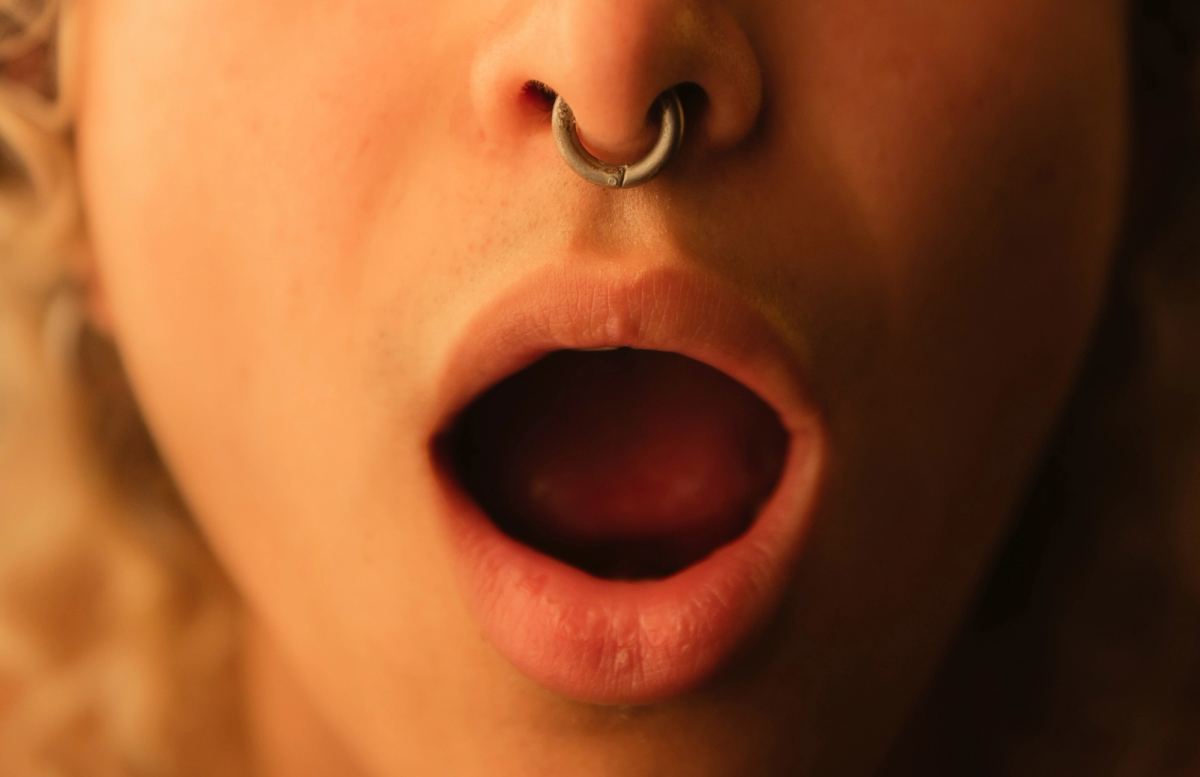
What do nose piercing sizes mean?
Gauge measures thickness; post length and ring inner diameter measure fit. Record all applicable dimensions before ordering.
Gauge reference
18G is approximately 1.0 mm, 20G approximately 0.8 mm and 16G approximately 1.2 mm. These nominal sizes are not a prescription for your piercing.
For the broader placement and jewellery decisions, see our nose piercing jewellery guide.
Measure the wearable section
For a flat back, measure from the disc to the underside of the top. For a ring, measure the clear inner opening. Do not include decorative elements.
Our 18G versus 20G comparison isolates the difference in shaft thickness; the nose ring diameter measurement guide explains how to identify the clear opening instead of the outside dimension.
Avoid guessing
Ask your piercer for the original gauge and dimensions of your well-fitting jewellery. Never force a thicker post through a smaller channel.
An accurate measurement is not permission to change an unhealed piercing: read when to change nose jewellery and our initial nose jewellery guide before attempting a replacement.
| Gauge | Nominal thickness |
|---|---|
| 16G | 1.2 mm |
| 18G | 1.0 mm |
| 20G | 0.8 mm |
The three measurements you need
Jewellery listings commonly mix gauge, diameter and length. They describe different things and cannot substitute for each other. Gauge is the nominal thickness of the part passing through the piercing. The inner diameter of a circular ring is the open distance between its inside edges, measured across the centre. Wearable post length is the usable straight section of a stud. The height of the decorative top, the size of the back disc and the total external dimensions are additional design measurements. A seller can quote a perfectly accurate number that is irrelevant to the measurement you need if the description does not specify which part was measured.

Consider a hypothetical listing that says 18G, 8 mm. For a hoop, this commonly describes a nominal wire thickness of around 1 mm and an inner diameter of 8 mm, assuming the seller explicitly uses inner diameter. For a flat-back stud, 8 mm might instead be the wearable post length. Neither number establishes that the item will fit a particular nostril. In a separate example, two rings with the same inner diameter but different thicknesses have different external diameters. That is why a ruler across the outside of an existing ring can give a misleading answer. Confirm the convention with the retailer before ordering.


For a related explanation, see 18G vs 20G Nose Jewellery: What's the Difference?.
Practical comparison checklist
A practical buying sequence
Make a note of location, healing status and existing dimensions before opening a catalogue. Filter incompatible variants first. Then compare materials, closure and appearance. Ask the retailer to confirm unclear measurements, and check the returns policy for body jewellery before ordering. A piece that cannot be returned after opening is a reason to double-check fit, not a reason to try an unsuitable item.
Reading product photographs
Front photographs show decorative appearance but often hide the wearable section. Look for a side view, close-up of closure and size diagram. Do not infer thickness or dimensions from an unscaled image. Likewise, a gold-coloured photograph does not prove a gold alloy, and a silver-coloured finish does not establish titanium.
What to record before a purchase
Record the piercing location, current gauge and applicable wearable length or inner diameter. Write the material and fastening mechanism alongside the size, and save the exact variant. This makes later comparisons more useful and helps avoid selecting a product with a similar title but a different specification.
Worked examples of jewellery dimensions
Consider a circular hoop with a listed inner diameter of 8 mm and nominal wire thickness of 1 mm. Its approximate outside diameter would be 10 mm before allowing for decoration. Another circular hoop with an 8 mm opening and a nominal thickness of 0.8 mm would measure approximately 9.6 mm across the outside. Both are examples of an 8 mm inner diameter. They are not interchangeable recommendations for any particular piercing. The calculation illustrates why an outside measurement is not a suitable substitute for an inside measurement.
Now consider a flat-back stud advertised as 20G with a 6 mm post and a 3 mm decorative top. Assuming the listing uses the normal wearable-length convention, those measurements refer to three different features: thickness, usable post length and the visible top. The 3 mm top does not tell you how long the post is. Before ordering, confirm that the stated 6 mm excludes the top and the disc. If the seller instead gives total assembly length, request the actual wearable measurement. For an existing piercing with uncertain dimensions, have a professional establish the size rather than buying multiple variants and testing them by insertion.
Frequently asked questions
Does 18G mean 18 millimetres?
No. It is a nominal gauge designation corresponding to approximately 1 mm in common body jewellery sizes.
How do I distinguish ring diameter from post length?
Ring diameter describes an opening; post length describes the usable straight section of a stud. Confirm how the retailer measured each.
Can I estimate fit from a photograph?
No reliable individual fit can be established that way. A piercer can assess placement and measure the appropriate jewellery.
Why do two 8 mm rings look different?
Their wire thickness, decorations and shape can differ even when their circular inner openings match.
Sources and editorial notes
- Association of Professional Piercers: initial jewellery
- Association of Professional Piercers: healed piercings
- Association of Professional Piercers: aftercare
Editorial guidance is not individual medical or piercing advice.