
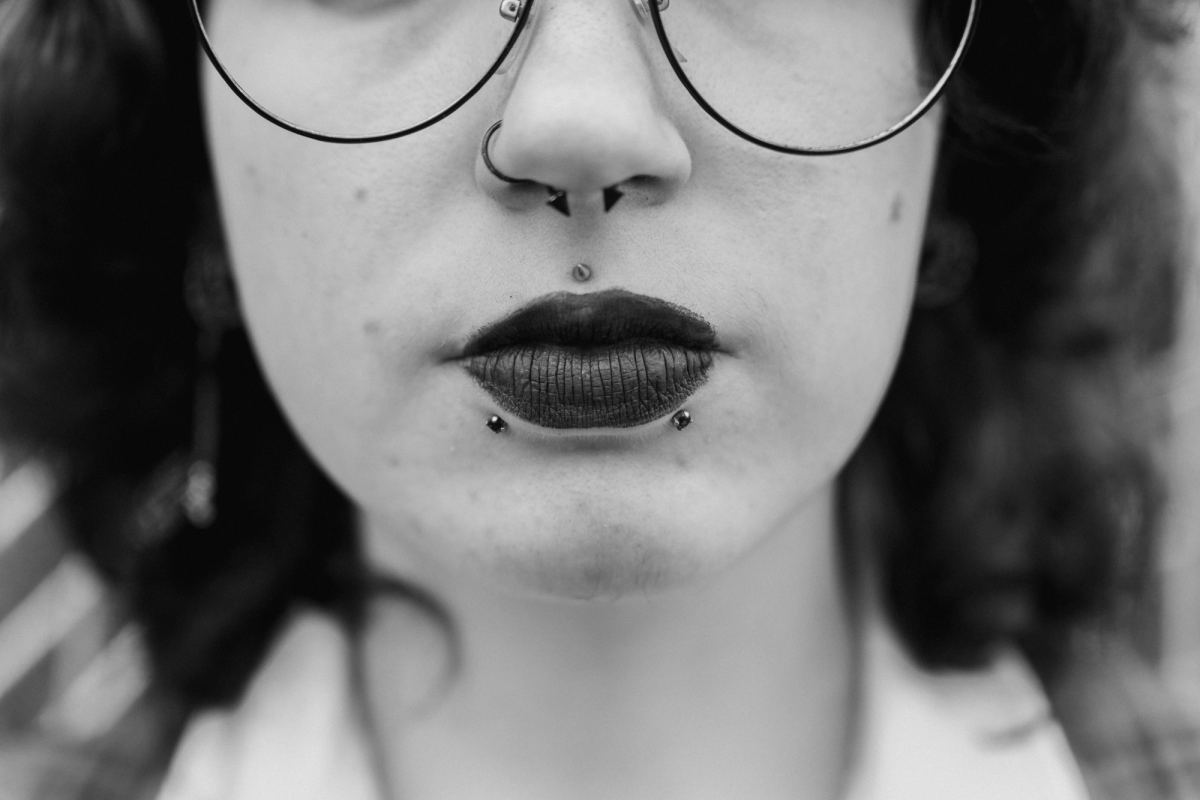
Lip jewellery · Expert-informed guide
Lip Ring vs Labret Stud
A labret has a straight post and backing; a hoop follows a curved path. Suitability depends on the piercing channel and oral contact.
Compare silhouettes
Studs create a point of decoration while hoops form a visible curve. Consider the lip line, neighbouring piercings and movement rather than simply choosing the smaller-looking piece.
The lip ring buying guide and labret stud guide offer more detail on the two constructions after a professional confirms which can fit your channel.
Compare practical fit
A post requires the correct wearable length. A ring requires a suitable inner diameter. Both require the correct gauge, and both can cause problems when badly fitted.
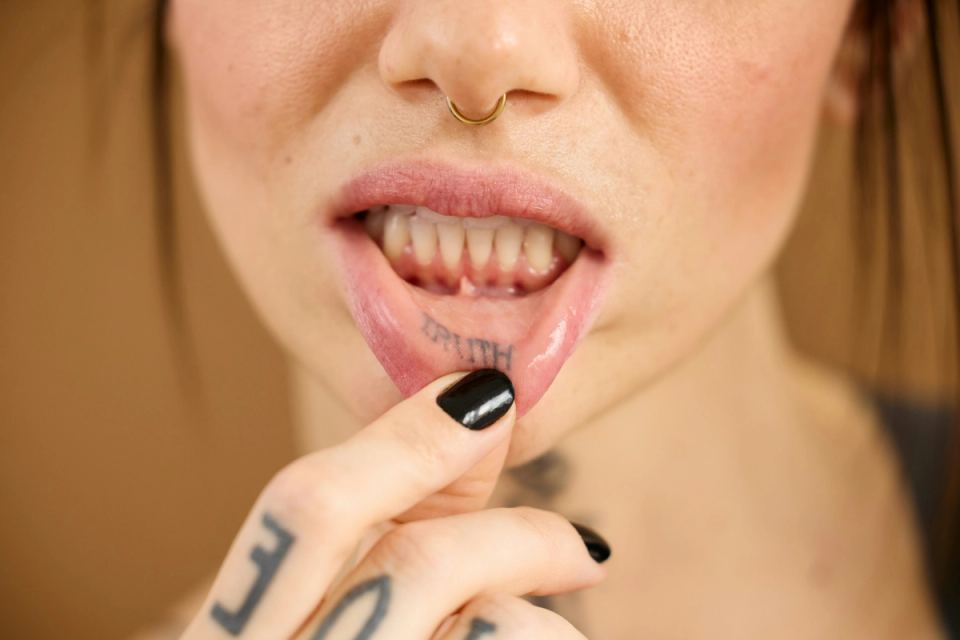
When a switch is unsuitable
Do not switch a healing piercing for a cosmetic preference. Not every placement accepts both shapes; vertical labret and Ashley require their own professional assessment.
| Measurement | What it describes |
|---|---|
| Gauge | Post or ring thickness |
| Wearable length | Space between stud ends |
| Inner diameter | Usable ring opening |
The two shapes solve different fitting problems
A conventional flat-back labret uses a shaft with a backing and a visible ornament. The jewellery occupies the channel as a post, and its wearable length is an important fitting dimension. A ring occupies the channel as part of a curve, and its opening has to accommodate the portion of the lip it surrounds. This is a more significant difference than the appearance of a circle versus a dot.
A person who has a healed side labret may be able to discuss both shapes with a piercer. Another person may have an angle or depth that is incompatible with the desired ring. A straight shaft that fits the existing channel does not establish that a circular piece will fit. Conversely, seeing someone with a ring in a similar-looking position does not establish that the same ring will work in yours.
The choice is particularly important for placements with distinct geometry. A vertical labret commonly uses a curved barbell, while a conventional labret commonly uses a post with an oral-facing backing. A curved barbell is not merely a small hoop, and the term labret in a product title does not guarantee that the item is appropriate for every placement containing that word.
Begin the comparison by asking a qualified piercer which jewellery constructions can be considered for your own channel. If one of the proposed shapes is unsuitable, the decision is already made, regardless of which style you like more.
Comparing the look in a real-life wardrobe
A stud can make the piercing appear as a small isolated point of decoration. A polished ball, clear gemstone or compact textured end changes the appearance while leaving the underlying post construction broadly recognisable. This is useful for someone who wants to vary the ornament without necessarily changing jewellery geometry.
A hoop creates a visible outline around part of the lip. A circular barbell introduces a gap between its ends; a segment ring creates a more continuous visual line. This may produce a stronger effect than a stud of the same material. But the size of that outline should be determined within the appropriate fitting options, not by choosing the smallest ring pictured in a fashion photograph.
Consider other facial jewellery. A lip hoop can echo the curve of a septum ring; a small labret ornament can complement a nostril stud. Coordinating material colour and design is a styling decision. Each piercing must retain its own appropriate measurements. Do not copy the diameter of your nose ring to your lip.
Think about how you want the jewellery to look during ordinary conversation rather than in a close-up. The outline of a hoop and the projection of a stud change with facial movement. Save useful photographs as inspiration, then ask a piercer whether the proposed construction can achieve the look on your anatomy.
What changes when you switch construction
When changing from a stud to a ring, the gauge alone is insufficient to identify the new piece. A conventional post has a wearable length, while a ring has an internal diameter and a curve. Their relationship to the tissue and oral structures differs. Obtain the required ring specification rather than trying to convert your current post length directly into an inner diameter.
The reverse change also requires assessment. A person who knows the gauge and inner diameter of a comfortable ring still needs an appropriate post length, backing and closure system for a labret. Do not assume a post with the same numerical length as the ring diameter is the correct replacement.
If you already own a suitable flat-back system and simply want a change of appearance, a compatible new end may be an alternative to switching construction. Check manufacturer compatibility, the dimensions of the new ornament and the existing post's condition. This is especially worth discussing if you prefer the original geometry and only want a different visual effect.
A healing piercing is not a suitable opportunity to experiment with multiple styles. Professional downsizing or other necessary adjustments during healing are separate from an elective cosmetic change. Follow the advice given for your individual channel and seek a review if the fit becomes concerning.
Practical comparison of the selected examples
Our CZ labret and stainless-steel ring set illustrate two different shopping directions. The labret has an end and backing supported by a post; the ring set contains circular pieces with listed dimensions. The product cards are examples for discussion, not a conclusion that either construction fits every lip piercing.
Check the selected variant carefully. The thickness of the metal, the length of a shaft and the inner diameter of a hoop answer different questions. The price of a set is not useful if none of its pieces match your measurements. Similarly, a visually appealing labret end is not a complete replacement if you do not have a compatible post.
Ask for material documentation and evaluate the whole piece. A stainless steel listing does not establish suitability for a person with a known sensitivity. A titanium listing does not establish appropriate geometry or freedom from dental contact. The two comparisons—material and shape—must be made separately.
For oral-facing placements, neither option should be presented as harmless. Discuss contact with your dentist and piercer, especially if you notice changes or discomfort. The American Dental Association advises against cosmetic oral and perioral piercing because of the associated health risks.
Product options to consider
We may earn a commission from qualifying purchases through affiliate links. Product details come from the Oufer feed; we have not independently tested these items or confirmed current stock. These examples are not recommendations for initial jewellery.

CZ Internally Threaded Titanium Labret Stud – CZ 3mm
Small CZ decoration; ask your piercer to confirm post length and fit.
Check current price at Oufer
6PCS Ball Lip Ring Set – 12mm
Merchant describes stainless steel; confirm alloy and inner diameter. Not a default choice for nickel-sensitive wearers.
Check current price at OuferFrequently asked questions
Can I order jewellery using only the gauge?
No. Verify shape, length or inner diameter, end design and closure with your piercer.
Is this suitable for a new piercing?
Retail examples are for consideration only after healing and a professional fit check. Initial jewellery is selected and fitted by your piercer.
What if jewellery touches my teeth or gums?
Arrange dental and piercing assessments. Even well-fitted oral jewellery carries risk; the American Dental Association advises against cosmetic oral and perioral piercing.