

Which nose ring is best for your piercing?
A plain hinged ring is a practical starting point for a healed nostril if its diameter and gauge match your piercing.
Affiliate disclosure: We may earn a commission through these links. Selections are based on Oufer catalogue specifications, not hands-on tests. Prices in USD from the supplied Awin feed; check current price, availability and shipping. These examples are for healed piercings only; confirm fit and material documentation.
Options worth comparing

18G Hinged Segment Titanium Nose Hoop - Silver / 6mm
Plain hinged hoop; merchant specifies ASTM F136 titanium. Check the compact diameter.
$8.79 USD — feed price, subject to change.
Check price at Oufer
C Shaped Titanium Nose Hoop - 8mm
Open hoop; merchant specifies ASTM F136 titanium.
$10.39 USD — feed price, subject to change.
Product link currently unavailable
18G CZ Titanium Segment Nose Hoop - 6mm / Sliver
Clear cubic zirconia decoration; check setting clearance.
$16.79 USD — feed price, subject to change.
Check price at Oufer
20G Double Hoop CZ Titanium Nose Ring - Silver / 6mm
Double-hoop appearance from one piercing; check clearance.
$20.79 USD — feed price, subject to change.
Check price at Oufer| Product | Feed price (USD) |
|---|---|
| 18G Hinged Segment Titanium Nose Hoop - Silver / 6mm | $8.79 |
| C Shaped Titanium Nose Hoop - 8mm | $10.39 |
| 18G CZ Titanium Segment Nose Hoop - 6mm / Sliver | $16.79 |
| 20G Double Hoop CZ Titanium Nose Ring - Silver / 6mm | $20.79 |
Ring mechanisms
A hinged segment opens at a built-in joint; a seamless ring has a small opening; an open C-shaped hoop has ends that do not meet. Inspect closure alignment and the finish of the wearable surface.
For the broader placement and jewellery decisions, see our nose piercing jewellery guide.
Decoration and fit
A CZ-set ring adds sparkle, but check where the setting sits relative to the channel. A double hoop may occupy more space. Do not select a tight ring just because it looks discreet in a photo.
Material and finish are separate decisions: compare titanium nose rings and studs with solid gold nose jewellery when the required geometry is already established.
Selection method
Our choices illustrate different styles and price points using retailer specifications. We have not conducted wear tests. Compare the exact variant and ask about returns before ordering.
If you are undecided about changing construction, read the nose ring versus nose stud comparison; for closure differences, our clicker versus seamless ring guide explains the mechanisms.
How to compare nose ring listings
Start by deciding whether you want a minimal everyday ring, a decorated piece or the appearance of multiple rings. A plain hinged segment has a relatively simple silhouette. A decorative segment can introduce stones, a wider front or a more prominent profile. An open hoop can have a different retention mechanism. Do not equate ease of opening with suitability: the joint and ends need to align smoothly when worn. Look at photographs of the closure rather than judging only the front. Ask the seller whether the diameter listed is the inner or outer measurement. If the ring is not circular, check both internal width and height.

The least expensive option is not necessarily the best fit. Compare the exact size variant, its stated material and the closure before looking at price. A 6 mm hoop can be too tight for a particular placement even if it is sold as a nose ring. The product selection on this page is an editorial shortlist drawn from merchant specifications, not a ranking based on laboratory analysis or wear testing. If a listing gives only a colour, request the actual metal composition. For healed piercings, a smooth, well-fitting piece is a more useful starting point than a complex decorative design.

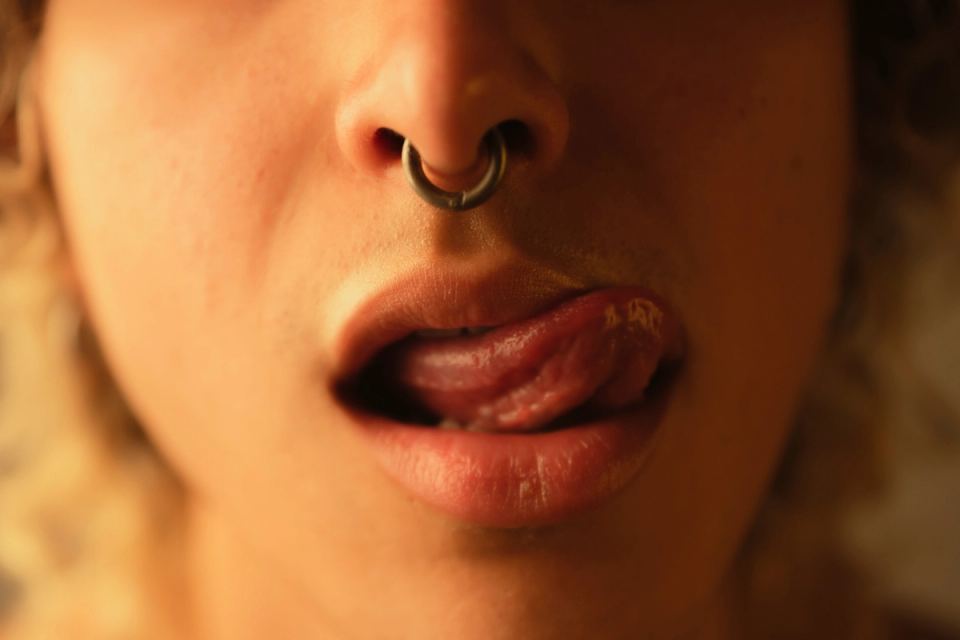
For a temporary look without a channel, choose a purpose-designed fake nose ring rather than wearing an ordinary piercing ring as a clip. For a permanent healed nostril, assess your routine using the everyday nose ring guide.
For a related explanation, see Nose Piercing Size Guide: Gauge, Length and Diameter.
Practical comparison checklist
A practical buying sequence
Make a note of location, healing status and existing dimensions before opening a catalogue. Filter incompatible variants first. Then compare materials, closure and appearance. Ask the retailer to confirm unclear measurements, and check the returns policy for body jewellery before ordering. A piece that cannot be returned after opening is a reason to double-check fit, not a reason to try an unsuitable item.
Reading product photographs
Front photographs show decorative appearance but often hide the wearable section. Look for a side view, close-up of closure and size diagram. Do not infer thickness or dimensions from an unscaled image. Likewise, a gold-coloured photograph does not prove a gold alloy, and a silver-coloured finish does not establish titanium.
What to record before a purchase
Record the piercing location, current gauge and applicable wearable length or inner diameter. Write the material and fastening mechanism alongside the size, and save the exact variant. This makes later comparisons more useful and helps avoid selecting a product with a similar title but a different specification.
How to narrow down a large ring catalogue
A catalogue filter is a starting point, not a guarantee of compatibility. Begin with the exact gauge and internal opening recommended for your healed piercing. Remove variants with incompatible measurements, then compare the closure, material and finish of the remaining pieces. When a listing offers multiple sizes, check the selected variant immediately before checkout. A product image may remain unchanged when you switch diameter. The visible photograph is therefore not a reliable record of the variant you have selected.
A second decision is whether the ring is intended to look plain or decorative. A single line of metal has a different profile from a double-hoop design or a ring carrying stones. Consider how the decorative portion sits in relation to the channel and whether it projects into areas that may catch during routine activities. If the retailer cannot describe the wearable section clearly, do not compensate by choosing a smaller size. Ask for the missing measurements or compare another product.
Frequently asked questions
Is a smaller hoop always more discreet?
It may sit closer to the nostril, but insufficient clearance can cause pressure. Choose the correct opening before considering the visual profile.
Can I judge a ring by its listed gauge alone?
No. Check the opening, fastening, material and decorative dimensions as well.
Does a double hoop require two piercings?
Some designs imitate two rings from a single channel. Check the exact listing rather than assuming this applies to every double-ring design.
Sources and editorial notes
- Association of Professional Piercers: initial jewellery
- Association of Professional Piercers: healed piercings
- Association of Professional Piercers: aftercare
- Oufer Awin product feed, merchant 91941, supplied November 2026.
Editorial guidance is not individual medical or piercing advice.