
Lip jewellery · Expert-informed guide
Best Ashley Piercing Jewellery
Ashley jewellery requires a precise fit through the lower lip, with an internal backing. A professional should establish the shape and dimensions.
Ashley versus vertical labret
Ashley generally has a visible end on the lower lip and an interior end. A vertical labret generally has both ends externally visible. Buying by the names alone can lead to incorrect geometry.
The labret stud guide explains conventional post terminology, and the lip size guide distinguishes dimensions; neither establishes a universal Ashley fitting.
Visible end selection
A simple smooth top can emphasise the central placement without adding unnecessary projections. The correct backing and channel angle are more important than a decorative gem.
Assess changing fit
Lip swelling, a sinking end or contact with teeth warrants an assessment. Do not force a shorter or differently shaped piece into the channel.
Recognising what makes an Ashley distinct
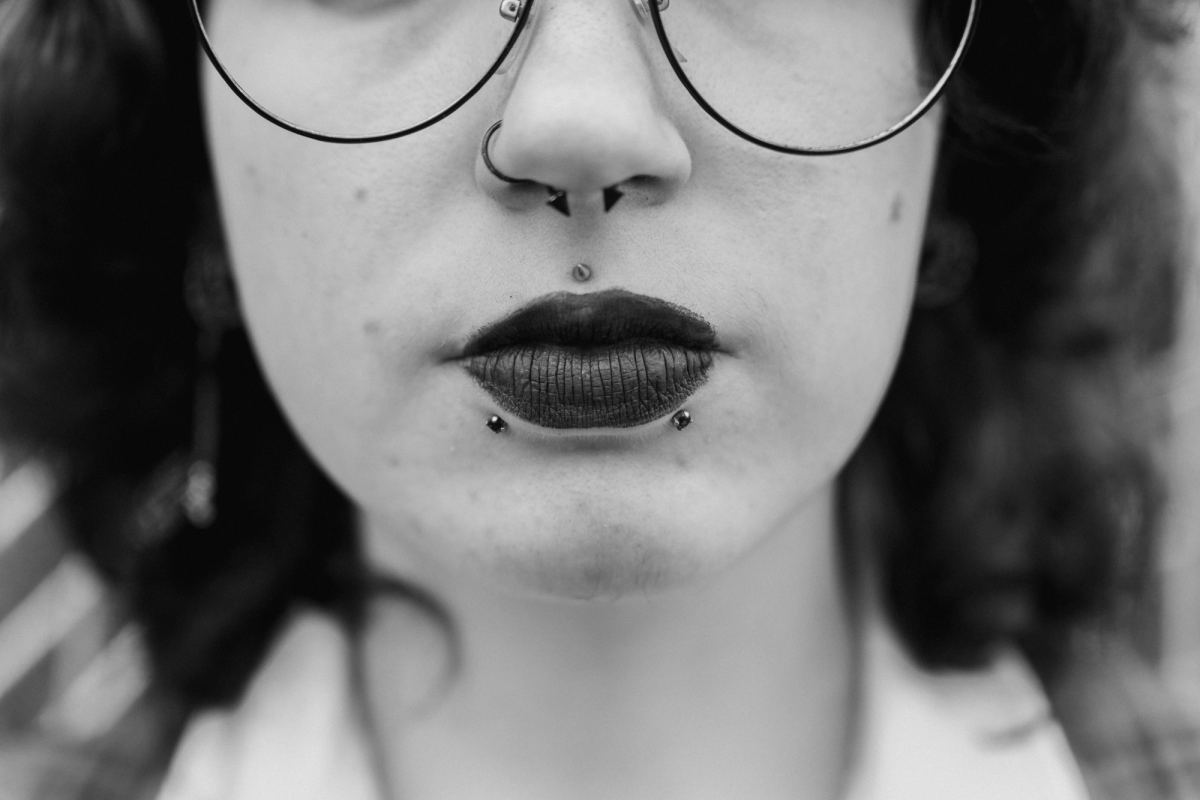
An Ashley generally presents a single visible ornament on the lower lip itself, rather than a point below the lip. Its other end sits inside the mouth. This creates a strong central visual effect, but also makes the relationship between the channel, lip movement and internal backing particularly important.
The name is sometimes used alongside terms such as inverse vertical labret. Do not rely on a retailer's use of that terminology to determine the piece you need. Confirm the actual placement and intended geometry with your piercer. The upper visible end and hidden backing are not the same arrangement as the two external ends commonly seen with a vertical labret.
A photograph of a well-styled Ashley can make the jewellery appear to be a small independent gemstone. In reality, a whole assembly occupies the channel. The post or bar, attachment, backing and ornament all need appropriate dimensions. The unseen components are as important to the decision as the front.
If you are considering the piercing for the first time, discuss the placement and oral-contact risks with qualified professionals before buying jewellery. The appropriate conclusion may be that the placement or preferred style is not suitable for your anatomy.
Selecting an appropriate visible end
A small round gem can emphasise the centre of the lower lip without creating an elaborate outline. A polished ball provides a different visual texture. A more complex setting may appeal when the wearer wants an obviously decorative feature, but its projection and edge profile require careful consideration.
The lip moves during eating, speech and ordinary facial expressions. An end that looks proportional when the face is still may behave differently in motion. Ask your piercer to assess clearance rather than choosing an ornament solely by gemstone size. The complete setting can be wider than the stone itself.
A familiar decorative end from ear or nose jewellery is not necessarily suitable for the Ashley. Even if it can be attached to a compatible system, the profile and dimensions should be assessed for this use. The correct purchase may be a professionally sourced component rather than a complete piece marketed under several piercing categories.
If you prefer a minimalist look, do not interpret minimalist as meaning the shortest available post. The wearable length must account for the actual tissue and geometry. A visually discreet end can still belong to a longer appropriately fitted assembly.
Why this placement needs an individual specification
Retailer guides may list common gauges and lengths, but these are not prescriptions for an Ashley. The direction of the channel, lip thickness and position of the inside end can affect the fitting. A qualified piercer should identify the shape and dimensions rather than selecting from a generic labret chart.
Write down the current professionally established jewellery specification, including the shape, gauge, usable length, backing and end system. Ask whether replacement ends can be supplied within that system. If the information is incomplete, get it clarified before buying a piece on the strength of its visual similarity.
This cluster's product selection has not established a verified Ashley-specific jewellery option. We are deliberately not presenting a conventional straight labret or a generic curved barbell as a universal solution. The more reliable next step is to bring the retailer's full specification to your piercer.
For someone with a healing piercing, a planned cosmetic change should wait for professional assessment. If swelling or fitting concerns arise, seek a review rather than ordering a replacement based on the symptoms alone.
Oral contact and follow-up
An Ashley has an internal end, so the appearance of the external ornament cannot tell you whether it contacts teeth or gums. Ask a dentist to assess any concerns. The American Dental Association advises against cosmetic oral and perioral piercings because of their health risks.
Do not ignore persistent discomfort, a sinking end or difficulty with ordinary mouth movement because the placement looks aesthetically pleasing. These changes deserve appropriate assessment. Rapidly worsening symptoms, particularly those affecting breathing or swallowing, require urgent attention.
The same applies after the initial healing period. A change in the appearance of the lip or a new pattern of dental contact can alter the decision about whether to retain or change the jewellery. Seek advice based on the actual issue rather than trying to adjust the piece yourself.
A suitable Ashley jewellery choice is an individually established fitting with an ornament you prefer, not merely a product that appears in search results for lip studs. Our size and labret guides can help you understand terminology, while the professional fitting determines which terminology applies to your own piece.
Frequently asked questions
Can I order jewellery using only the gauge?
No. Verify shape, length or inner diameter, end design and closure with your piercer.
Is this suitable for a new piercing?
Retail examples are for consideration only after healing and a professional fit check. Initial jewellery is selected and fitted by your piercer.
What if jewellery touches my teeth or gums?
Arrange dental and piercing assessments. Even well-fitted oral jewellery carries risk; the American Dental Association advises against cosmetic oral and perioral piercing.