
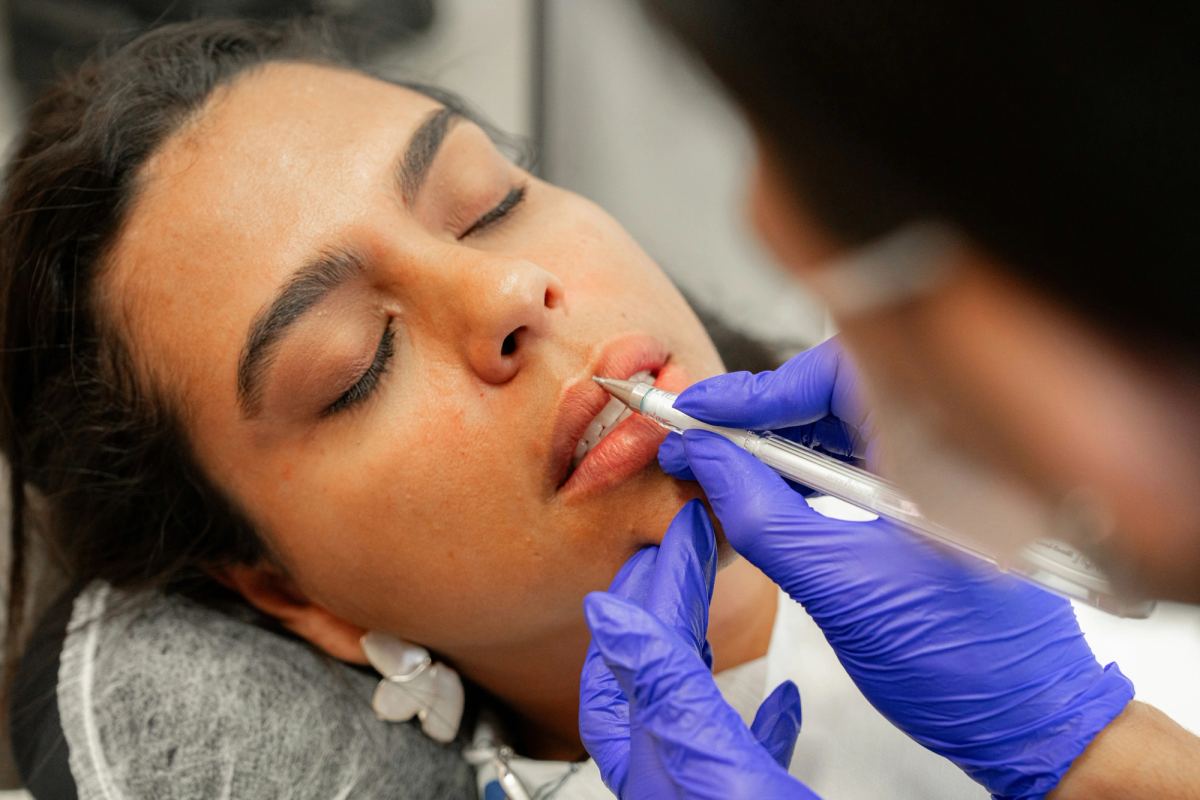
Lip jewellery · Expert-informed guide
Best Jewellery for a Fresh Lip Piercing
Initial lip jewellery must be fitted and sterilised by a qualified professional using appropriate material and geometry; retail fashion picks are not a substitute.
Initial jewellery criteria
Ask about material documentation, smooth construction, channel-specific shape and room for expected swelling. A professional studio should explain its sterilisation process and aftercare.
The lip size guide explains the measurements and the titanium lip jewellery guide explains material terminology; the professional must select initial hardware.
Plan follow-up
Arrange a fit check and discuss whether professional downsizing will be needed. Avoid experimenting with decorative rings, oversized tops or unknown coatings during healing.
Oral health
Discuss dental risks before choosing a placement that enters the mouth. Maintain oral hygiene and follow the piercer's instructions. Seek dental or medical care for concerning symptoms.
Initial jewellery is part of the professional procedure
Choosing jewellery for a new piercing is different from shopping for a decorative replacement. The studio needs to consider the person's anatomy, intended placement, the appropriate geometry and material, the expected response of the tissue and the subsequent fitting review. A product displayed in a fashion catalogue does not address those decisions.
Begin by discussing the procedure rather than asking whether a particular ornament can be inserted. The piercer should explain the proposed location and jewellery construction and assess whether they are appropriate. If the preferred placement is unsuitable, a different option or a decision not to proceed may be appropriate.
Ask the studio what it uses for initial jewellery and why. It should be able to describe the material, construction and fitting criteria and explain its sterilisation process. The Association of Professional Piercers publishes guidance on initial-jewellery standards, which can help you understand the questions worth asking.
Do not bring an online product to a studio with the expectation that it must be used. The piece's origin, documentation, finish and condition matter. A studio may decline an item or choose a more appropriate professionally supplied piece. The decision should be based on the procedure, not the money already spent on an ornament.
Shape and size are individual, not a standard starter kit
A traditional labret commonly has a flat-back construction, but the correct wearable length and backing are individual. A vertical labret commonly requires curved jewellery appropriate to its different channel. The two placements cannot be fitted from one generic straight-stud starter kit.
The initial piece may need room for swelling. A professional should establish that room and explain how the fit will be reviewed. Too little space and excessive length can each present different concerns. Do not assume the longest or shortest available post is the most suitable initial choice.
An ornament's shape also matters. Its profile and relationship to the tissue should be considered as part of the assembly. A simple appearance is not proof of suitable initial construction, and an elaborate decoration is not automatically appropriate because it is made from an advertised premium material.
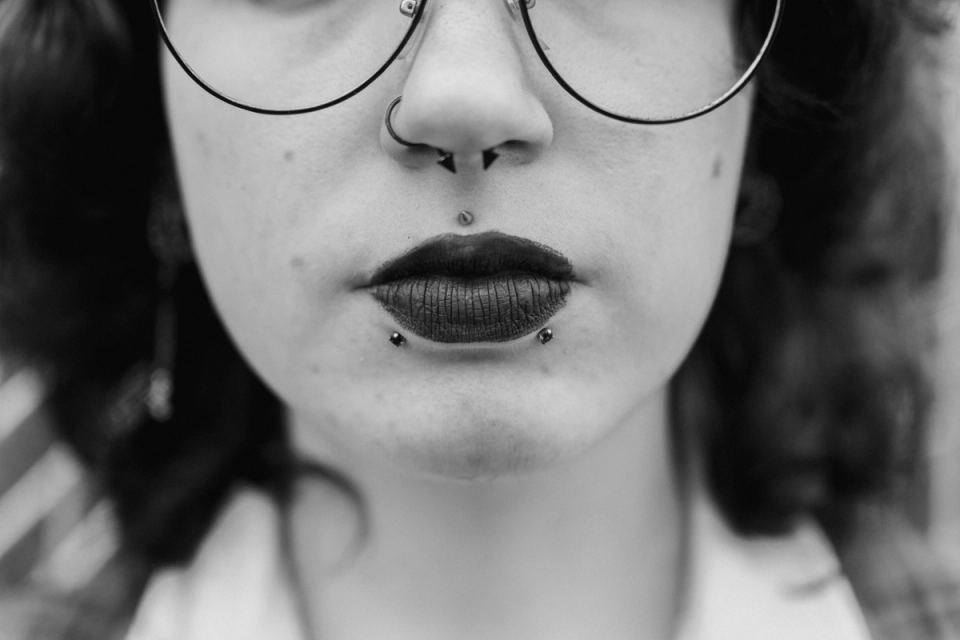
If you are considering a paired arrangement such as snake bites, ask the studio about each placement and the planned follow-up. Symmetry of the final appearance does not establish identical underlying measurements. The initial fit is assessed individually.
What to ask about material and construction
Useful material information identifies an actual grade or alloy rather than using a general term such as titanium, surgical steel or hypoallergenic. Ask the studio about the manufacturer's documentation and the construction of the complete piece. A claim in an online product title is not the same as a material specification.
The Association of Professional Piercers lists acceptable material and construction criteria for initial jewellery. It also distinguishes unsuitable coated or other constructions from appropriately specified pieces. Refer to its current guidance and discuss what applies to the jewellery your piercer proposes.
The way an ornament attaches to its post is relevant to the overall construction. Internally threaded and compatible threadless systems can provide smooth wearable surfaces when manufactured appropriately. However, the connection label alone does not establish suitability, nor does the appearance of a polished shaft prove its material grade.
Explain any known allergies or medical concerns during the consultation. If a question requires medical or dental advice, seek that advice from an appropriately qualified professional. Do not rely on a retailer's sensitive-skin label to make a medical decision.
Plan the aftercare and dental conversation before the appointment
Ask for clear written aftercare guidance and a follow-up plan. Establish who to contact if the fit becomes concerning, and how the studio handles a professional downsize if indicated. These are parts of the decision to get pierced, not optional services to discover afterwards.
A new oral-facing lip piercing also has potential implications for teeth and gums. Discuss those risks with a dentist, particularly if you already have concerns about oral health. The American Dental Association advises against cosmetic oral and perioral piercing because of the associated health risks; appropriate jewellery cannot remove those risks entirely.
Follow the individual aftercare advice and consult the Association of Professional Piercers' oral aftercare resource. Avoid treating a fashion article as a replacement for the instructions supplied by the professional who assessed your piercing.
Seek appropriate care for worsening symptoms, an apparently embedded end or other concerning changes. Difficulty breathing or swallowing in the context of significant swelling requires urgent emergency assessment. Do not attempt to manage these issues by purchasing or fitting an alternative decorative piece yourself.
There are intentionally no retail purchase recommendations in this fresh-piercing guide. The appropriate next step is a consultation and a professionally selected fitting, not an affiliate link to a product whose suitability for your anatomy has not been established.
Frequently asked questions
Can I order jewellery using only the gauge?
No. Verify shape, length or inner diameter, end design and closure with your piercer.
Is this suitable for a new piercing?
Retail examples are for consideration only after healing and a professional fit check. Initial jewellery is selected and fitted by your piercer.
What if jewellery touches my teeth or gums?
Arrange dental and piercing assessments. Even well-fitted oral jewellery carries risk; the American Dental Association advises against cosmetic oral and perioral piercing.