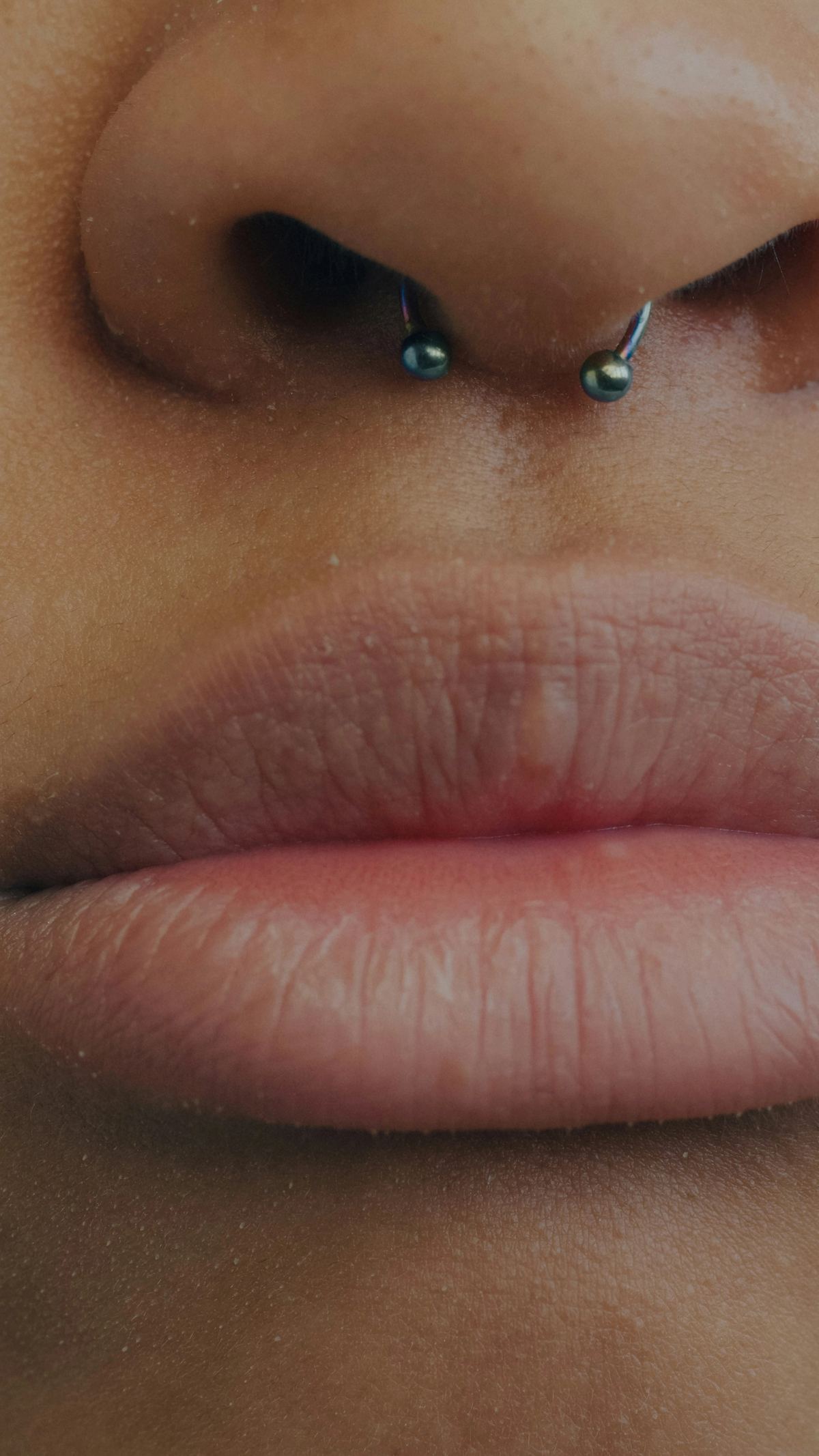
Quick answer Choose septum jewellery by the dimensions of your existing piercing, the suitability of the material, and the closure style. A simple, appropriately fitted piece is usually easier to manage than an elaborate decorative ring. If your piercing is new, leave jewellery selection and changes to your qualified piercer. Once healed, hinged clickers, circular barbells and retainers offer different combinations of appearance and convenience.
Start with the piercing, not the photograph A septum piercing passes through tissue separating the nostrils, with placement dependent on individual anatomy. A ring that looks small and snug on another person may hang lower on you, or may not have enough room at all. The position of the piercing, shape of the nose and thickness of the jewellery all affect how much metal is visible. This is why measuring an existing comfortable piece is more useful than buying according to a photograph alone.
Before ordering, find out the gauge and inner diameter of the jewellery you already wear. If you have never changed it, ask your piercer to confirm both dimensions. Do not treat a retailer's most popular size as a prescription for your own anatomy. A piece should not pinch, pull or leave pressure marks. If it does, ask a professional to assess the fit rather than trying to stretch the piercing yourself.
Materials: what the label tells you Titanium is a useful starting point for people seeking lightweight jewellery with documented material quality. For initial piercings, professional standards distinguish implant-grade specifications from the broad commercial label titanium. Ask for the actual specification and documentation rather than assuming that a product title establishes suitability. ASTM F136 and ASTM F67 are examples of titanium standards relevant to professional body jewellery.
Gold requires its own checks. A solid gold item and a gold-coloured coating are not interchangeable. Suitable solid gold jewellery for initial piercings must meet requirements for alloy composition, finish and construction as well as gold content. A decorative gold-plated piece may be marketed for healed piercings but should not automatically be considered appropriate for healing tissue. Even after healing, irritation can develop when a finish deteriorates or an alloy contains a substance to which you react.
Read the titanium septum rings guide for a closer look at material selection and supplier documentation.
Understanding gauge and diameter Gauge describes the thickness of the part passing through the piercing. In common body jewellery sizing, 16G corresponds to approximately 1.2 mm and 14G to approximately 1.6 mm. The lower gauge number therefore represents the thicker piece. These measurements do not tell you how far the ring will hang below the nose.
Inner diameter describes the open space inside a circular ring. For a plain round hoop, an 8 mm inner diameter with 1.2 mm wire has an approximate outside diameter of 10.4 mm. A decorative front or differently shaped hoop can alter the overall dimensions considerably. When shopping online, check whether a listing gives the internal or external dimension and whether measurements apply to the selected variant.
The septum ring size guide explains how to distinguish these two dimensions and why choosing a smaller diameter is not necessarily the best way to achieve a discreet look.
Closures and everyday use A hinged clicker opens at a hinge and closes when its moving segment engages the clasp. It can offer a continuous visual outline without removable balls. The hinge and seam still deserve inspection: poor construction or a rough join can make a piece uncomfortable. A circular barbell, often called a horseshoe, has an opening between two ends. Its shape creates a different silhouette and some appropriately fitted designs can be concealed inside the nose. A retainer is primarily chosen for discretion rather than decorative appearance.
Compare the different septum jewellery types and styles before deciding which closure fits your routine. Someone who needs a low-profile design for work may value different features from someone buying a statement piece for occasional wear.
Choosing a decorative ring The visual front of a ring can include stones, geometric shapes or multiple rows of metal. Look at photographs from the side as well as the front. Decorative elements add weight and depth, and a design that is comfortable for an evening may be less practical for everyday wear. Consider how the piece behaves when you wash your face, use a tissue or pull clothing over your head. Avoid sharp protrusions that are likely to catch.
Our best septum rings and jewellery guide separates everyday designs from statement options. Product recommendations should be assessed against the exact material, closure and dimensions of the selected variant, not simply its appearance.
Healing and changing jewellery Healing time varies. An absence of pain or visible redness does not establish that the internal piercing channel has healed. Ask your piercer before the first elective change, and arrange professional help if the jewellery is difficult to open or remove. Do not repeatedly rotate, flip or remove jewellery during healing. Follow the aftercare instructions supplied by your piercer; avoid aggressive cleaning or experimenting with household chemicals.
Increasing pain, heat, swelling, spreading redness, discharge or feeling unwell can warrant medical assessment. If infection is suspected, obtain medical advice rather than removing the jewellery on your own.
Frequently asked questions ### Is a clicker better than a horseshoe? Neither is universally better. The choice depends on fit, healing status, construction and whether you need a closed visual outline or an open-ended shape.
Can I buy a smaller ring to make the piercing less obvious? Only if the dimensions remain comfortable for your placement. A snug ring that compresses tissue is not a suitable solution for discretion.
Does titanium jewellery always mean implant grade? No. A material name alone does not establish a documented implant-grade specification.
Professional references - Association of Professional Piercers: https://safepiercing.org/jewelry-for-initial-piercings/ - Association of Professional Piercers: https://safepiercing.org/aftercare/ - NHS: https://www.nhs.uk/conditions/infected-piercings/
Further septum guides
Explore Best Septum Rings and Jewellery for further guidance.
Explore Best Titanium Septum Rings for further guidance.
Explore Septum Ring Size Guide for further guidance.
Explore Septum Jewellery Types and Styles for further guidance.

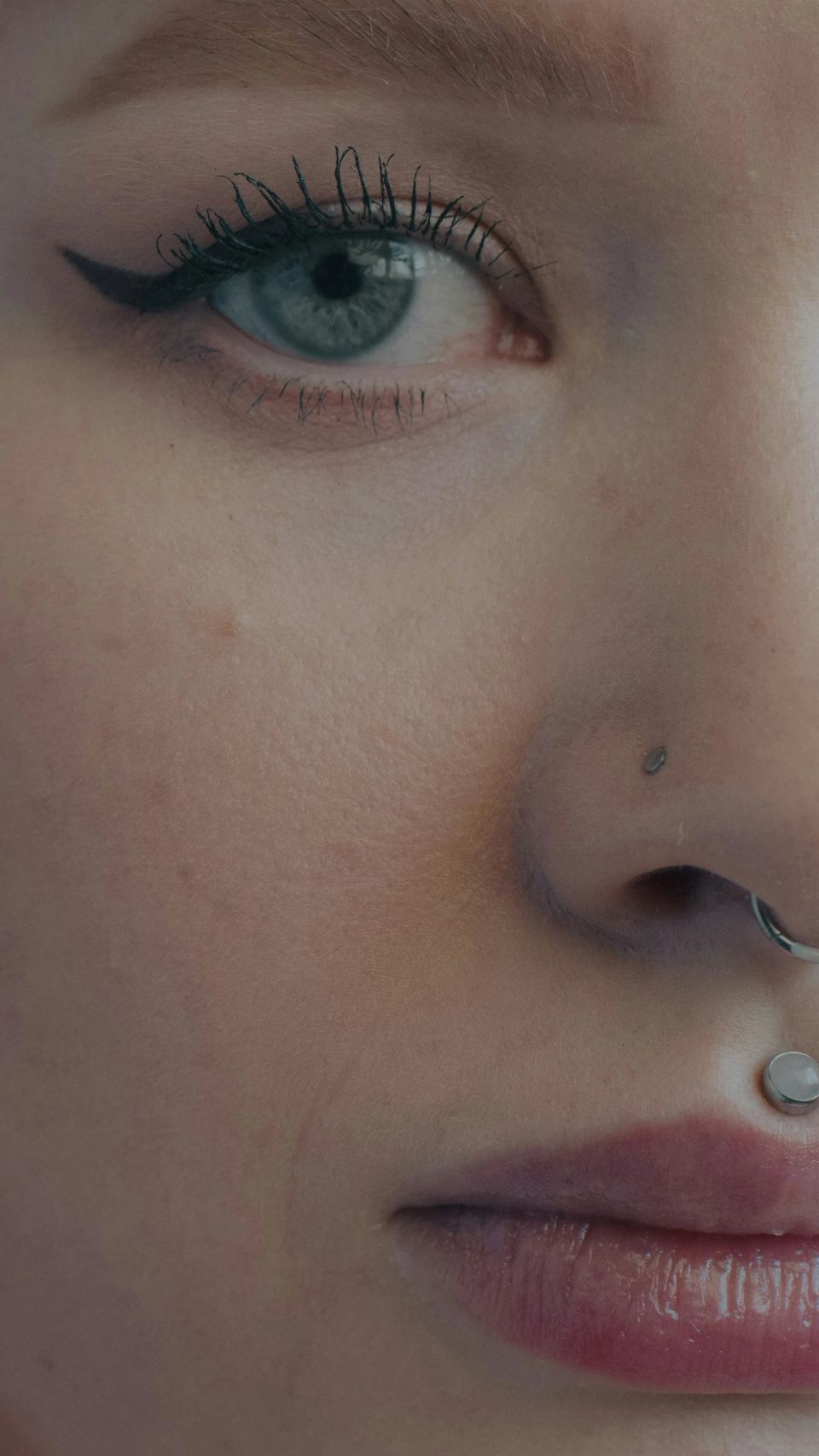
OUFER jewellery examples
Affiliate links: we may earn a commission. Examples from the existing OUFER catalogue; check current availability and exact specifications. Not hands-on tested.

16G Hinged Segment Titanium Septum Ring - 6mm / Silver
Simple hinged septum ring; merchant specifies ASTM F136 titanium.
$8.79 USD — feed price, subject to change.
Check price at Oufer
V-Shaped Titanium Septum Ring - 8mm
Angular hinged septum design.
$11.99 USD — feed price, subject to change.
Check price at Oufer
Titanium Horseshoe Septum Ring Pack - 8mm
Two horseshoe styles with ball and spike ends, per merchant.
$11.19 USD — feed price, subject to change.
Check price at OuferSeptum Piercing Jewellery Library
Complete guide
Main guides
- Best Septum Rings and Jewellery
- Best Titanium Septum Rings
- Septum Ring Size Guide
- Septum Jewellery Types and Styles
Supporting guides
- Best Septum Clicker Rings
- Best Horseshoe Septum Rings
- Best Gold Septum Rings
- Best Black Septum Rings
- Best Septum Jewellery for Sensitive Skin
- Best Minimalist Septum Rings
- Best Decorative Septum Rings
- Septum Clicker vs Horseshoe Ring
- 6mm vs 8mm vs 10mm Septum Rings
- 14G vs 16G Septum Jewellery
- How to Hide a Septum Piercing
- Best Septum Retainers
- When Can You Change Septum Jewellery?
- Best Fake Septum Rings